

Disease Overview
Invasive meningococcal disease (IMD) is caused by the gram-negative bacterium Neisseria meningitidis (meningococcus). In Canada from 2012 to 2022, children <5 years old accounted for the largest number of IMD cases (n=265, or 23% of total cases), followed by adolescents 15–19 years old (n=138, or 12% of total cases) and adults 20–24 years old (n=98, or 8% of total cases). In Canada and around the globe, the most common serogroups are A, B, C, W-135 and Y.1-3




Transmission
IMD is transmitted through respiratory droplets and throat secretions.1
Clinical Manifestations1
Invasive meningococcal infection can result in meningitis or sepsis, or both.
Common signs and symptoms of meningitis can include the sudden onset of:
- Fever
- Intense headache
- Nuchal rigidity
Other common symptoms of meningitis can include:
- Nausea
- Vomiting
- Photophobia
- Altered sensorium
Meningitis may present differently or more subtly in newborns and infants. Newborns and infants may:
- vomit
- feed poorly
- be irritable
- be lethargic
- have a bulging fontanelle
- have a change in level of alertness
Complications of IMD1
IMD has an overall case fatality rate of 14.1%.
About 15% to 20% of survivors develop long-term sequelae, including:

Hearing
loss

Seizures

Neurologic
disabilities

Behavioural and
cognitive problems

Digit or limb
amputations

Skin
scarring
Risk factors1
People at increased risk of exposure to IMD include:
- Travellers to areas with high rates of endemic meningococcal disease or transmission, such as the meningitis belt of sub-Saharan Africa, and pilgrims for the purposes of Hajj in Mecca or Umrah
- Research, industry and clinical laboratory personnel who are potentially exposed to N. meningitidis
Age is a predictor of risk. Between 2012 and 2022 in Canada, the highest annual incidence rates were in:
- Infants <1 year of age
- Children 1–4 years of age
- Adolescents 15–19 years of age
- Young adults 20–24 years of age
In epidemiological studies, increased incidence of IMD has also been observed in people:
- Living in households with overcrowding
- Who have been actively and passively smoking
- With concurrent or recent respiratory tract infection
Overall Cases and Incidence
Case data were obtained from the National Enhanced IMD Surveillance System (eIMDSS), data requests to provinces and territories not participating in eIMDSS, and the National Microbiology Laboratory.3
Between 2012 and 2022, 1,196 cases of IMD were reported. Overall, the mean incidence of IMD was 0.31 cases per 100,000 population per year. However, the distribution of cases, instance rates and serogroups varied substantially across age groups, provinces and territories.3
Serogroup distribution of IMD case isolates* by province/regions, 2015–20203†
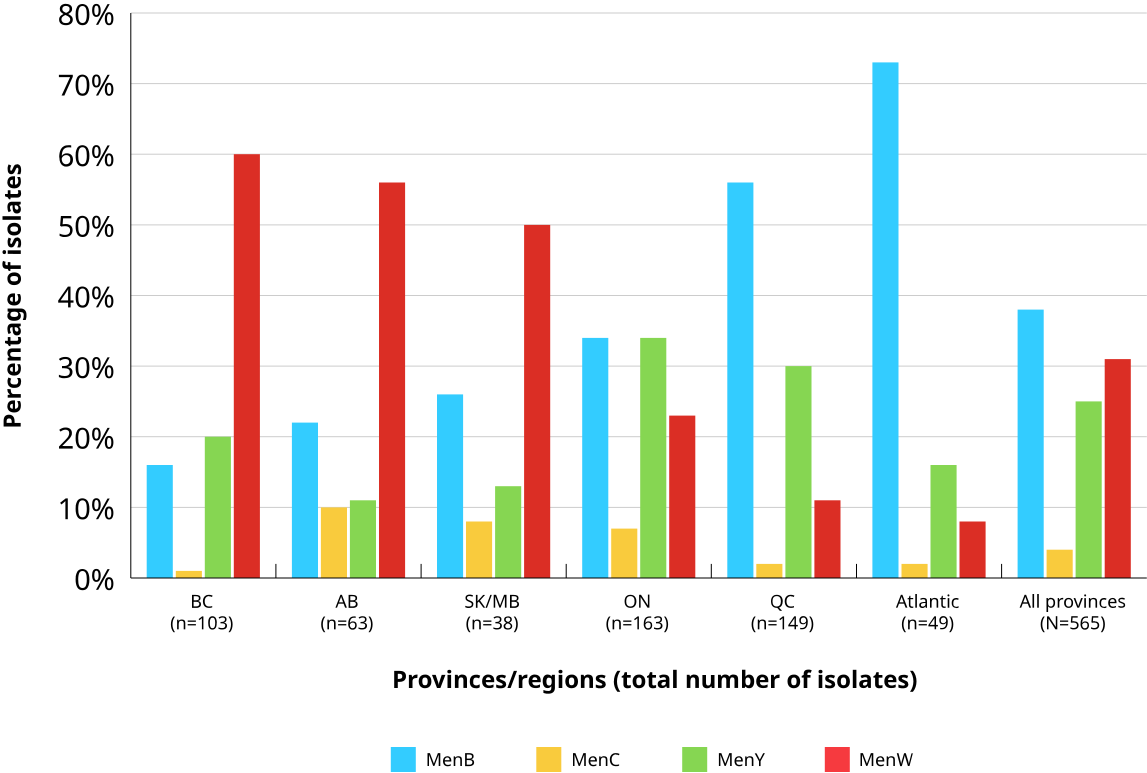
AB=Alberta; BC=British Columbia; MB=Manitoba; MenB=Neisseria meningitidis serogroup B; MenC=Neisseria meningitidis serogroup C; MenW=Neisseria meningitidis serogroup W; MenY=Neisseria meningitidis serogroup Y; ON=Ontario; QC=Quebec; SK=Saskatchewan.
* Total includes other serogroups (e.g. E, Z, non-encapsulated).
† Atlantic includes New Brunswick, Nova Scotia, Prince Edward Island, Newfoundland and Labrador.
Cases by Serogroup and Age
Based on data from 2012–2022, the highest incidence of IMD was serogroups B (0.14 cases per 100,000 population), followed by serogroup W and Y (both 0.06 cases per 100,000 population, respectively). Serogroup B incidence was highest in children younger than 1 year old and children between 1–4 years old (2.03 and 0.59 cases per 100,000 population, respectively).3
Incidence rates, per 100,000 population, of IMD in Canada by age group and serogroup, 2012–2022 (N=1,178‡)3
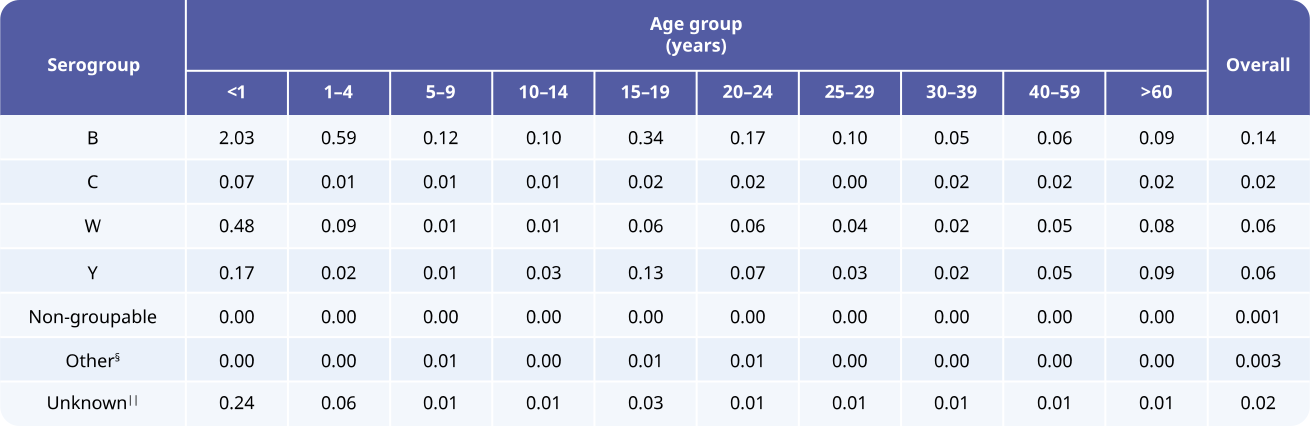
‡ 18 cases of total sample missing age.
§ Other are those cases with the serogroup noted as A, E, Z, 29E and non-encapsulated.
|| Unknown are those cases missing serogroup information.
NACI Vaccine Recommendations
The National Advisory Committee on Immunization (NACI) provides the following immunization recommendations for IMD:2
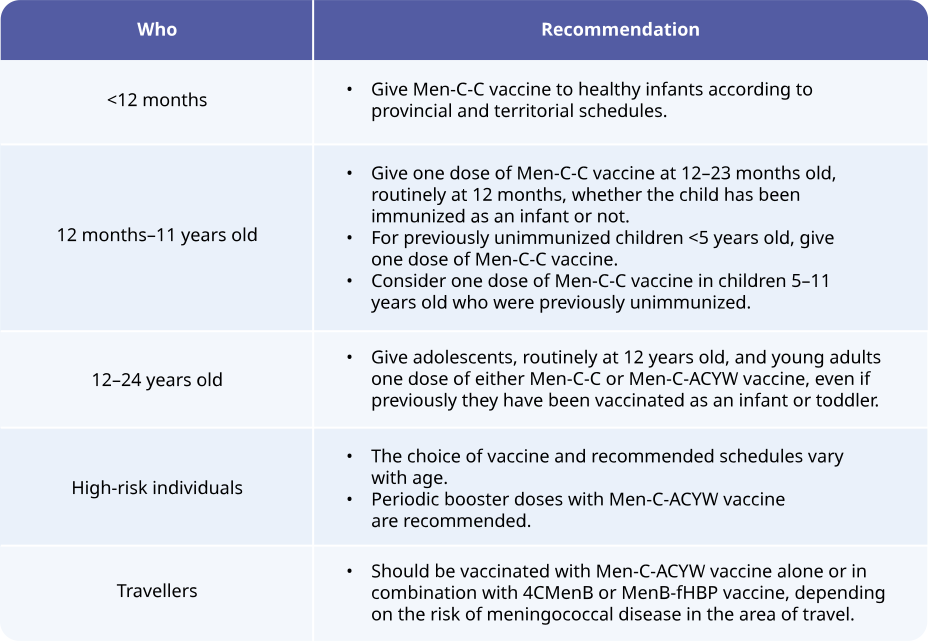
4CMenB=multicomponent meningococcal serogroup B; MenB-fHBP=bivalent, factor-H binding protein serogroup B meningococcal; Men-C-ACYW=quadrivalent conjugate meningococcal; Men-C-C=monovalent conjugate C meningococcal.
- Government of Canada. Invasive meningococcal disease. July 3, 2024. https://www.canada.ca/en/public-health/services/immunization/vaccine-preventable-diseases/invasive-meningococcal-disease/health-professionals.html
- National Advisory Committee on Immunization. Meningococcal vaccine: Canadian immunization guide. March 31, 2025. https://www.canada.ca/en/public-health/services/publications/healthy-living/canadian-immunization-guide-part-4-active-vaccines/page-13-meningococcal-vaccine.html
- Pham-Huy A, Zafack J, Deeks S, et al. A National Advisory Committee on Immunization (NACI) update on invasive meningococcal disease (IMD) epidemiology and program-relevant considerations for preventing IMD in individuals at high risk of exposure. Can Commun Dis Rep. 2023;49(9):358–367.
Sanofi, 1755 Steeles Avenue West, Toronto, Ontario M2R 3T4
© 2025 Sanofi Pasteur Limited. All rights reserved.
MAT-CA-2201026-v1.0-07/2025

View-SoloSTAR®-video-(EN)
View-DoubleSTAR®-video-(EN)
.jpg/jcr:content/image%20(1).jpg)
View-SoloSTAR®-video-(FR)
.jpg/jcr:content/image%20(2).jpg)
View-DoubleSTAR®-video-(FR)
.jpg/jcr:content/image%20(3).jpg)