
FLUNITY-HD: Immunocompromized
To assess the relative effectiveness of high-dose(HD) versus standard-dose (SD)* influenza vaccine in older adults according to immunosuppression status.
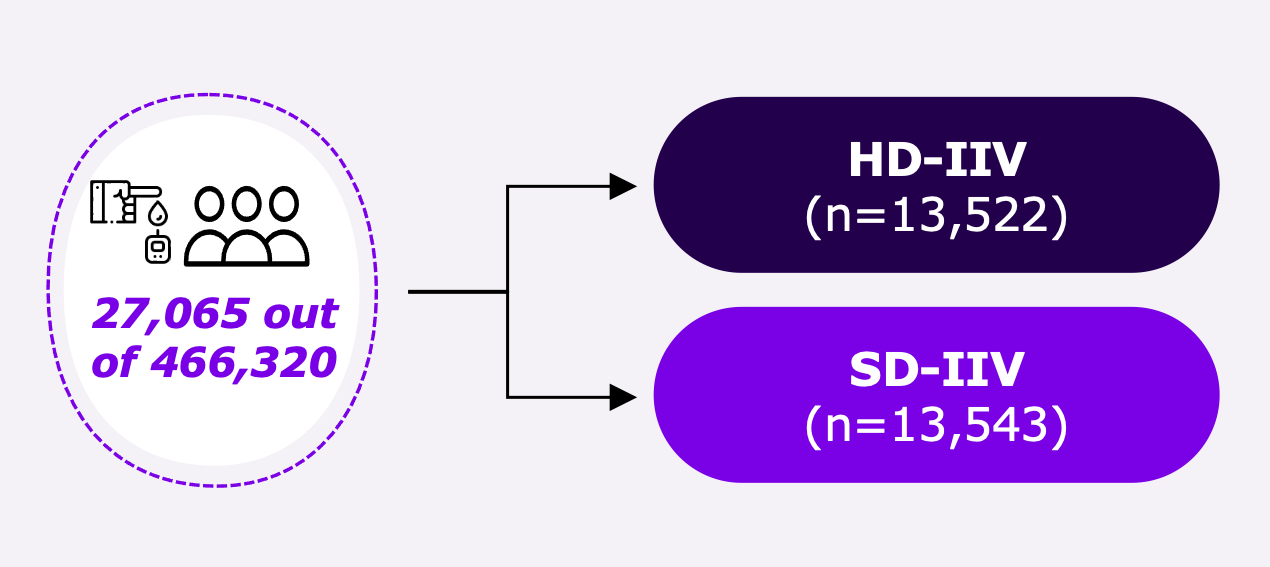
A total of 13,033 participants with HF at baseline were identified from the FLUNITY-HD study population3
WITH IMMUNOSUPPRESSION
Similar age and sex distribution More comorbidities
Cancer: 32.4% vs 11.0%
Chronic kidney disease: 14.5% vs 10.1%
Chronic lung disease: 12.6% vs 6.5%
Composition of Immunosuppression
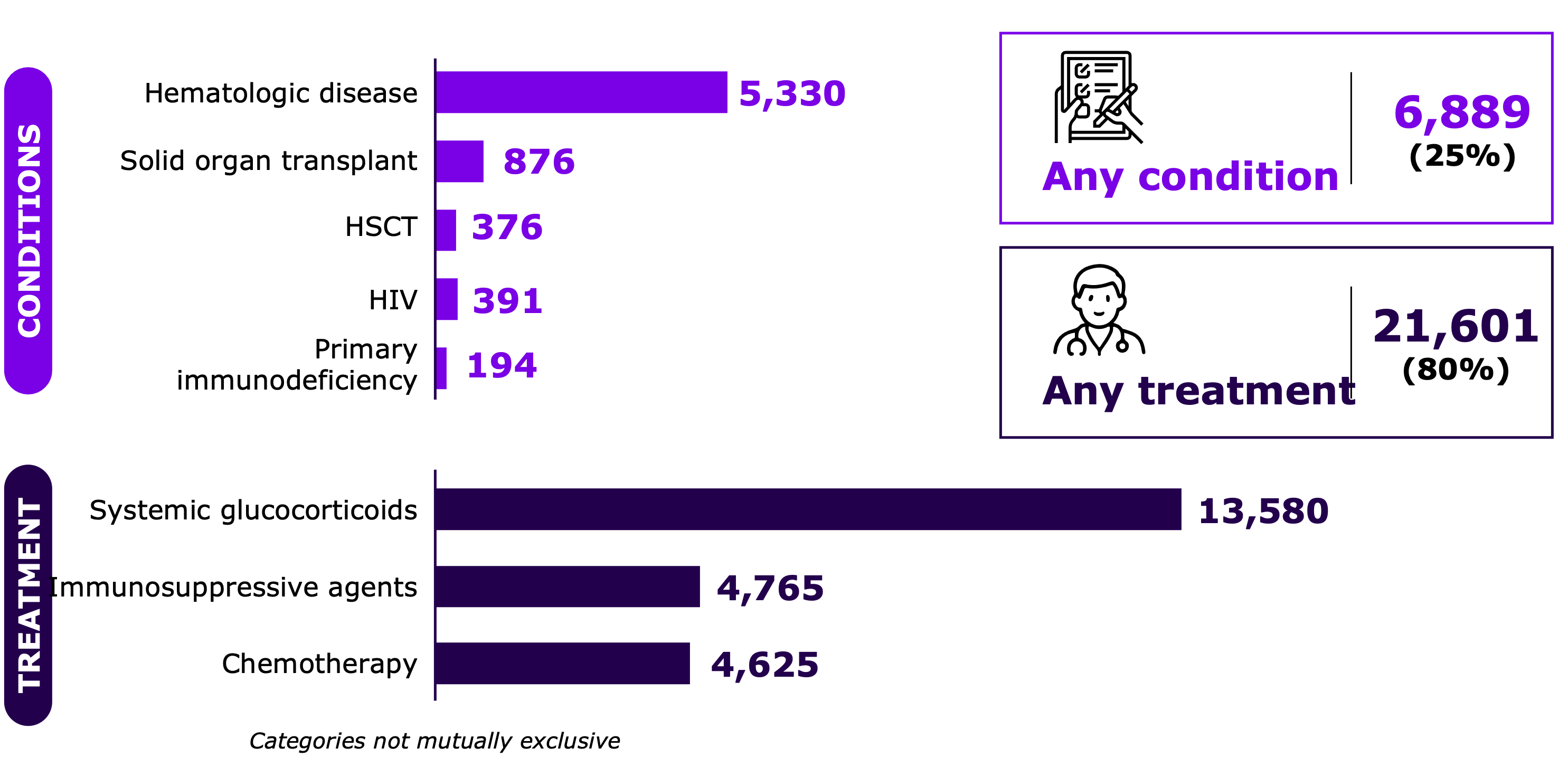
Definition of immunosuppression:
Immunosuppressive conditions: Hematologic disease, solid organ transplant, HSCT, primary immunodeficiency, HIV and/or
Immunosuppressive treatment: chemotherapy§, immunosuppressive agents, systemic glucocorticoids**.
Not mutually exclusive, based on registry data (ICD-10 codes, procedure codes§, ATC codes**)
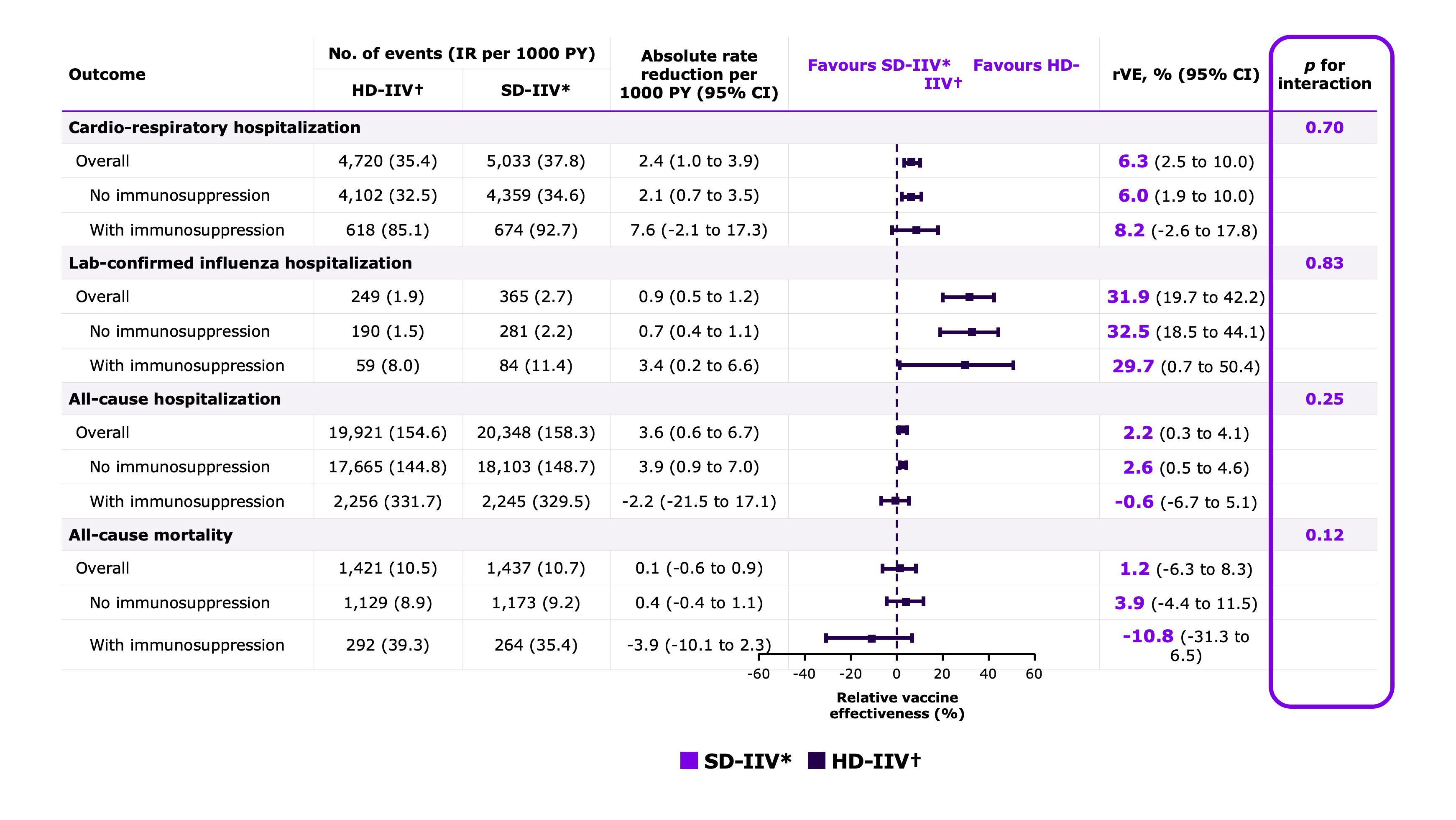
Primary Endpoint
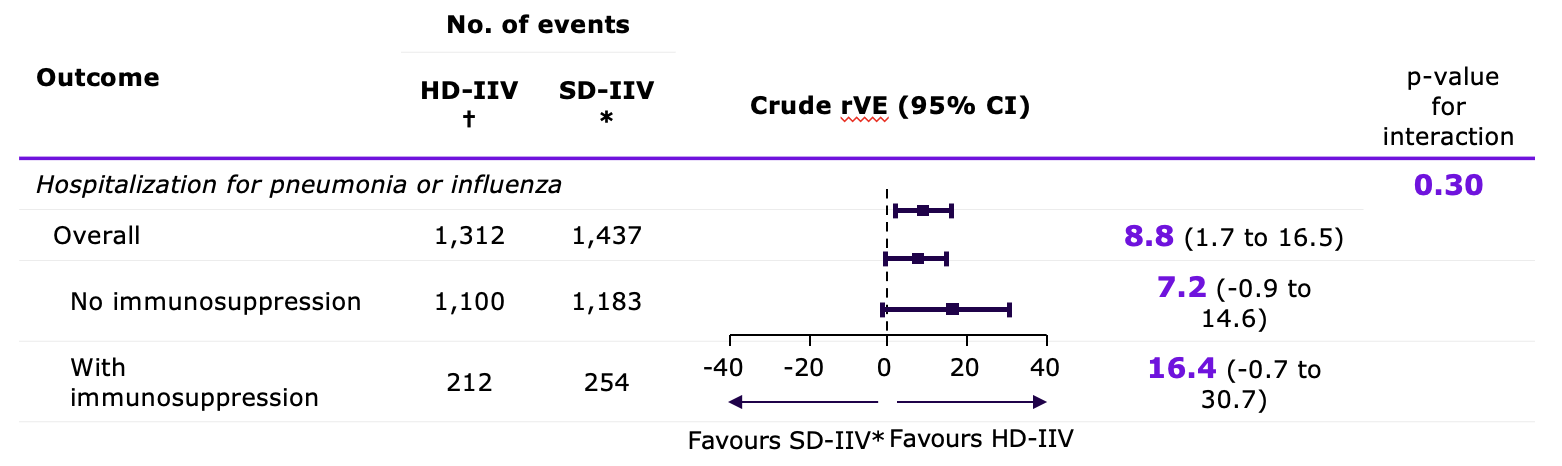
Absolute rate reduction
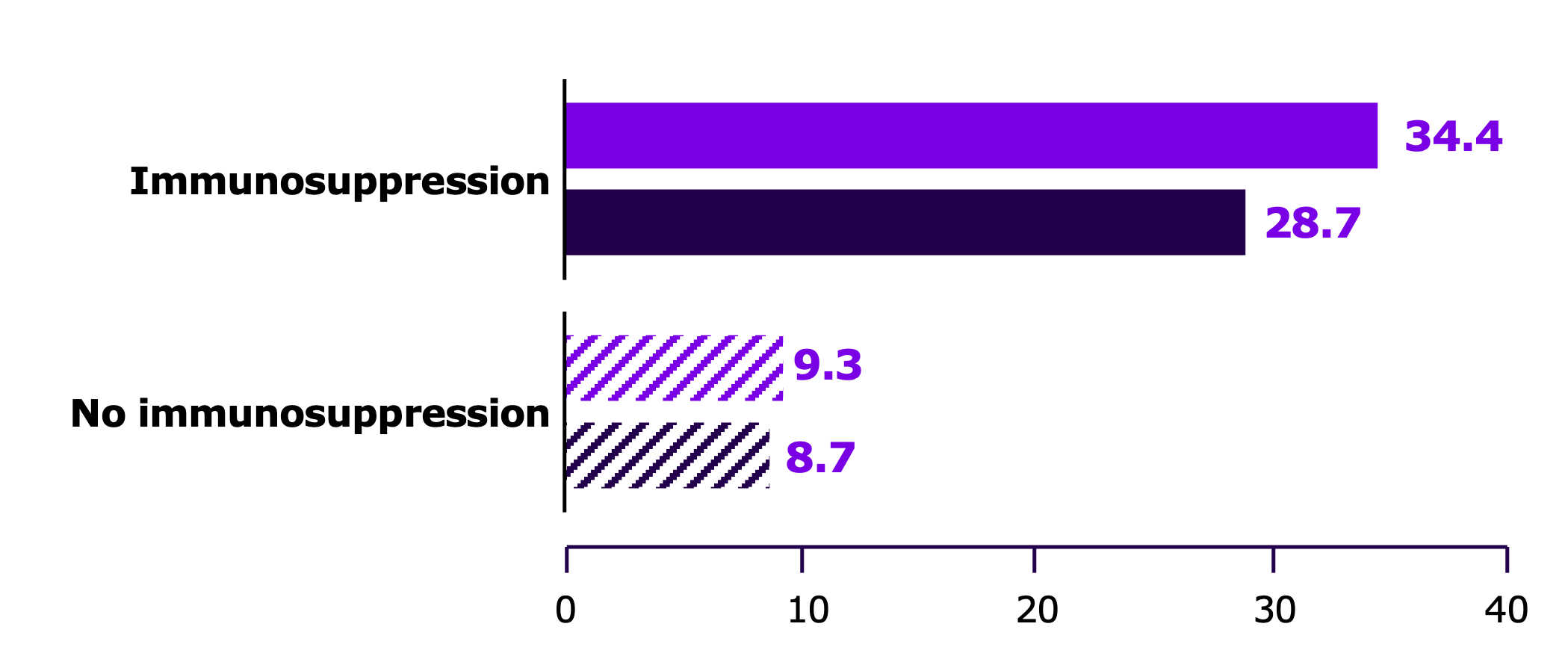
ARR (95% CI)
per 1000 PY
Immunosuppression
5.7 (‑0.1 to 11.4)
No immunosuppression
0.7 (‑0.1 to 1.4)
Secondary endpoints
Conclusion

|
Immunosuppressed older adults have increased risk of severe influenza-related complications and decreased vaccine response1-5 |

|
High-dose influenza vaccine has demonstrated greater protection than standard-dose vaccine (SD-IIV) in multiple studies6,7 |

|
This analysis addresses the knowledge gap of limited evidence in immunosuppressed populations |

|
|
Do you want to know more about the results? Click LINK to access the oral presentation .
- Kunisaki KM et al. Lancet Infect Dis 2009
- Greffe S et al. Influenza Other Respir Viruses 2023
- Collins JP et al. Clin Infect Dis 2020.
- Kimball J et al. J Infect Dis 2021 2023;14:100327.
- Hall VG et al. N Engl J Med 2025
- DiazGranados CA et al. N Engl J Med 2014.
- Skaarup KG et al. J Infect 2024.
- Johansen ND et al. N Engl J Med 2025.
- Pardo-Seco J et al. N Engl J Med 2025.
- Johansen ND et al. Lancet 2025

High-Dose inactivated influenza vaccine (HD-IIV) Recommendations
Health authorities and leading medical societies—from the Gulf region to beyond—now preferentially recommend high-dose influenza vaccination for older adults, driven by robust clinical evidence demonstrating superior protection against influenza-related complications
FLUNITY-HD
The FLUNITY-HD Study is the largest individually randomized influenza vaccine effectiveness study and the first of its kind for an influenza vaccine.
The study demonstrates the superior benefit of HD-IIV, specifically developed for older adults, compared with SD-IIV against a wide range of hospitalization outcomes in a prespecified and powered analysis encompassing nearly half a million participants. Providing the high-quality data, this study provides further critical evidence that widespread use of HD-IIV could substantially reduce the burden of influenza on both older adults and healthcare systems globally.

FLUNITY-HD: Chronic kidney disease
To assess the relative vaccine effectiveness (rVE) of HD-IIV vs. SD-IIV against FLUNITY-HD's prespecified primary, secondary, and relevant exploratory endpoints according to presence or absence of chronic Kidney disease (CKD) at baseline.