
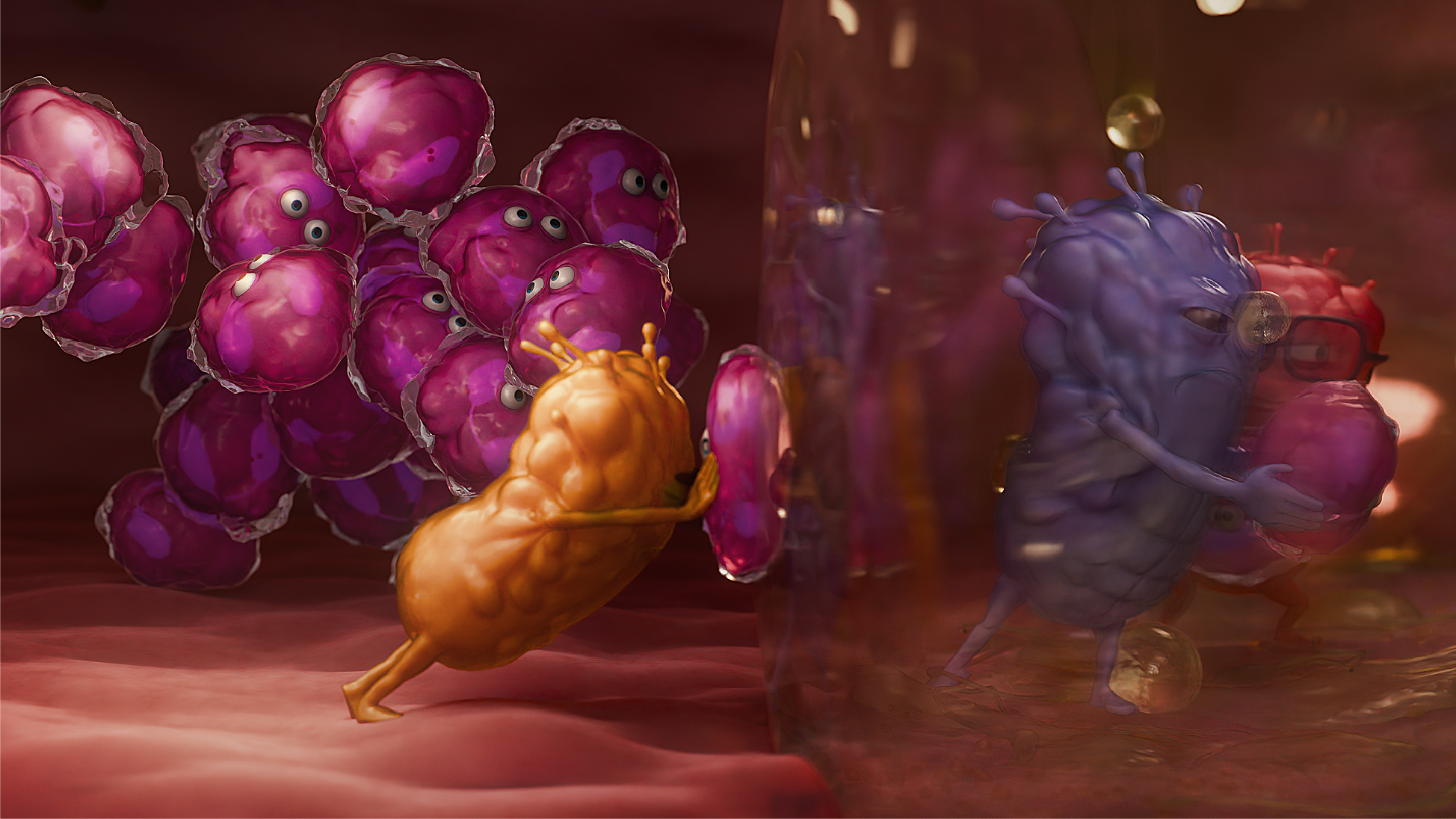
IL-4 and IL-13 traffic EOS directly to airway tissues, leading to asthma symptoms and increasing the risk of exacerbations and lung function decline.
{
event: "article_read",
name: `IL-4, IL-13, AND IL-5 ARE DRIVERS OF SYSTEMIC TYPE 2 INFLAMMATION`,
author: ``,
tags: `Asthma`,
publication_date: ``,
interaction_type: "content"
}
IL-4 / IL-13

IL-5

IL-4, IL-13, AND IL-5 ARE DRIVERS OF SYSTEMIC TYPE 2 INFLAMMATION
Eosinophilic inflammation has multiple drivers1,2
IL-5 promotes the trafficking, differentiation, release, and survival of EOS.
Th2 cell differentiation1,2
Asthma triggers can activate the alarmin pathway while concurrently activating dendritic cells directly, which differentiate Th0 cells into Th2 cells and, along with ILC2 cells, produce IL-4, IL-13, and IL-5.
Just one of these biomarkers can indicate type 2 inflammation: EOS, FeNO, or IgE.1,2
Precisely target the underlying inflammation to impact the burden of uncontrolled type 2 asthma.
Related articles
MAT-BH-