
Lung Function in COPD
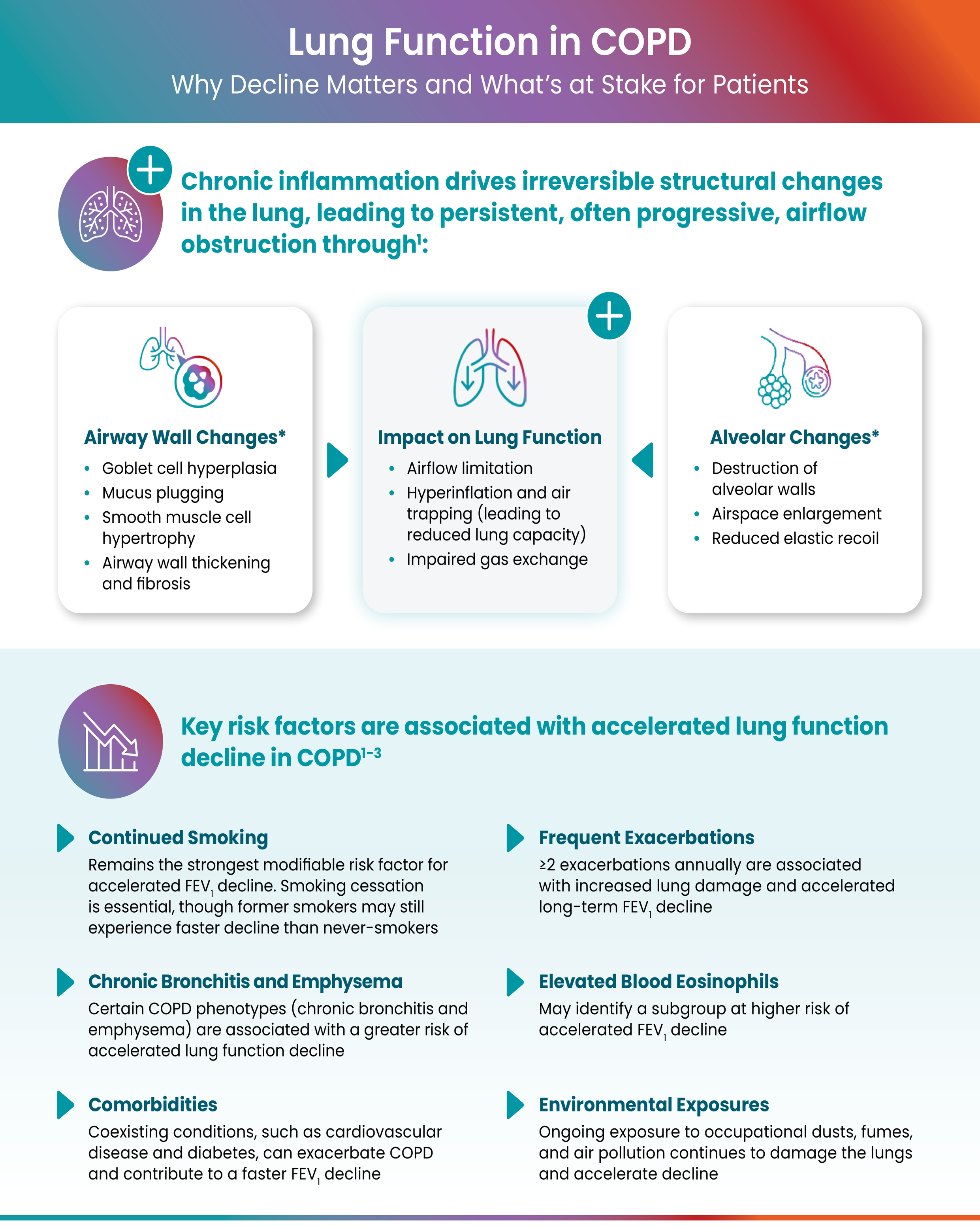
*In COPD, the extent of airway wall and alveolar changes varies among individuals. These changes do not always coexist and may progress at different rates over time.
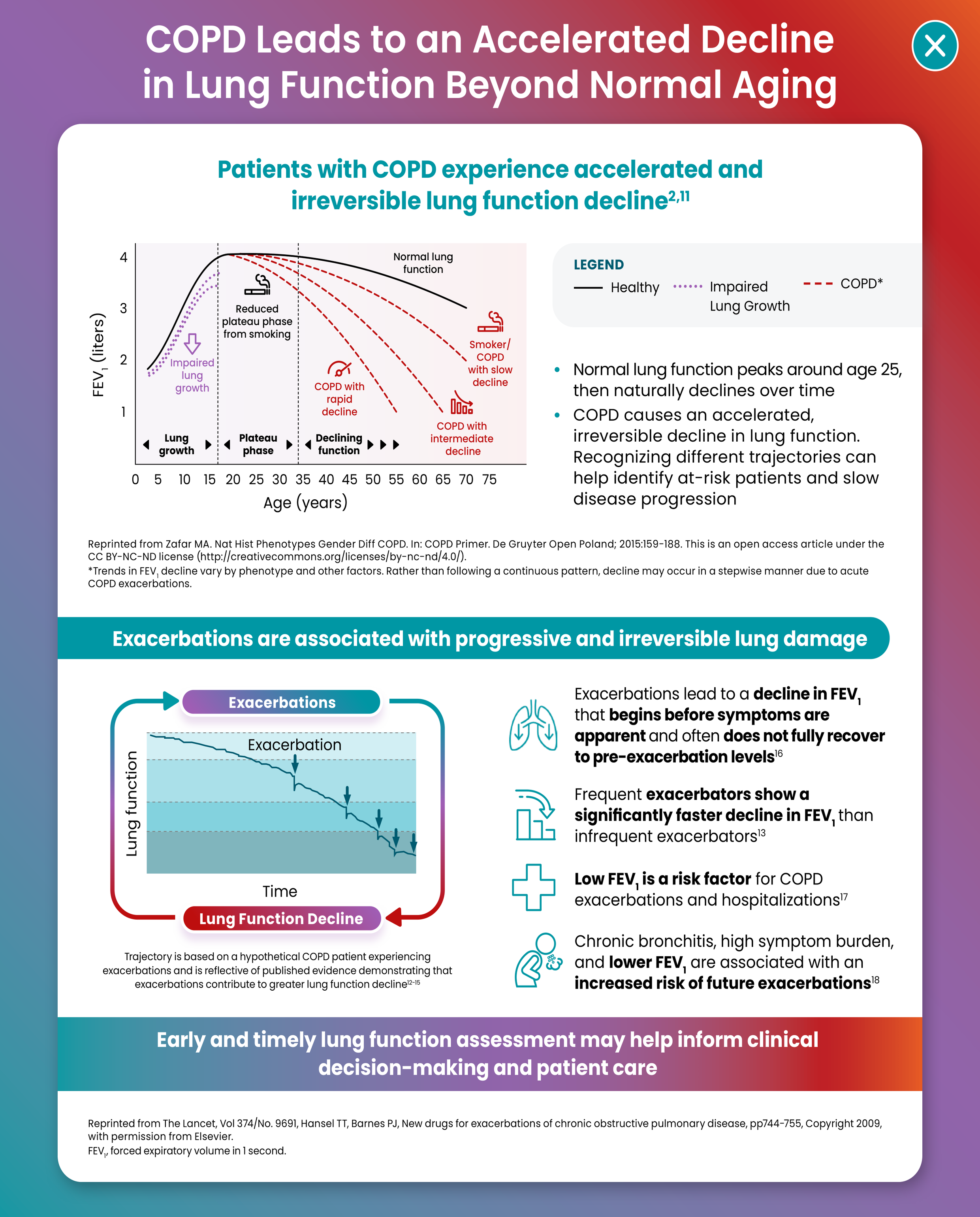
FEV1 , forced expiratory volume in 1 second.
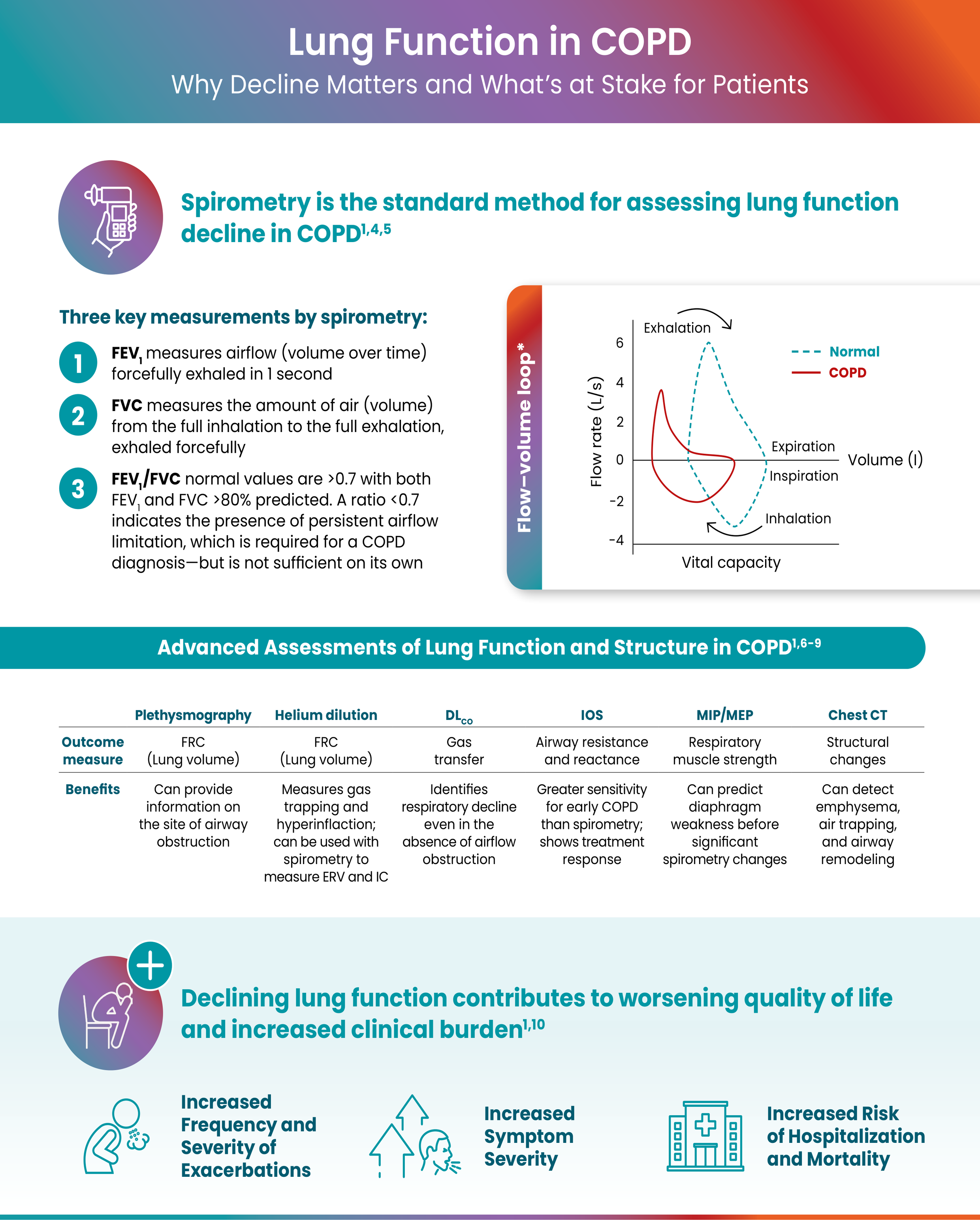
*COPD curve is typical but not universal.
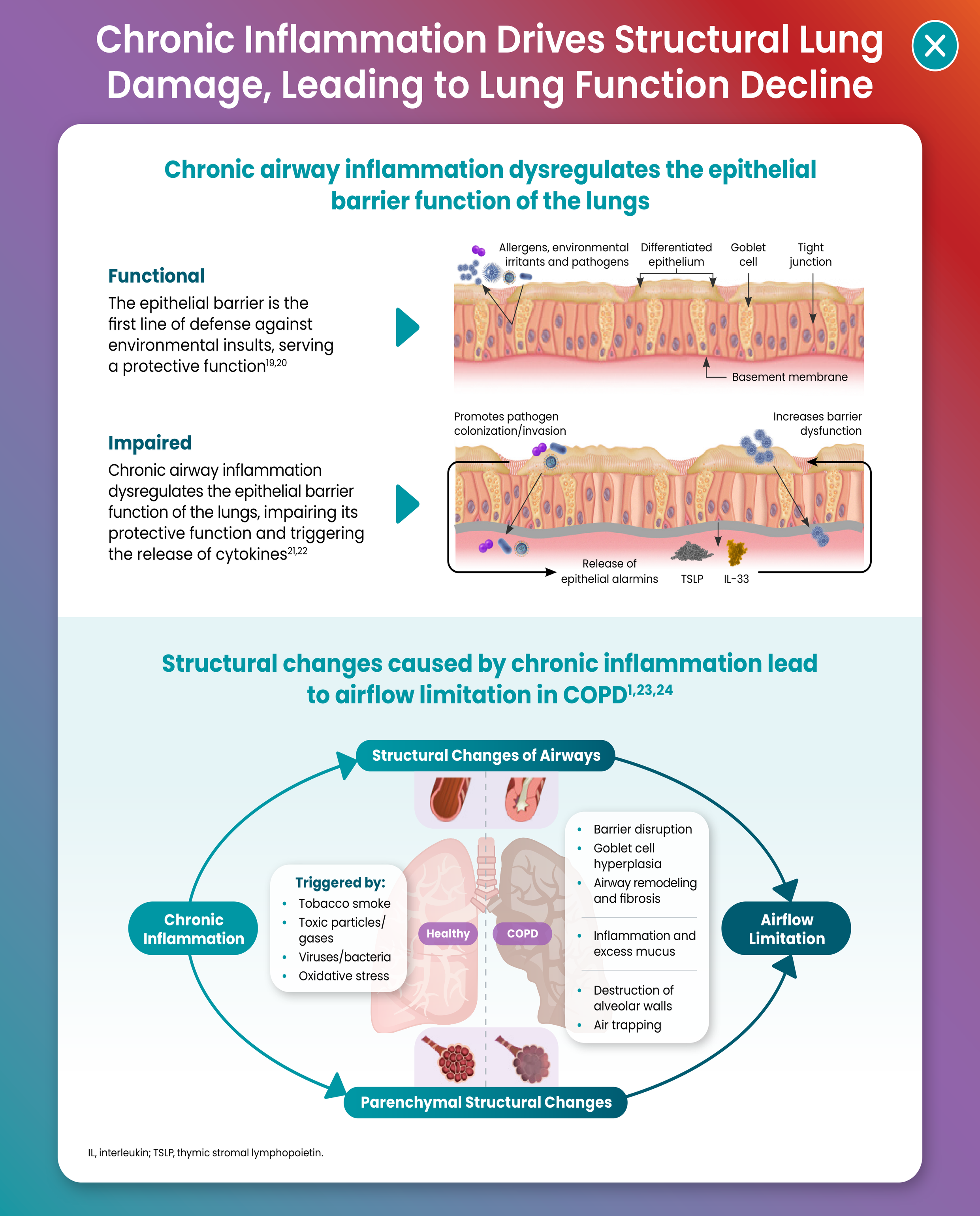
CT, computed tomography; DLCO, diffusing capacity of the lung for carbon monoxide; ERV, expiratory reserve volume; FEV1 , forced expiratory volume in 1 second; FRC, functional residual capacity; FVC, forced vital capacity; IC, inspiratory capacity; IOS, impulse oscillometry; MIP/MEP, maximal inspiratory pressure/maximal expiratory pressure.
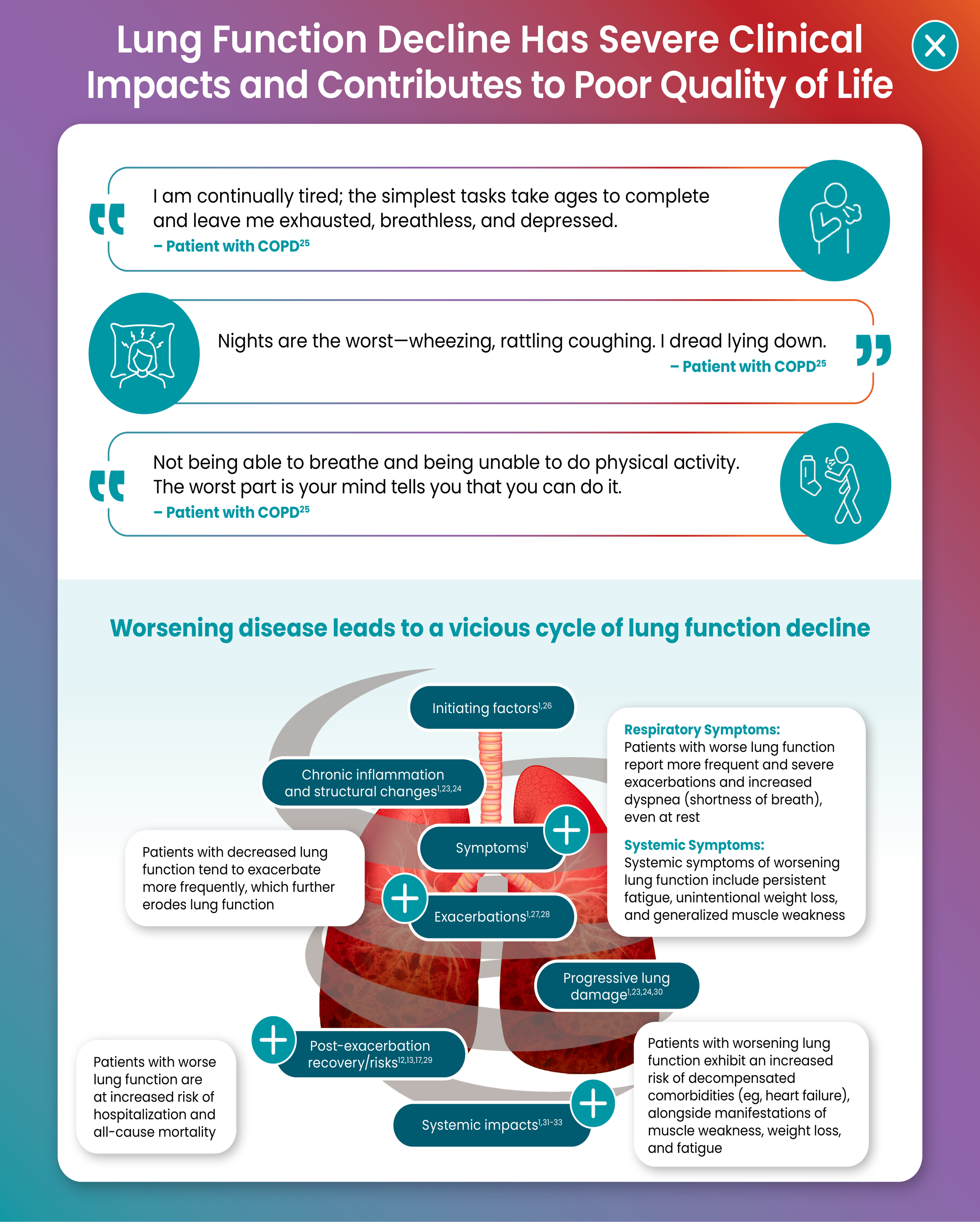
- Global Initiative for Chronic Obstructive Lung Disease (GOLD). Global strategy for the diagnosis, management, and prevention of chronic obstructive pulmonary disease. Updated 2025.
Accessed March 2025. https://goldcopd.org/wp-content/uploads/2024/11/GOLD-2025-Reportv1.0-15Nov2024_WMV.pdf - Zafar MA. Nat Hist Phenotypes Gender Diff COPD. In: COPD Primer. De Gruyter Open Poland; 2015:159-188.
doi:10.1515/9783110468007-010. - Burke H, Wilkinson TMA. Eur Respir Rev. 2021;30(160):210041.
- Johns DP, et al. J Thorac Dis. 2014;6(11):1557-1569.
- Mottram C: Ruppel’s manual of pulmonary function testing, ed 10, St. Louis, 2013, Mosby.
- Criée CP, et al. Respir Med. 2011;105(7):959-971.
- Wanger J, et al. Eur Respir J. 2005;26(3):511-522.
- Saadeh C, et al. SAGE Open Med. 2015;3:2050312115578957.
- Schoser B, et al. Orphanet J Rare Dis. 2017;12(1):52.
- Rehman AU, et al. Sci Rep. 2021;11(1):13578.
- Sin DD. Tuberc Respir Dis (Seoul). 2023;86(2):71-81.
- Hansel TT, Barnes PJ. Lancet. 2009;374(9691):744-755.
- Donaldson GC, et al. Thorax. 2002;57(10):847-852.
- Wedzicha JA, Seemungal TAR. Lancet. 2007;370(9589):786-796.
- Dransfield MT, et al. Am J Respir Crit Care Med. 2017;195(3):324-330.
- Watz H, et al. Respir Res. 2018;19(1):251.
- Garcia-Aymerich J, et al. Thorax. 2011;66(7):585-590.
- Ferrera MC, et al. Ann Am Thorac Soc. 2024;21(3):421-427.
- Schleimer RP, Berdnikovs S. J Allergy Clin Immunol. 2017;139(6):1752-1761.
- Yang Y, et al. Clin Respir J. 2021;15(10):1027-1045.
- Lloyd CM, Snelgrove RJ. Sci Immunol. 2018;3(25):eaat1604.
- Gandhi NA, et al. Nat Rev Drug Discov. 2016;15(1):35-50.
- Barnes PJ. J Allergy Clin Immunol. 2016;138(1):16-27.
- Linden D, et al. Eur Respir Rev. 2019;28(151):180063.
- Cook N, et al. Int J Chron Obstruct Pulmon Dis. 2019;14:1365-1376.
- Stolz D, et al. Lancet. 2022;400(10356):921-972.
- Hogea SP, et al. Clin Resp J. 2020;14(3):183-197.
- Jamieson DB, et al. Am J Respir Crit Care Med. 2013;188(2):187-192.
- Wageck B, et al. COPD. 2019;16(1):93-103.
- Higham A, et al. Respir Res. 2019;20(1):49.
- Barnes PJ, Celli BR. Eur Respir J. 2009;33(5):1165-1185.
- Dal Negro RW, et al. Multidiscip Respir Med. 2015;10(1):24.
- Gaddam S, et al. BMC Pulm Med. 2016;16(1):158.

Dupilumab Efficacy Across Baseline Eosinophil Counts in COPD
Dupilumab Efficacy in COPD Patients with Type 2 Inflammation: Post Hoc Analysis Stratified by Baseline
Blood Eosinophil Counts (≥150 vs ≥300 cells/μL) from Pooled BOREAS and NOTUS Data