Dupilumab for Patients with AFRS
Dupilumab for Patients With
|
AFRS is a form of chronic rhinosinusitis characterized by type 2 inflammation
and fungal hypersensitivity
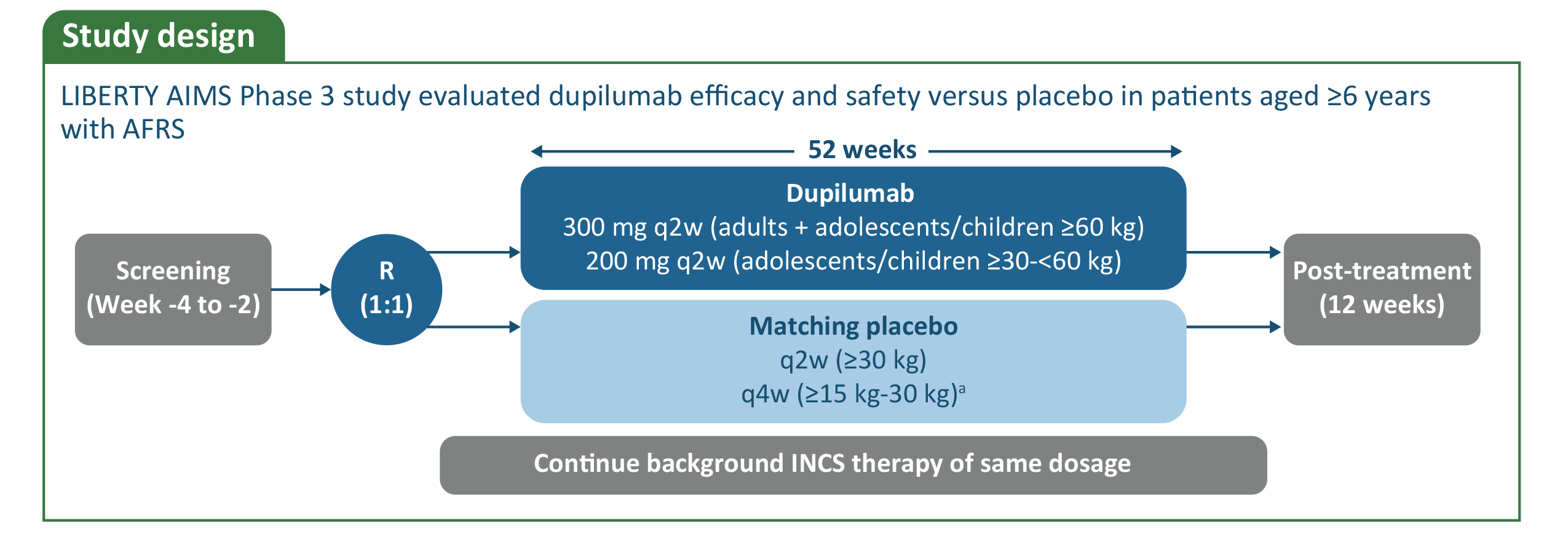
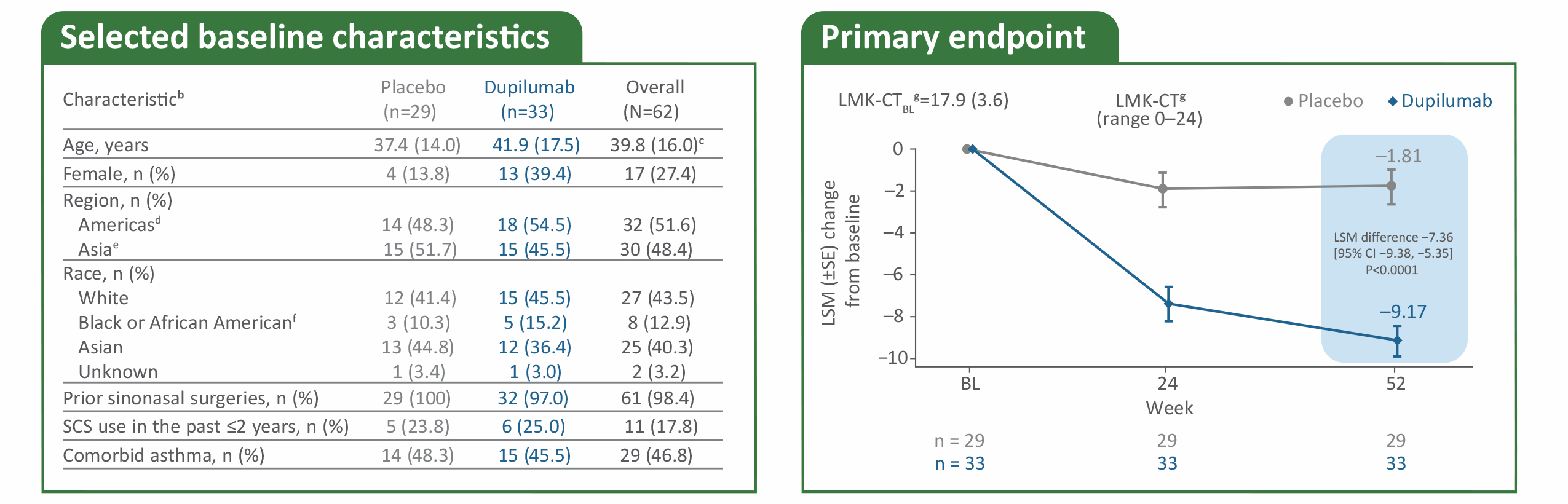
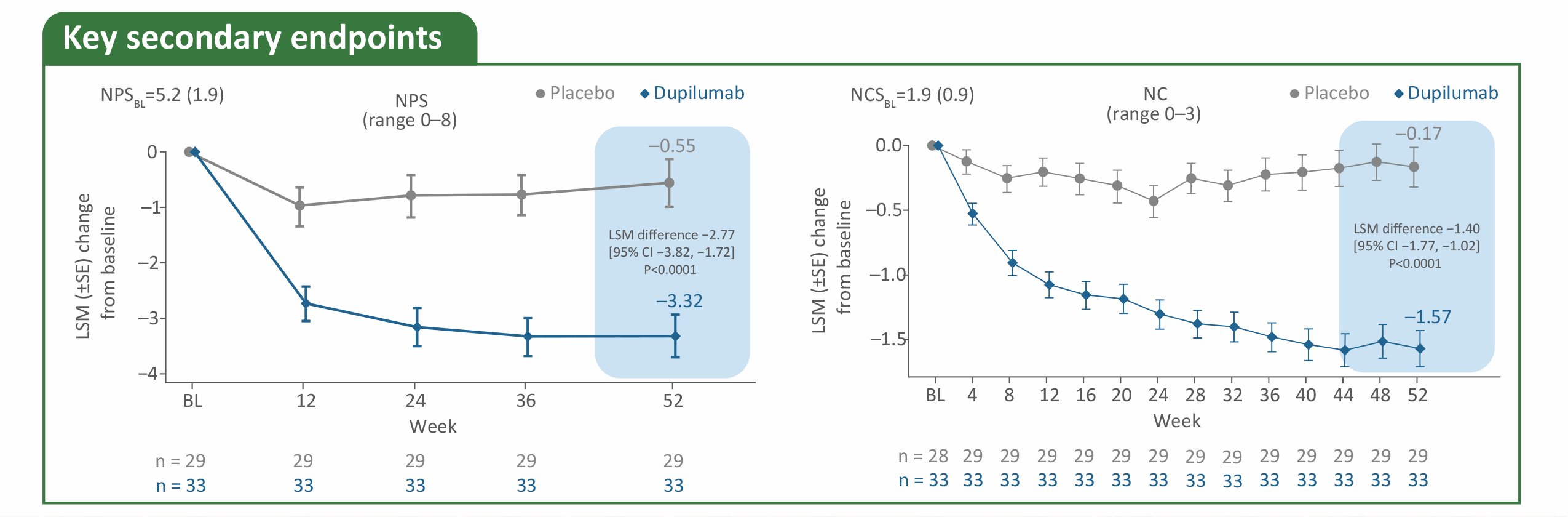
aNo participant received a q4w dosage as there were no patients in this weight category. bValues are mean (SD) unless otherwise indicated. cAmong adult patients only, mean (SD) ages is 42.6 (14.2), n=56. dAmericas: Argentina, Canada, and USA. eAsia: China, India, Japan, Saudi Arabia, and Turkey. f8/15 (53.3%) patients in North America were Black or African American. gLund–Mackay (LMK)-CT score of at least 9 (unilateral) or 12 (bilateral) out of 24 (score range score range 0−24; higher score indicates greater sinus opacification).
BL, baseline; CI, confidence interval; INCS, intranasal corticosteroids; LMK-CT, Lund-Mackay computed tomography score; LSM, least squares mean; NCS, nasal congestion score; NPS, nasal polyp score; q2w, every 2 weeks; q4w, every 4 weeks; R, randomization; SCS, systemic corticosteroids; SE, standard error.
Luong AU, et al. Presented at the American College of Allergy, Asthma, and Immunology (ACAAI) 2025 annual meeting: Orlando, FL, USA; November 6–10, 2025.
|
Safety: Treatment-emergent adverse events (TEAEs) |
|
TEAEs |
Placebo (n=28)b |
Dupilumab (n=33) |
|
Patients with any TEAE |
22 (78.6) |
23 (69.7) |
|
Patients with any treatment-emergent SAE |
2 (7.1) |
0 |
|
Patients with with any TEAE leading to permanent IMP discontinuationc |
1 (3.6) |
1 (3.0) |
|
Patients with any treatment-related TEAE |
3 (10.7) |
9 (27.3) |
|
Patients with any TEAE leading to death |
0 |
0 |
|
Overall incidence of TEAEs was similar between placebo and dupilumab |
||
|
Summary |
|
In the LIBERTY-AIMS Phase 3 study, dupilumab significantly improved
|
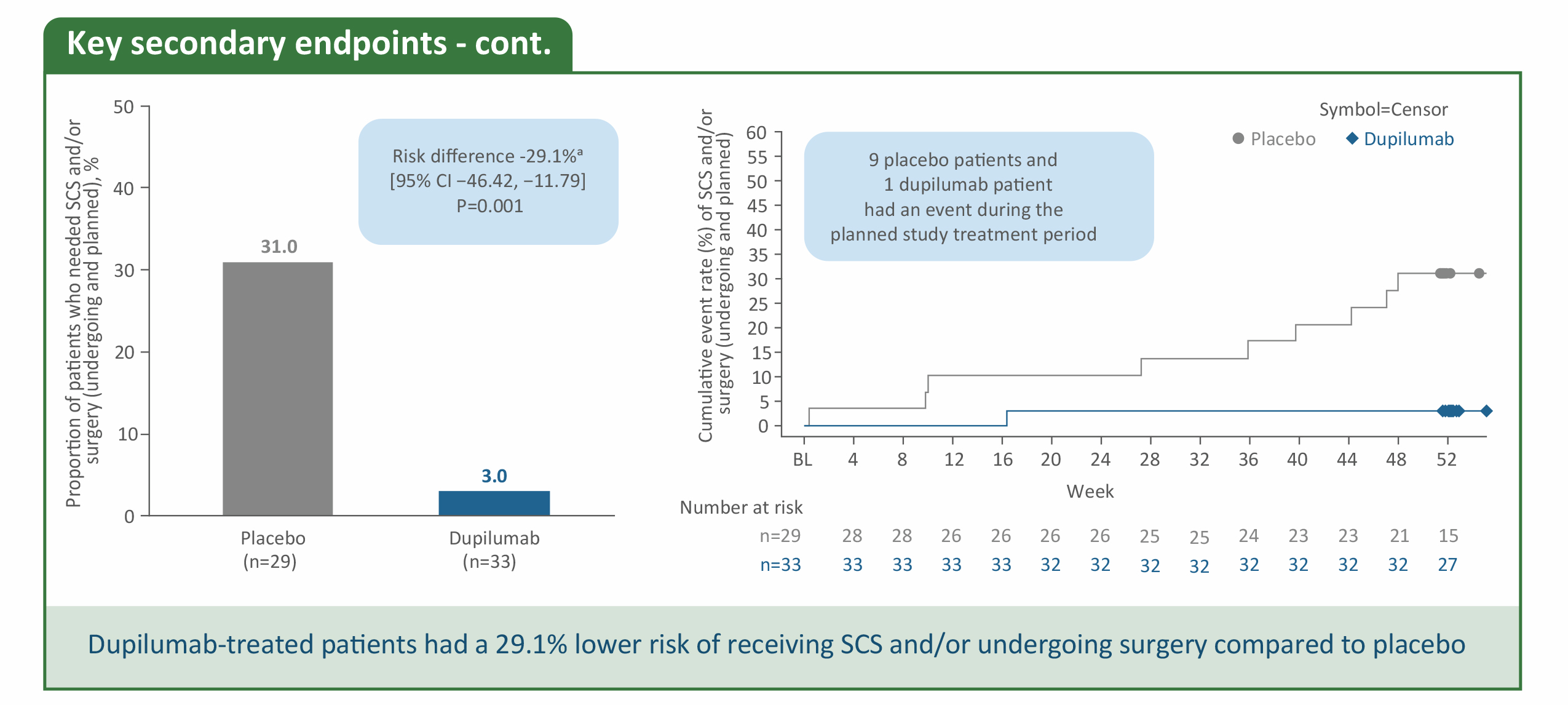
aDupilumab-treated patients had a 29.1% lower risk of receiving SCS and/or undergoing surgery compared to placebo. bOne participant in the placebo group (n = 29) randomized but not treated. cOne participant (3.6%) in the placebo group and 1 participant (3.0%) in the dupilumab group permanently discontinued study intervention due to Sjögren’s syndrome and allergic dermatitis, respectively.
CI, confidence interval; IMP, investigational medicinal product; SAE, serious adverse event; SCS, systemic corticosteroids.
Luong AU, et al. Presented at the American College of Allergy, Asthma, and Immunology (ACAAI) 2025 annual meeting: Orlando, FL, USA; November 6–10, 2025.