
.2023-11-29-13-19-58.svg)
.2023-12-01-09-12-11.svg)
.2023-10-25-16-46-38.2024-04-23-17-48-47.svg)
| Organ system | Adverse events and frequency |
| Blood and lymphatic system disorders | Rare: Thrombocytopeniab
Not known: Thrombocytopeniae |
| Immune system disorders | Rare: Hypersensitivity reactions including angioedemab
Not known: Hypersensitivity (including rash, urticaria, anaphylaxis and angioedema)e |
| Endocrine disorders | Common: Diabetes mellitusa,b |
| Metabolism and nutrition disorders | Uncommon: Decreased appetitec |
| Psychiatric disorders | Not known: Depressionb,e |
| Nervous system disorders | Common: Headacheb,d, dizzinessb
Uncommon: Paraesthesiad Very rare: Polyneuropathyb, memory lossb Not known: Peripheral neuropathyb, sleep disturbances (including insomnia and nightmares)b, dizzinesse; paraesthesiae, myasthenia gravisb |
| Eye disorders | Not known: Ocular myastheniab |
| Vascular disorders | Uncommon: Hot flushc, hypertensionc |
| Respiratory, thoracic and mediastinal disorders | Uncommon: Coughc
Not known: Dyspnoeab,e, coughb |
| Gastrointestinal disorders | Common: Constipationb, nauseab, abdominal painb,c, diarrhoeac, flatulencec
Uncommon: Dyspepsiac; gastro-oesophageal reflux diseasec; nauseac, dry mouthd; gastritisd Rare: Pancreatitisb Not known: Diarrhoeab, pancreatitise; constipatione |
| Hepatobiliary disorders | Rare: Increased hepatic transaminasesb
Very rare: Jaundiceb, hepatitisb Not known: Hepatitise, cholelithiasise, cholecystitise |
| Skin and subcutaneous tissue disorders | Uncommon: Pruritusb,d, rashb,d, urticariab,d
Not known: Stevens Johnson syndromeb, erythema multiformee, drug reaction with eosinophilia and systemic symptoms (DRESS)b |
| Musculoskeletal and connective tissue disorders | Common: Myalgiab,d
Uncommon: Arthralgiac, muscle spasmsc; neck painc, back paind; muscular weaknessd; pain in extremityd Rare: Myopathy (including myositis)b, rhabdomyolysisb, lupus-like syndrome, muscle rupture Very rare: arthralgiab Not known: Immune-mediated necrotising myopathyb, tendon disorders, sometimes complicated by ruptureb, myalgiae; myopathy/rhabdomyolysise |
| Renal and urinary disorders | Very rare: Haematuriab |
| Reproductive system and breast
disorders |
Very rare: Gynaecomastiab |
| Investigations | Common: ALT and/or AST increasedd
Uncommon: ALT and/or AST increasedc; blood CPK increased; gamma-glutamyltransferase increasedc; liver function test abnormalc |
| General disorders and administration site conditions | Common: Astheniab, fatiguec
Uncommon: Chest painc; painc; astheniad; oedema peripherald Not known: oedemab; astheniae |
Please refer to the full SmPC for the complete list.1
Adverse reactions have been ranked under headings of frequency using the following convention: very common (≥1/10); common (≥1/100 to <1/10); uncommon (≥1/1,000 to <1/100); rare (≥1/10,000 to <1/1,000); very rare (<1/10,000), not known (cannot be estimated from the available data).a frequency will depend on the presence or absence of risk factors (fasting blood glucose ≥ 5.6 mmol/l, BMI >30 kg/m2, raised triglycerides, history of hypertension) for rosuvastatin.b Adverse reaction profile for rosuvastatin based on data from clinical studies and/or post-marketing experience and extensive post-marketing experience.c Ezetimibe in monotherapy. Adverse reactions were observed in patients treated with ezetimibe (n=2,396) and at a greater incidence than placebo (n=1,159).d Ezetimibe coadministered with a statin. Adverse reactions were observed in patients with ezetimibe co-administered with a statin (n=11,308) and at a greater incidence than statin administered alone (n=9,361).e Additional adverse reactions of ezetimibe, reported in postmarketing experience (with or without statin).
Profile
Suvezen is an HMG-coA reductase inhibitor in combination with other lipid-modifying agents, rosuvastatin and ezetimibe.
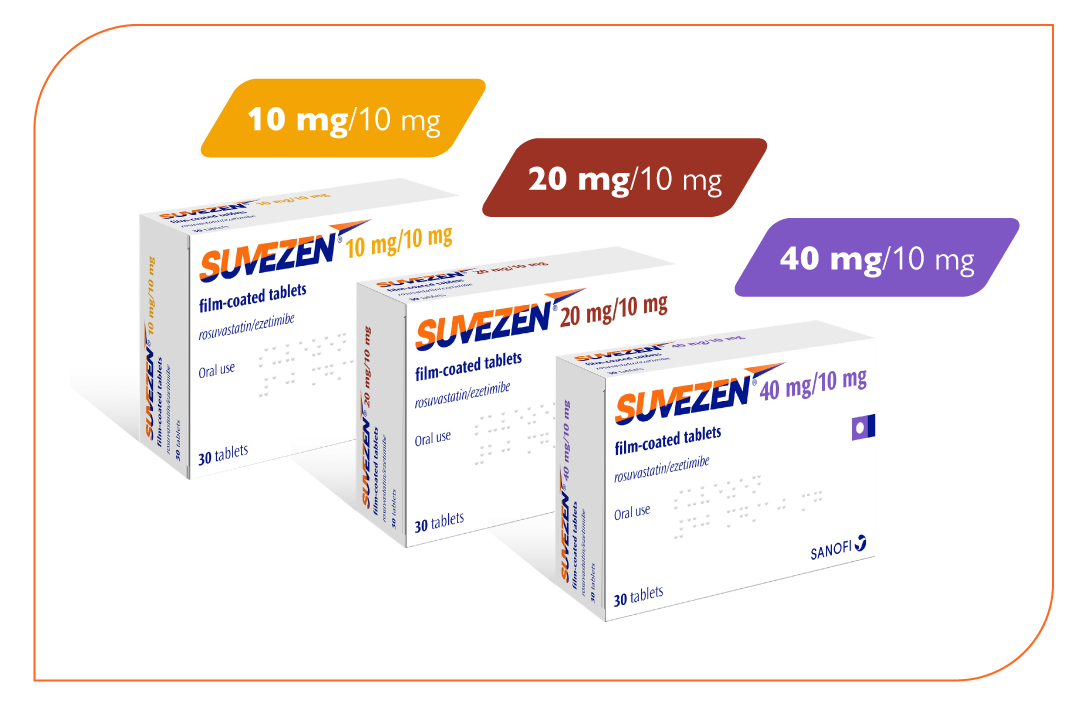
Presentations:
Suvezen 10mg/10mg, 20mg/10mg and 40mg/10mg:
Each film-coated tablet contains 10mg; 20mg or 40mg of rosuvastatin (as rosuvastatin calcium) respectively, and 10mg ezetimibe.
Please consult the SMPC for more information, this is available upon request.
Indication1
Primary Hypercholesterolaemia/Homozygous Familial Hypercholesterolaemia (HoFH)
Suvezen is indicated as adjunct to diet for treatment of primary hypercholesterolaemia (heterozygous familial and non-familial) or homozygous familial hypercholesterolaemia in adult patients
- who are not appropriately controlled with statin alone,
- who are adequately controlled with rosuvastatin and ezetimibe given concurrently at the same dose level as in the fixed combination, but as separate products.
Prevention of Cardiovascular Events
Suvezen is indicated as substitution therapy in adult patients who are adequately controlled with rosuvastatin and ezetimibe given concurrently, at the same dose level as in the fixed dose combination, but as separate products to reduce the risk of cardiovascular events in patients with coronary heart disease (CHD) and a history of acute coronary syndrome (ACS).
Watch a Product Summary

Flexibility of dose range to suit individual patient needs1
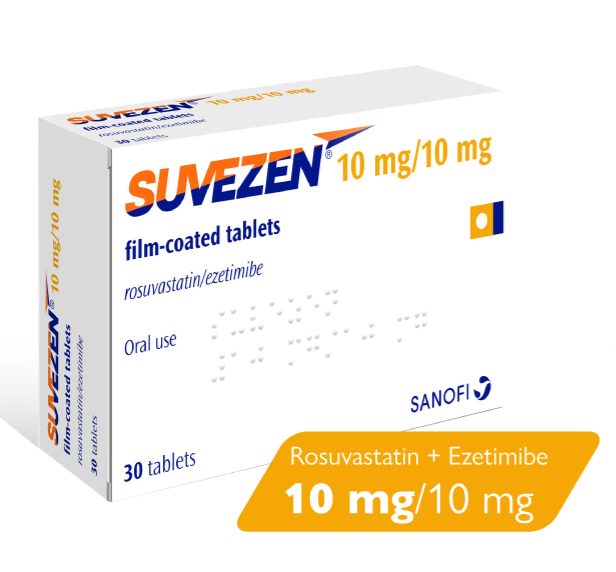
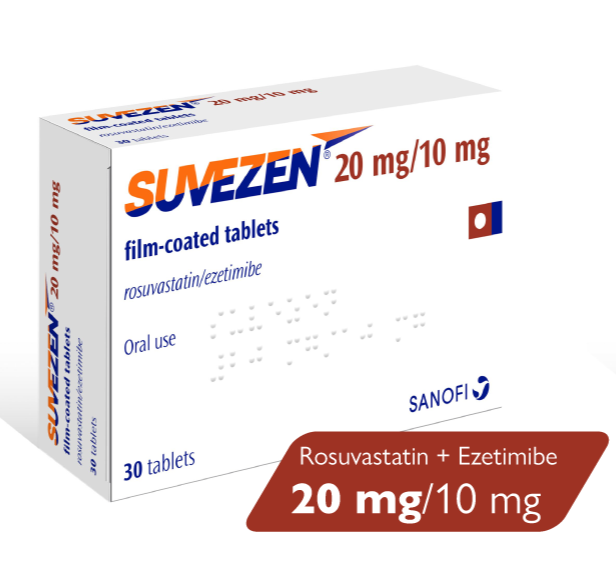
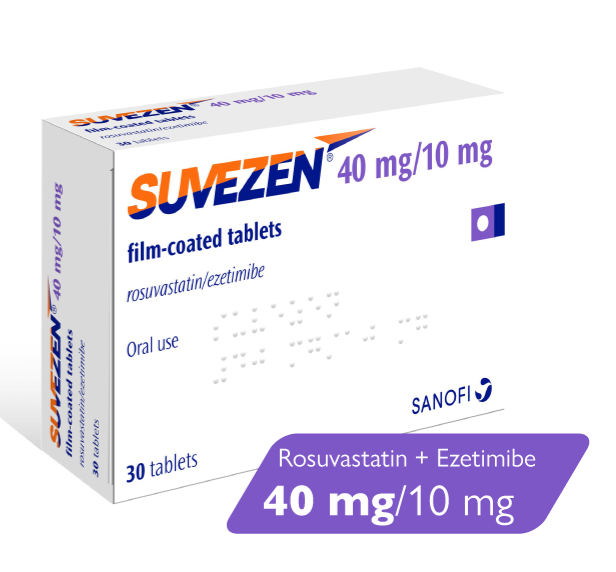
To be taken once per day; at the same time; with or without meals; as part of a low-fat dietary regimen.

- SuvezenTM Summary of Product Characteristics. Available from www.medicines.ie last accessed September 2026.
MAT-IE-2600139 (V1.0)
Date of Preparation: September 2026
Site Entry HCP Disclaimer

Welcome to Sanofi Campus Ireland
This site is intended for Healthcare Professionals in the Republic of Ireland and contains information on Sanofi Ireland medicine, educational resources and more. Please click the appropriate button below. By entering this site, you are confirming that you are a Healthcare Professional in the Republic of Ireland. This site contains promotional information.
MAT-IE-2300185 (v5.0)
Date of Preparation: December 2025