CRSwNP EVEREST
Efficacy and Safety of Dupilumab Versus Omalizumab in Patients
With Severe CRSwNP and Coexisting Asthma (EVEREST):
Results From a First, Prospective, Head-to-Head Phase 4 Trial
De Corso E, et al. EAACI. 2025. Oral presentation.
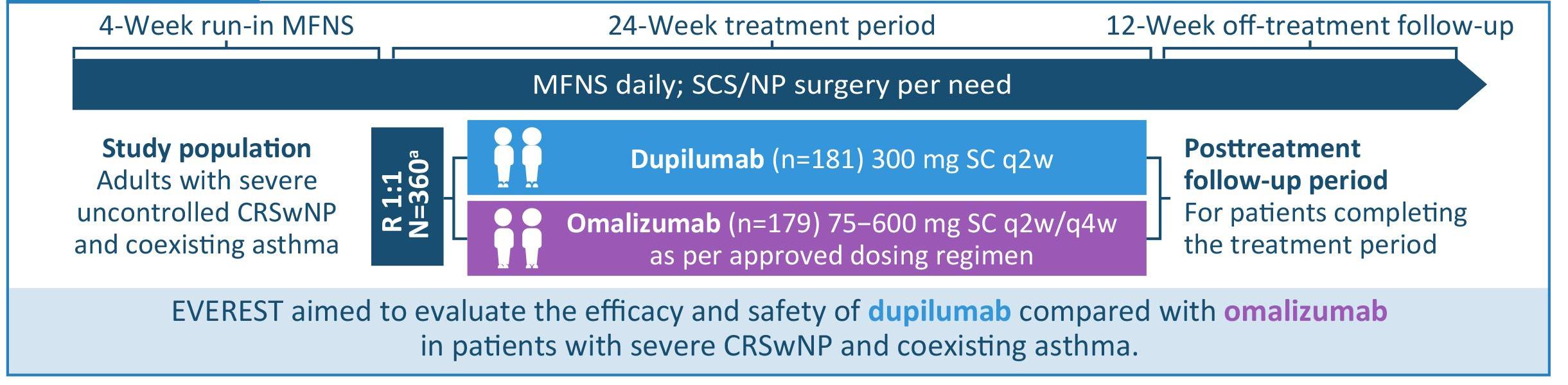
Study design |
Safety |
Safety profiles of dupilumab and omalizumab were comparable and consistent with known profiles (study-related TEAEs, 19.6% and 21.4%; serious TEAEs, 1.7% and 4.0%; discontinuations due to TEAEs, 2.8% and 1.2%, respectively; with no deaths occurring during the study). |
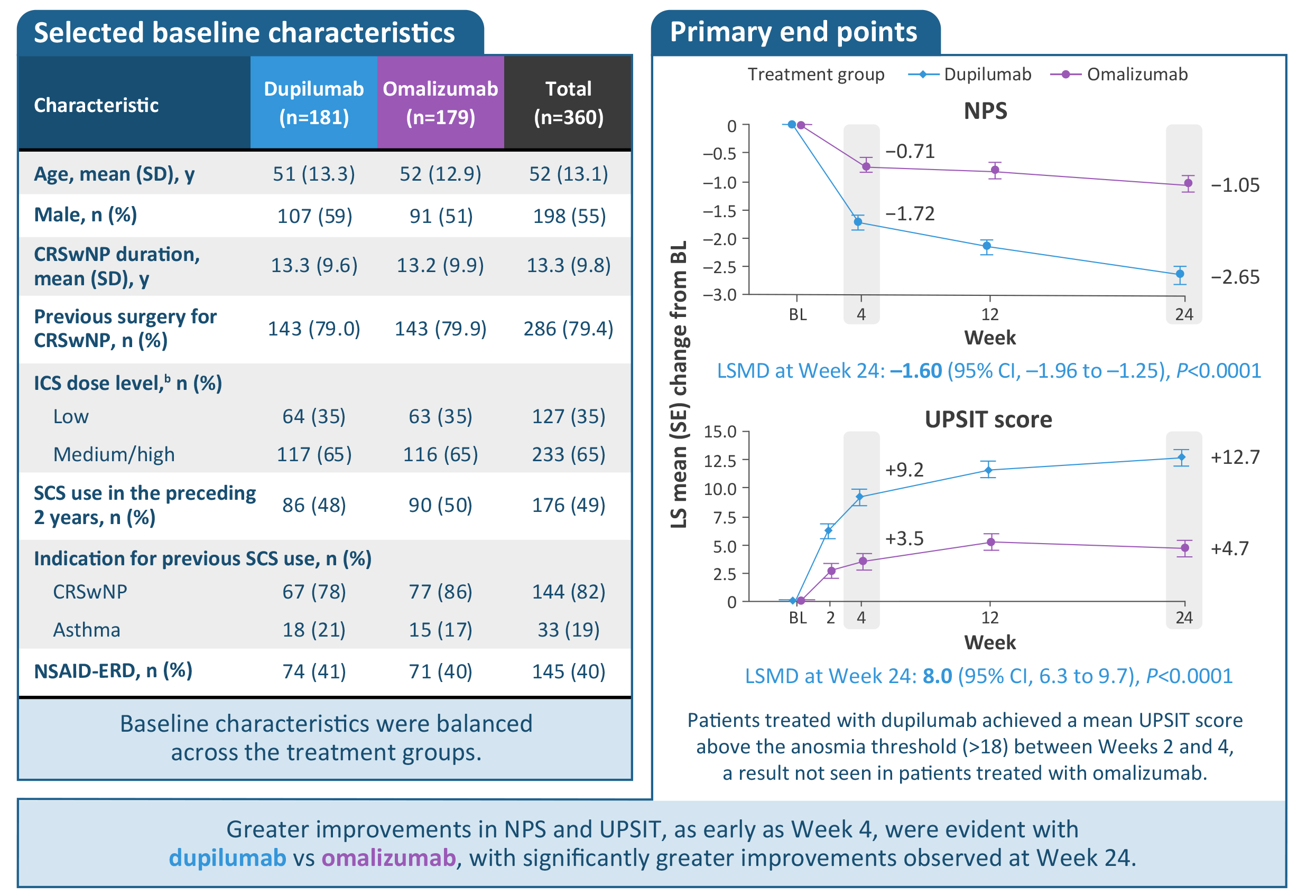
aPatients from 17 countries in North America and Europe participated in this study. bAccording to the GINA 2020 guidelines. BL, baseline; EAACI, European Academy of Allergy and Clinical Immunology; GINA, Global Initiative for Asthma; ICS, inhaled corticosteroids, LS, least-squares; LSMD, least-squares mean difference; MFNS, mometasone furoate; NP, nasal polyp; NPS, nasal polyp score; NSAID-ERD, nonsteroidal anti-inflammatory drug–exacerbated respiratory disease; q2w, every 2 weeks; q4w, every 4 weeks; R, randomization; SC, subcutaneous; SCS, systemic corticosteroids; TEAE, treatment-emergent adverse event; UPSIT, University of Pennsylvania Smell Identification Test. De Corso E, et al. EAACI. 2025. Oral presentation.
Secondary end points |
Asthma-related end points |
|
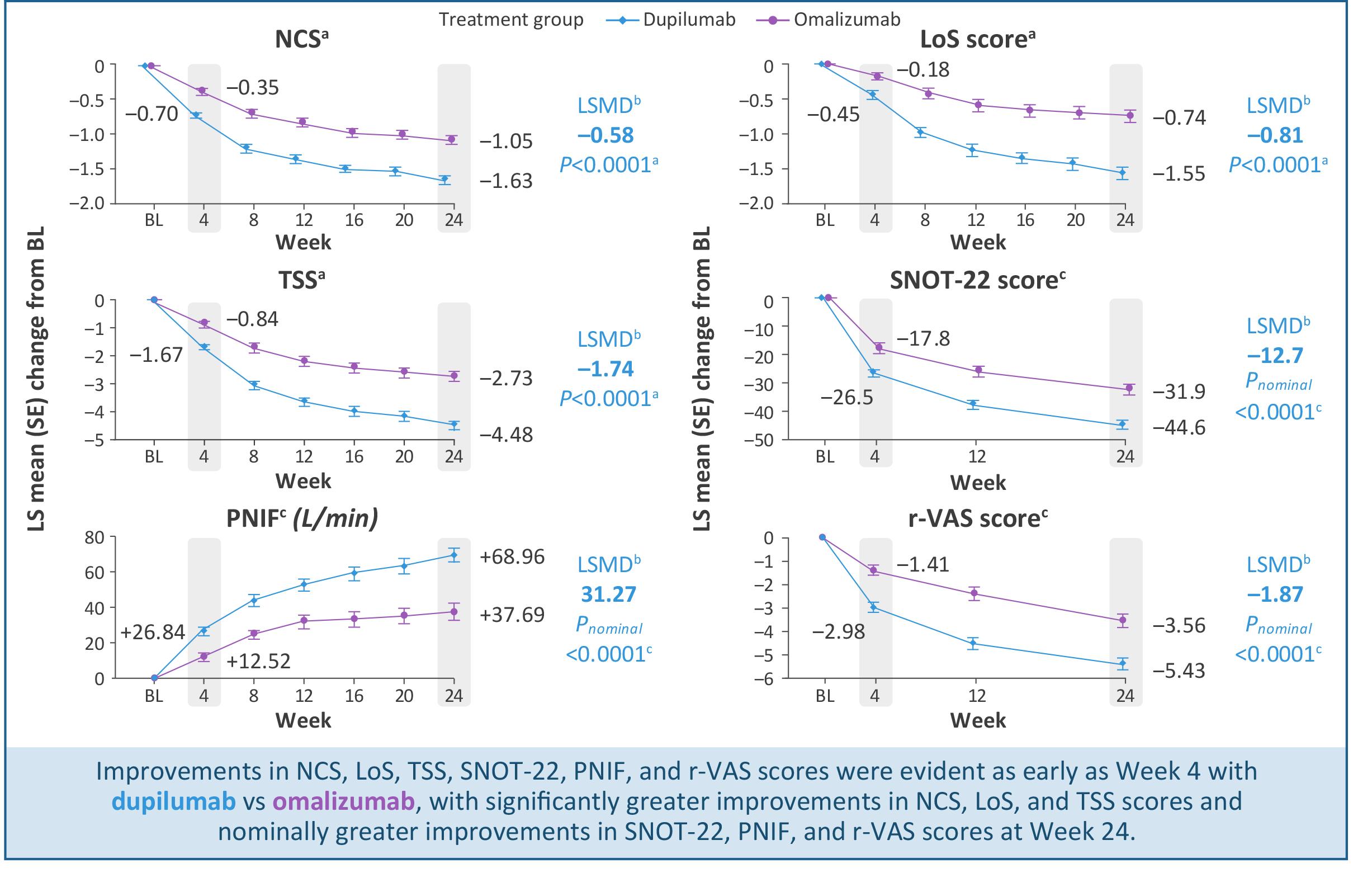
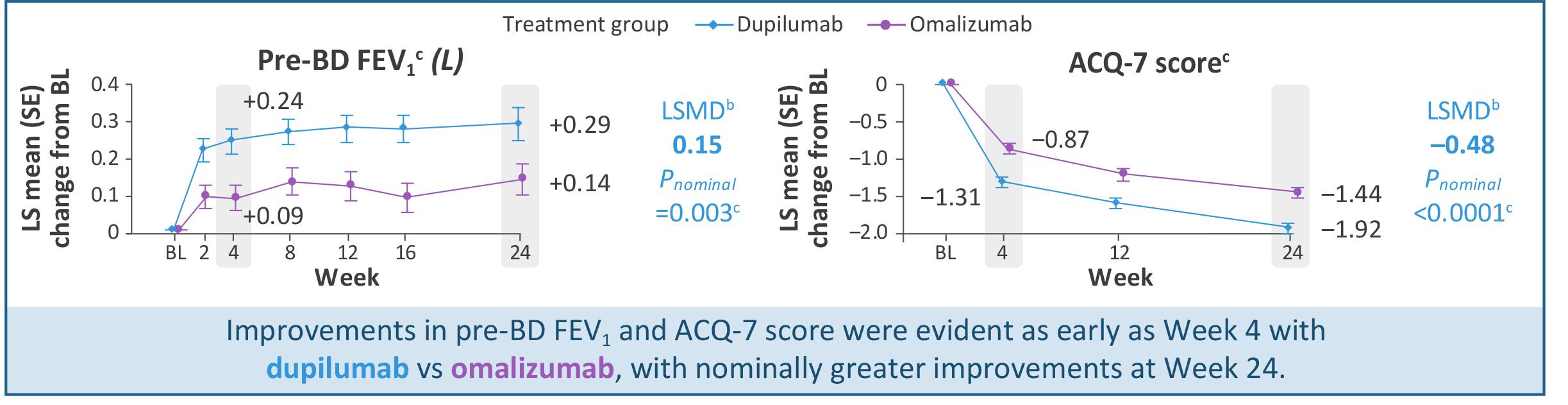
In EVEREST, dupilumab demonstrated superiority over omalizumab for all outcomes prespecified in the testing hierarchy in patients with severe CRSwNP and coexisting asthma. Safety profiles were comparable. |
aThe following secondary end points were included in the multiplicity adjustment scheme and tested in the following order: Change from BL to Week 24 in (1) LoS, (2) NCS, (3) TSS. bDupilumab vs omalizumab LSMD at Week 24. cEnd points not included in multiplicity adjustment hierarchy; P-values are nominal. ACQ-7, 7-item asthma control questionnaire; BD, bronchodilator; BL, baseline; EAACI, European Academy of Allergy and Clinical Immunology; FEV1, forced expiratory volume in 1 second; LoS, loss of smell; LS, least-squares; LSMD, least-squares mean difference; NCS, nasal congestion score; PNIF, peak nasal inspiratory flow; r-VAS; rhinosinusitis visual analog scale; SNOT-22, 22-item Sinonasal Outcomes Test; TSS, total symptom score. De Corso E, et al. EAACI. 2025. Oral presentation.
EPOS2020/EUFOREA Expert Opinion on Defining Disease States and Therapeutic Goals in CRSwNP
An expert panel convened by EPOS2020 and EUFOREA proposed standardized definitions for disease control, remission, and progression in CRSwNP. This initiative aims to harmonize and optimize the standard of care for patients with CRSwNP.