Interplay between the innate and adaptive immunity

The regulatory interplay between the innate and adaptive immunity allows immune homeostasis to be maintained1,2
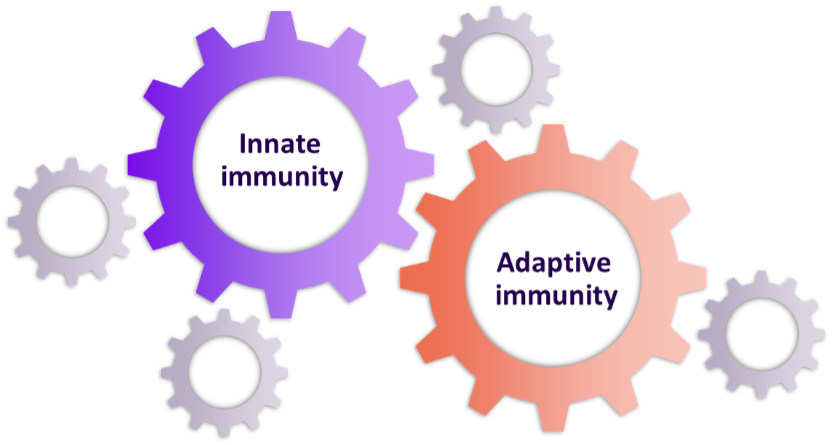
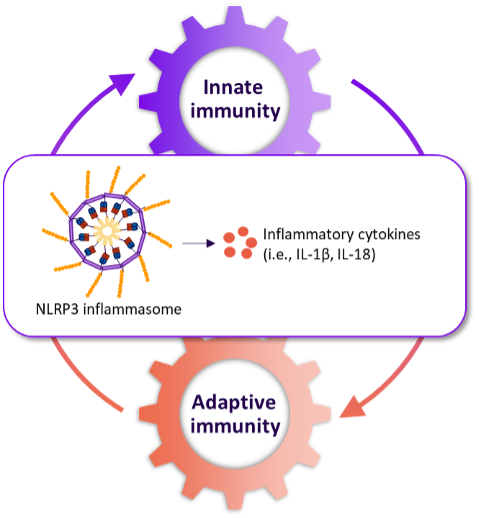
Crosstalk between the innate and adaptive immune systems occurs through various mechanisms, including cytokine signaling, antigen presentation, and inflammasome activity1,2
Immune dysregulation arises from the dysfunction of the innate and/or adaptive immune systems, and can lead to pathological consequences1,2
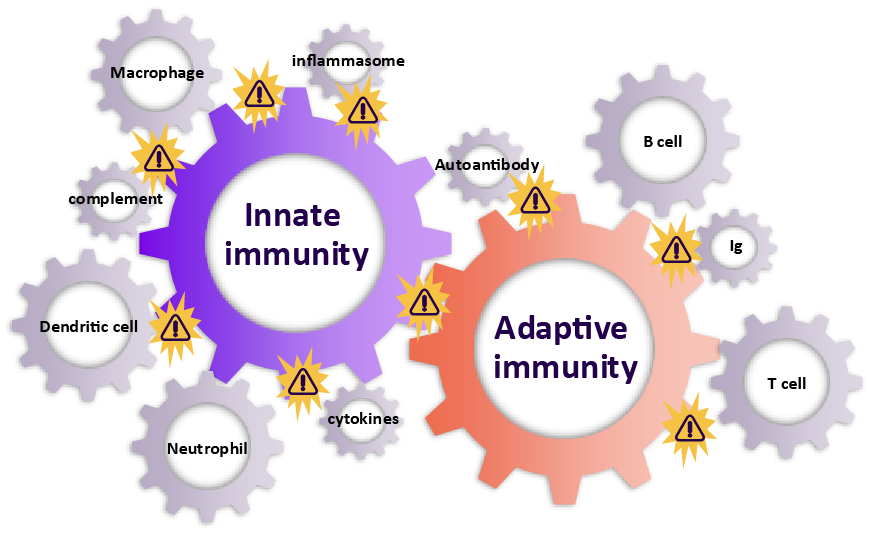
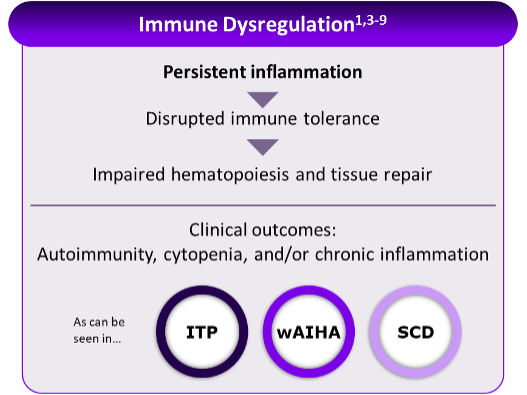
NLRP3 inflammasome and its byproducts (i.e., IL-1β, IL-18) contribute to cross-talk between the innate and adaptive immune systems1,2
Innate immunity may induce adaptive immune response via NLRP3 inflammasome and its by products leading to2:
- T-cell proliferation
- B-cell proliferation
- Enhanced antibody production
Adaptive immunity regulates innate immune response in part by targeting inflammasomes2:
- Antibodies from B cells regulate inflammasome production
-
T cells produce cytokines that regulate
inflammasome activation
Abbreviations:
ITP, immune thrombocytopenia; SCD, sickle cell disease; wAIHA, warm autoimmune hemolytic anemia.
- Wang R, et al. MedComm (2020). 2024;5(10):e714.
- Zhang H, et al. J Adv Res. 2023;54:181-193.
- Marshall JS, et al. Allergy Asthma Clin Immunol. 2018;14(Suppl 2):49.
- Loriamini M, et al. Int J Mol Sci. 2024;25(8):4296.
- Kuter DJ, et al. Ther Adv Hematol. 2023;14:20406207231205431.
- Brodsky RA. N Engl J Med. 2019;381(7):647-654.
- Capecchi M, et al. J Clin Med. 2021;10(8):1764.
- Conran N, Belcher JD. Clin Hemorheol Microcirc. 2018;68(2-3):263-299.
- Kremer V, et al. Int J Biochem Cell Biol. 2022;147:106231
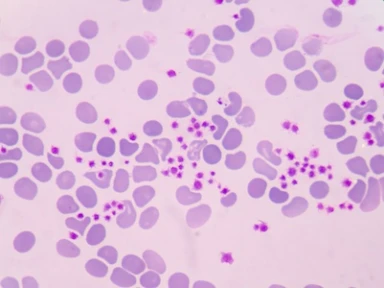
The pathophysiology of ITP stems from complex immune dysregulation drives thrombocytopenia and inflammation