
- Article
- Source: Campus Sanofi
Updated Treatment Algorithm for Cancer-Associated Thrombosis
An updated expert consensus treatment algorithm for managing cancer-associated thrombosis.

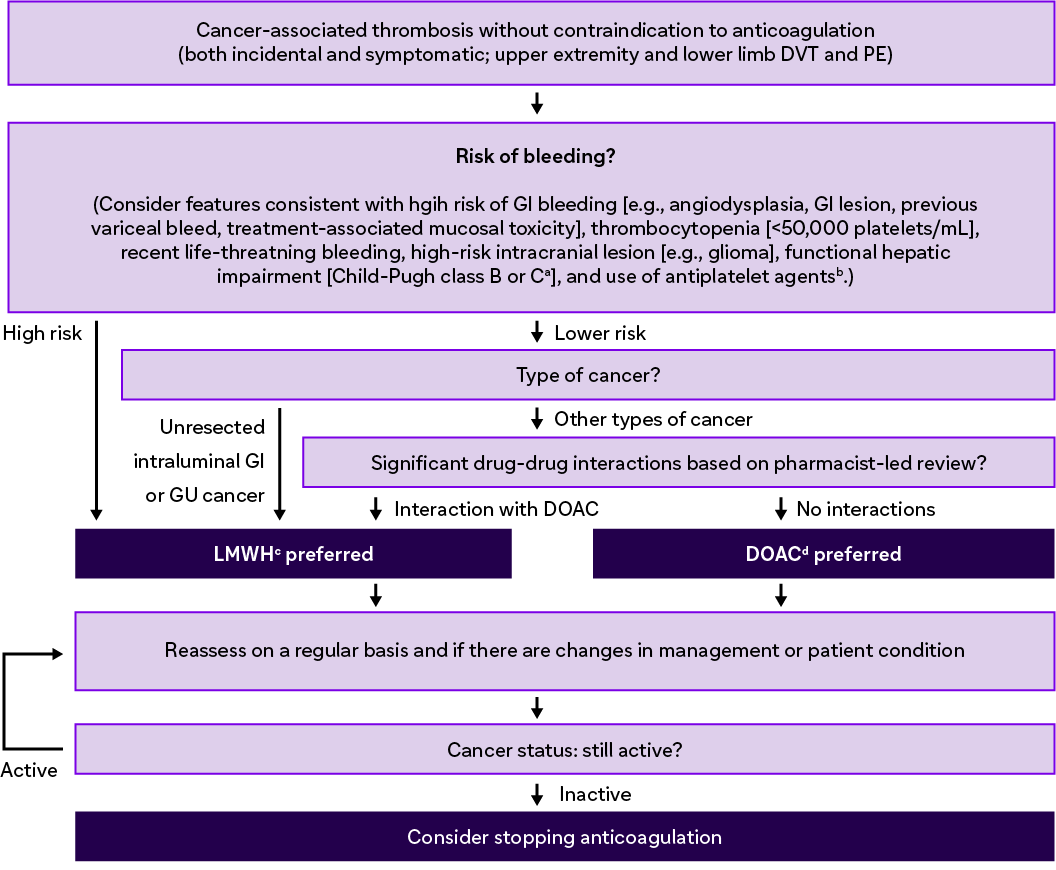
Figure 1. Patient risk stratification algorithm for anticoagulant therapy in cancer-associated thrombosis. a None of the DOACs are recommended for use in patients meeting criteria for Child-Pugh class C, with use of rivaroxaban being contraindicated in patients with hepatic disease (including Child-Pugh class B and C) associated with coagulopathy and having clinically relevant bleeding risk. Apixaban should be used with caution in patients with mild or moderate hepatic impairment (Child-Pugh class A or B), while these patients exhibited comparable pharmacokinetics and pharmacodynamics to healthy controls when treated with edoxaban. b Use of antiplatelet agents should be assessed, and discontinuation should be considered in the absence of a strong indication. Shared decision-making with other health care providers is warranted. c Currently, dalteparin, enoxaparin, and tinzaparin have randomized controlled trial evidence in cancerassociated thrombosis, with the evidence base being stronger for dalteparin and tinzaparin. Refer to the relevant product monograph for appropriate dosing. d Currently, apixaban, edoxaban, and rivaroxaban have randomized controlled trial evidence in cancer-associated thrombosis, with stronger evidence for apixaban and edoxaban. Refer to the relevant product monograph for appropriate dosing. DVT = deep vein thrombosis; PE = pulmonary embolism; GI = gastrointestinal; GU = genitourinary; DOAC = direct-acting oral anticoagulant; LMWH = low molecular weight heparin; VTE = venous thromboembolism.
You can access the full guidelines here:
Related Articles
.webp/jcr:content.webp)
Cancer-associated thrombosis carries a higher recurrence risk and bleeding risk compared with thrombosis unrelated to malignancy, which affects anticoagulant choice and often extends the recommended treatment duration. Certain anticoagulant classes have shown specific efficacy and safety data in this population that inform preferred treatment pathways. These distinctions are the basis for using a cancer-specific treatment algorithm rather than standard venous thromboembolism protocols.
The Khorana model is primarily used before treatment to identify ambulatory cancer patients who may benefit from primary thromboprophylaxis, informing the earlier decision points within the broader treatment algorithm. Once thrombosis has occurred, the algorithm shifts focus to anticoagulant selection and duration of treatment. Both risk assessment and treatment pathway components work together to guide comprehensive management of thrombosis risk in cancer patients.
Duration is generally influenced by whether the underlying cancer remains active, ongoing treatment status, and the patient's individual bleeding risk, with many guidelines favoring extended or indefinite anticoagulation while cancer remains active. Regular reassessment is recommended as the patient's cancer status and treatment plan evolve. Healthcare professionals should individualize duration decisions based on current expert consensus and the patient's specific clinical trajectory.
Confirm that you are a healthcare professional to continue reading.
Click login to continue

RCOG Guidance on Reducing Venous Thromboembolism Risk in Pregnancy
Royal College of Obstetricians and Gynaecologists guidance on reducing venous thromboembolism risk in pregnancy.