
Highlighting the Global Burden of RSV in Infants in Clinical Practice
Patient and caregiver perspectives alongside clinical evidence on the broader impact of RSV disease in infants.
.2025-09-14-22-23-05.jpg)
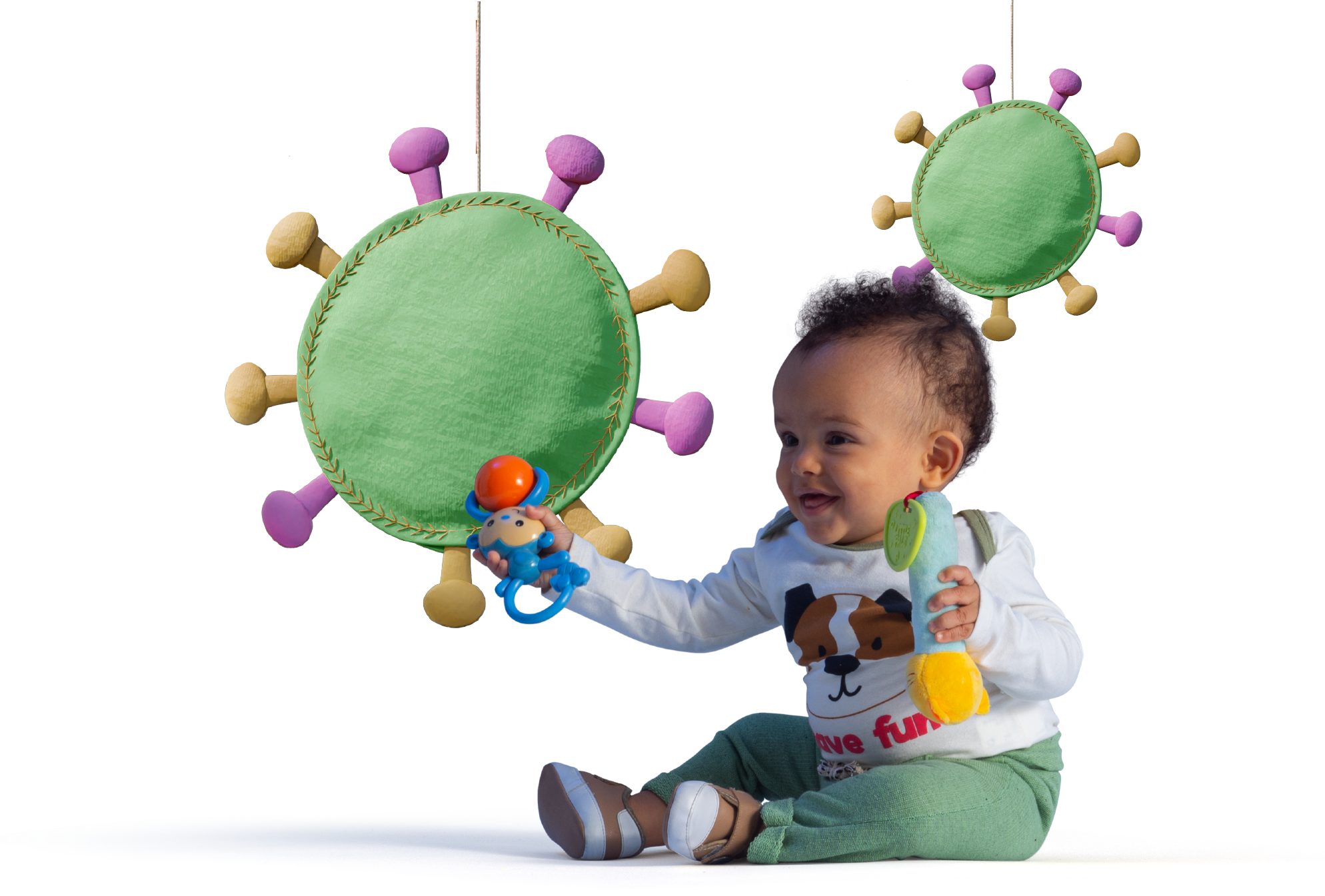
WHAT IF INFANTS HAD A VOICE?
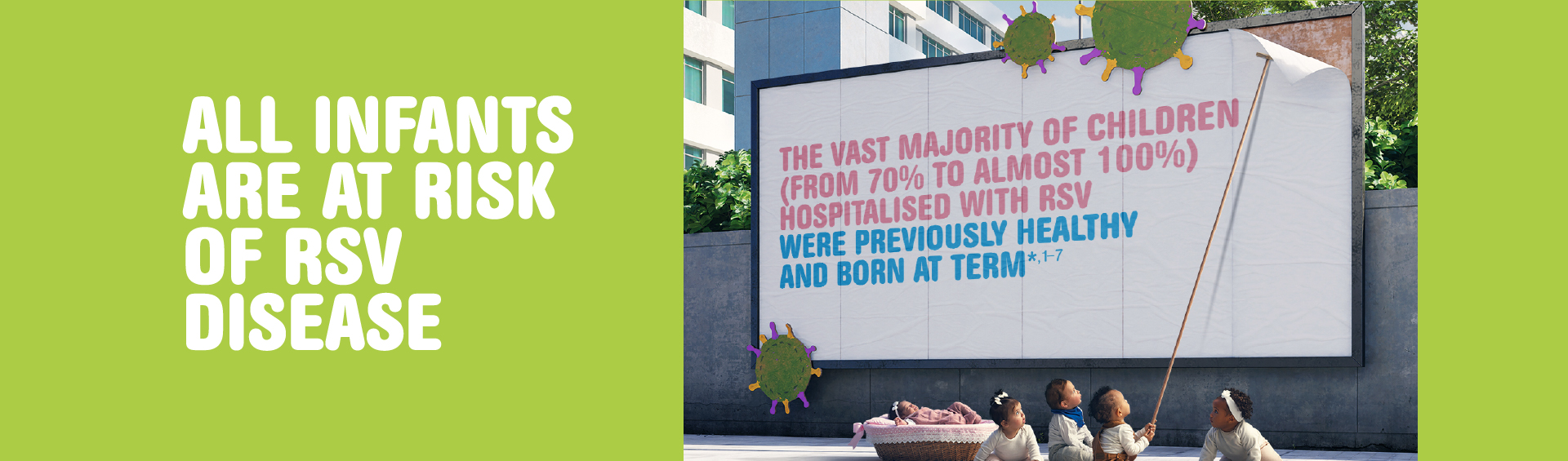
If infants had a voice, they would tell us that they were at risk from respiratory syncytial virus (RSV) – a virus that is a leading cause of infant hospitalisation,†,1,14,15 despite most cases being mild.17
Keep exploring to learn more about the burden and risk of RSV disease among infants.

Around 50% of infants
who are hospitalised due to RSV are born before the season starts‡,1,20,21

RSV disease represents a
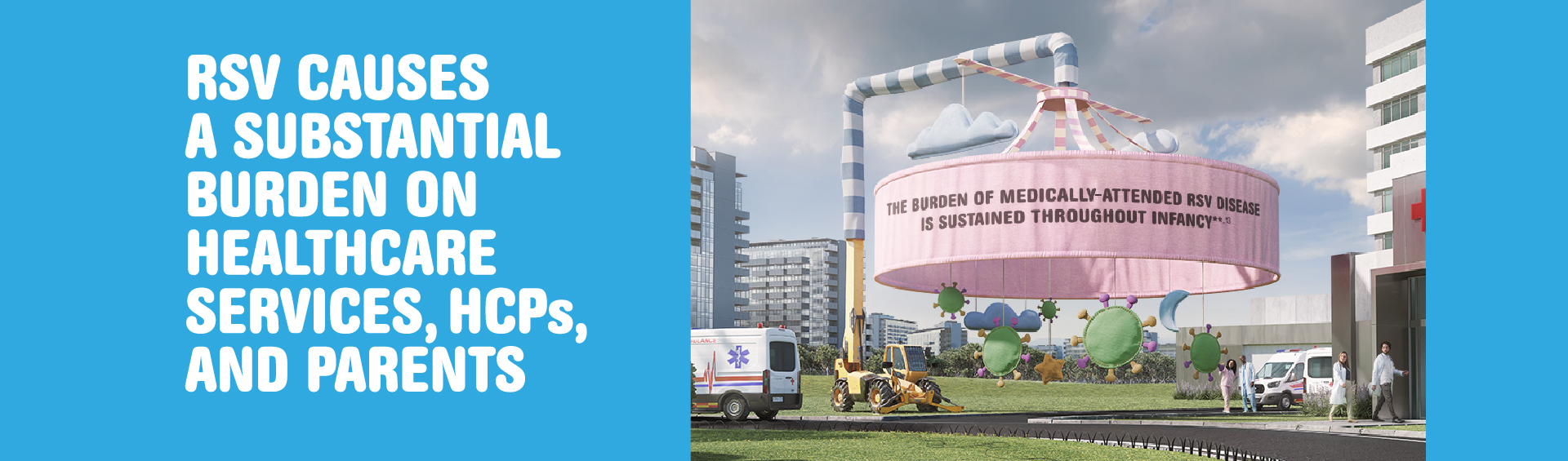
substantial burden across inpatient and outpatient healthcare services §,||,10,22
|
RSV is a common respiratory virus and a leading cause of respiratory disease in children. ¶,#,15,17,23-25
|

|
*Percentage of children born healthy and/or full term among children hospitalised due to RSV in different retrospective analyses: France (2010‒2018; in children <5 years of age): 87% healthy and 90% full term;1 Spain (2004‒2012; in infants): 98% healthy and full term;2 Japan (January 2017‒December 2018; in children ≤2 years of age): 90% healthy and full term;3 Germany (2015–2018; in infants): 90% healthy and 83% full term;4 China (2007–2015, in children 28 days–13 years of age): 88% healthy and full term (median age 1.4 years);5 UK (Scotland 2000–2011; in children ≤2 years of age): 93% healthy and 82% full term;6 US (population-based surveillance 2014–2015; in infants ≤11 months): 72% healthy and full term.7
** From a US study designed to estimate the impact of immunization strategies on RSV-associated medically attended LRTIs in various healthcare settings among infants <12 months. The study developed a modeling tool using, in part, data for all-risk rates of medically attended-RSV infections obtained from population-based surveillance data published by the New Vaccine Surveillance Network (NVSN). Proportions of outpatient clinic and emergency department visits resulting in an LRTI were based on the average proportion of lab-confirmed RSV visits in the NVSN from 2002–2009 with any of the following diagnoses: croup, bronchiolitis, bronchitis, pneumonia, or asthma (data from the US Centers for Disease Control and Prevention, unpublished). All hospitalised patients were assumed to have an LRTI.13
† From a US-based retrospective analysis of the Healthcare Cost and Utilization Project (HCUP)’s inpatient hospital discharge datasets from the Agency for Healthcare Research and Quality from 2009 through 2019 among US infants aged <1 year14 and a systematic literature review of studies from US, Canada and Europe reporting data for hospital visits/admissions for RSV infection among children (≤18 years of age), as well as studies reporting RSV-associated morbidity, mortality, and risk factors, with search results from Jan 1, 1995 to Dec 31, 2015.15
‡ Based on a French study where 47% (n=85,292/181,758) of hospitalised infants were born before the season (April to September);1 an English study where 51% (n=10,328/20,359) of hospital admissions occurred in infants born April to October;20 and a Spanish study where 54% (n=340/631) of infants hospitalised with RSV were born before the season (April through October).21
§ From a prospective, population-based surveillance of acute respiratory infections among children under 5 years of age in three US counties. The study enrolled hospitalised children from 2000 through 2004, and children presenting as outpatients in emergency departments and pediatric offices from 2002 through 2004. Data were extrapolated to the US population to estimate that among children with RSV-related illnesses, approximately 57,527 (3%) are hospitalized, 517,747 (24%) are treated in emergency departments, and 1,534,064 (73%) are treated by pediatric practices; of these outpatients, 1,256,014 (61%) are between 2 and 5 years of age.10
|| From a prospective cohort study on 408 Finnish infants during the RSV season of 2017–2018. Infants were followed for 10 months after birth (from September to June). The resulting seasonal incidence rate of RSV hospitalisation was 22.1 per 1,000 (95% CI: 10.1–41.9).22
¶ In most cases, RSV causes a mild and self-limiting disease, but it can progress to severe and potentially life-threatening conditions, such as bronchiolitis and pneumonia.17
# Based on data from US studies23,24 and a systematic literature review of studies from the US, Canada, and Europe.15
CI, confidence interval; HCP, healthcare professional; HCUP, Healthcare Cost and Utilization Project; LRTI, lower respiratory tract infection; NVSN, New Vaccine Surveillance Network; RSV, respiratory syncytial virus.
- Demont C, Petrica N, Bardoulat I, et al. Economic and disease burden of RSV-associated hospitalizations in young children in France, from 2010 through 2018 [published correction appears in BMC Infect Dis. 2023 Feb 27;23(1):122. doi: 10.1186/s12879-023-08049-7.]. BMC Infect Dis. 2021;21(1):730.
- Sanchez-Luna M, Elola FJ, Fernandez-Perez C, Bernal JL, Lopez-Pineda A. Trends in respiratory syncytial virus bronchiolitis hospitalizations in children less than 1 year: 2004-2012. Curr Med Res Opin. 2016;32(4):693-698.
- Kobayashi Y, Togo K, Agosti Y, McLaughlin JM. Epidemiology of respiratory syncytial virus in Japan: A nationwide claims database analysis. Pediatr Int. 2022;64(1):e14957.
- Hartmann K, Liese JG, Kemmling D, et al. Clinical Burden of Respiratory Syncytial Virus in Hospitalized Children Aged ≤5 Years (INSPIRE Study). J Infect Dis. 2022;226(3):386-395.
- Yu J, Liu C, Xiao Y, et al. Respiratory Syncytial Virus Seasonality, Beijing, China, 2007-2015. Emerg Infect Dis. 2019;25(6):1127-1135.
- Thwaites R, Buchan S, Fullarton J, et al. Clinical burden of severe respiratory syncytial virus infection during the first 2 years of life in children born between 2000 and 2011 in Scotland.Eur J Pediatr. 2020;179(5):791-799.
- Arriola CS, Kim L, Langley G, et al. Estimated Burden of Community-Onset Respiratory Syncytial Virus-Associated Hospitalizations Among Children Aged <2 Years in the United States, 2014-15. J Pediatric Infect Dis Soc. 2020;9(5):587-595.
- Bianchini S, Silvestri E, Argentiero A, Fainardi V, Pisi G, Esposito S. Role of Respiratory Syncytial Virus in Pediatric Pneumonia. Microorganisms. 2020;8(12):2048.
- Hodges EN, White M, Nelson CB. All Infants Are at Risk of Developing Medically Attended Respiratory Syncytial Virus Lower Respiratory Tract Infection and Deserve Protection. J Infect Dis. 2022;226(Suppl2):S148-S153.
- Hall CB, Weinberg GA, Iwane MK, et al. The burden of respiratory syncytial virus infection in young children. N Engl J Med. 2009;360(6):588-598. European Health Management Association. The Health System Burden of Respiratory Syncytial Virus (RSV) in Europe. Available at: https://www.vaccinestogether.org the_health_system_burden_of_rsv_in_europe_ehma_s_white_paper. Accessed: April 2023
- Fusco F et al. The Burden of Respiratory Syncytial Virus: Understanding Impacts on the NHS, Society and Economy. RAND Corporation. 2022.
- Rainisch G, Adhikari B, Meltzer MI, Langley G. Estimating the impact of multiple immunization products on medically-attended respiratory syncytial virus (RSV) infections in infants. Vaccine. 2020;38(2):251-257.
- Suh M, Movva N, Jiang X, et al. Respiratory Syncytial Virus Is the Leading Cause of United States Infant Hospitalizations, 2009-2019: A Study of the National (Nationwide) Inpatient Sample. J Infect Dis. 2022;226(Suppl 2):S154-S163.
- Bont L, Checchia PA, Fauroux B, et al. Defining the Epidemiology and Burden of Severe Respiratory Syncytial Virus Infection Among Infants and Children in Western Countries. Infect Dis Ther. 2016;5(3):271-298.
- Abreo A, Wu P, Donovan BM, et al. Infant Respiratory Syncytial Virus Bronchiolitis and Subsequent Risk of Pneumonia, Otitis Media, and Antibiotic Utilization. Clin Infect Dis. 2020;71(1):211-214.
- Piedimonte G, Perez MK. Respiratory syncytial virus infection and bronchiolitis [published correction appears in Pediatr Rev. 2015 Feb;36(2):85. doi: 10.1542/pir.36-2-85.]. Pediatr Rev. 2014;35(12):519-530.
- Driscoll AJ, Arshad SH, Bont L, et al. Does respiratory syncytial virus lower respiratory illness in early life cause recurrent wheeze of early childhood and asthma? Critical review of the evidence and guidance for future studies from a World Health Organization-sponsored meeting. Vaccine. 2020;38(11):2435-2448.
- Simões EAF, Chirikov V, Botteman M, Kwon Y, Kuznik A. Long-term Assessment of Healthcare Utilization 5 Years After Respiratory Syncytial Virus Infection in US Infants. J Infect Dis. 2020;221(8):1256-1270.
- Reeves RM, Hardelid P, Panagiotopoulos N, Minaji M, Warburton F, Pebody R. Burden of hospital admissions caused by respiratory syncytial virus (RSV) in infants in England: A data linkage modelling study. J Infect. 2019;78(6):468-475.
- Mira-Iglesias A, Demont C, López-Labrador FX, et al. Role of age and birth month in infants hospitalized with RSV-confirmed disease in the Valencia Region, Spain. Influenza Other Respir Viruses. 2022;16(2):328-339.
- Thomas E, Mattila JM, Lehtinen P, Vuorinen T, Waris M, Heikkinen T. Burden of Respiratory Syncytial Virus Infection During the First Year of Life. J Infect Dis. 2021;223(5):811-817.
- Lively JY, Curns AT, Weinberg GA, et al. Respiratory Syncytial Virus-Associated Outpatient Visits Among Children Younger Than 24 Months. J Pediatric Infect Dis Soc. 2019;8(3):284-286.
- McLaughlin JM, Khan F, Schmitt HJ, et al. Respiratory Syncytial Virus-Associated Hospitalization Rates among US Infants: A Systematic Review and Meta-Analysis. J Infect Dis. 2022;225(6):1100-1111.
- Karron RA. Plotkin’s Vaccines. Seventh Edition. Chapter 51, Respiratory Syncytial Virus Vaccines. Elsevier Inc. 2018.
RSV is highly contagious and nearly all infants are infected at least once before their second birthday, regardless of underlying health status. While infants with risk factors such as prematurity face higher risk of severe disease, healthy full-term infants still account for a substantial proportion of RSV-related hospitalisations globally. This broad susceptibility has driven interest in universal prevention approaches rather than strategies targeting high-risk infants alone. The campaign highlights this often under-recognised aspect of RSV disease burden.
A universal approach aims to protect all infants during their first RSV season, regardless of individual risk factor status, typically through broad use of passive immunisation or maternal vaccination strategies. This contrasts with earlier risk-based approaches that targeted prevention only to infants with specific risk factors, such as prematurity. Universal strategies aim to address the substantial disease burden seen even in lower-risk infants. Implementation considerations include timing relative to the local RSV season and integration with existing infant care pathways.
The campaign combines patient and caregiver narratives with clinical and epidemiological evidence to build a fuller picture of RSV's impact on infants and families. This approach aims to complement clinical data with the lived experience of RSV hospitalisation, supporting broader awareness among healthcare professionals and policymakers. Increased awareness can support advocacy for broader access to RSV prevention strategies. The initiative is part of a global effort to elevate RSV as a public health priority for infant health.
MAT-ZA-2500092
Confirm that you are a healthcare professional to continue reading.
Click login to continue