
- Article
- Source: Campus Sanofi
Des essais cliniques aux recommandations cardiovasculaires
Les recommandations sur l'hypertension artérielle évoluent avec les essais cliniques randomisés et les données de vie réelle, qui se complètent en pratique courante.
.2023-12-04-08-14-49.svg)
Single Pill Combination vs Free Equivalent Combination
Meta-Analysis
Does an SPC-based regimen lead to improved adherence, persistence, and better BP control compared with FEC therapy in patients with hypertension?
- 44 studies
- 2 pills vs 1, or 3 pills vs 1 (free equivalent vs SPC)
SPC vs FEC on Adherence, Persistence, and Outcomes
Meta-Analysis
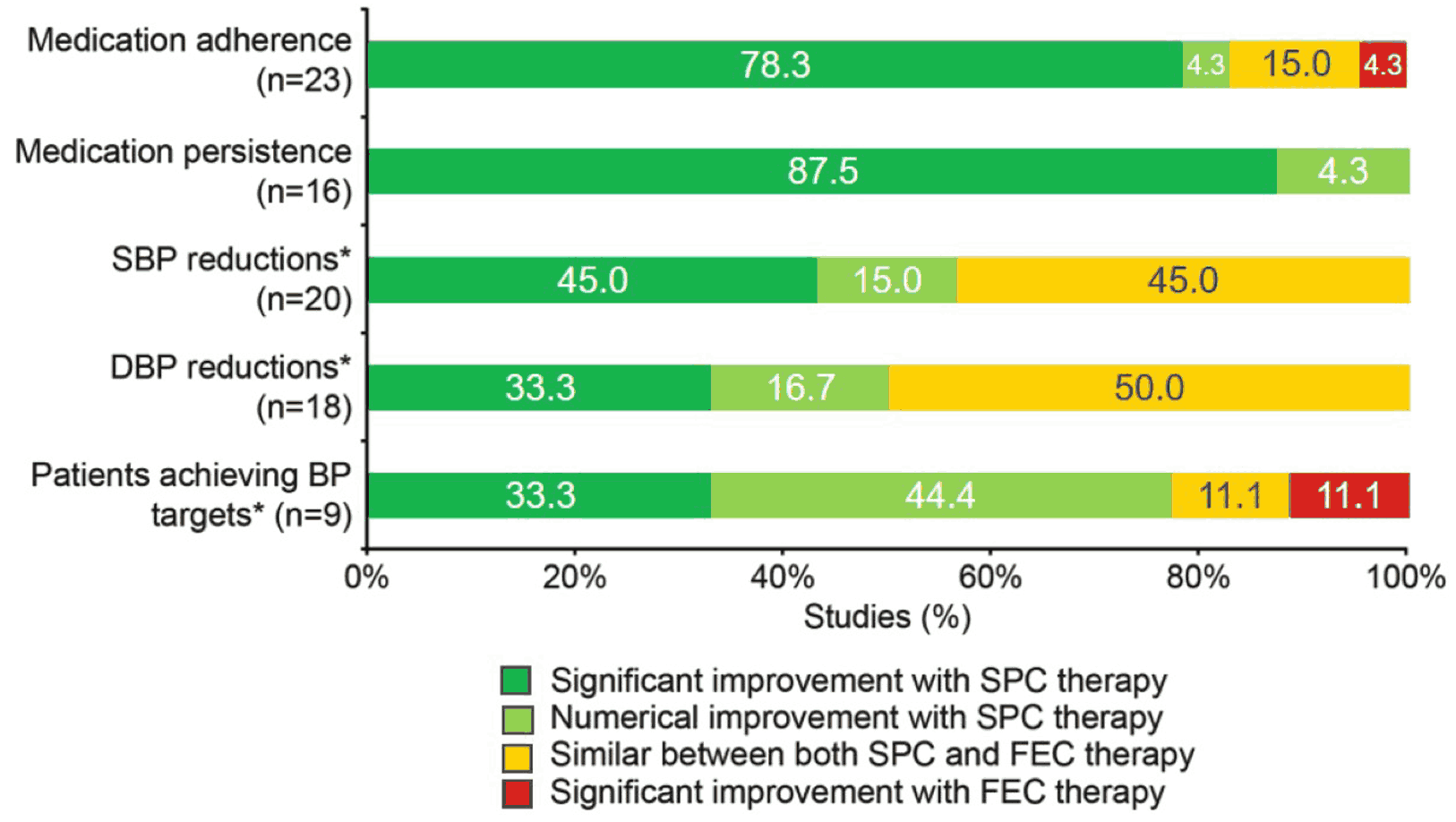
Single Pill Combination vs Free Equivalent Combination
Comparing the equivalent doses of two drugs in a single pill with equivalent doses with two pills, the better reduction of blood pressure may only be due to better adherence;
There is no other reason than better adherence.
Initial SPC Reduces CV Events in Hypertension
Meta-Analysis
SBP and DBP Normalization Ratios
Three studies including 653 patients
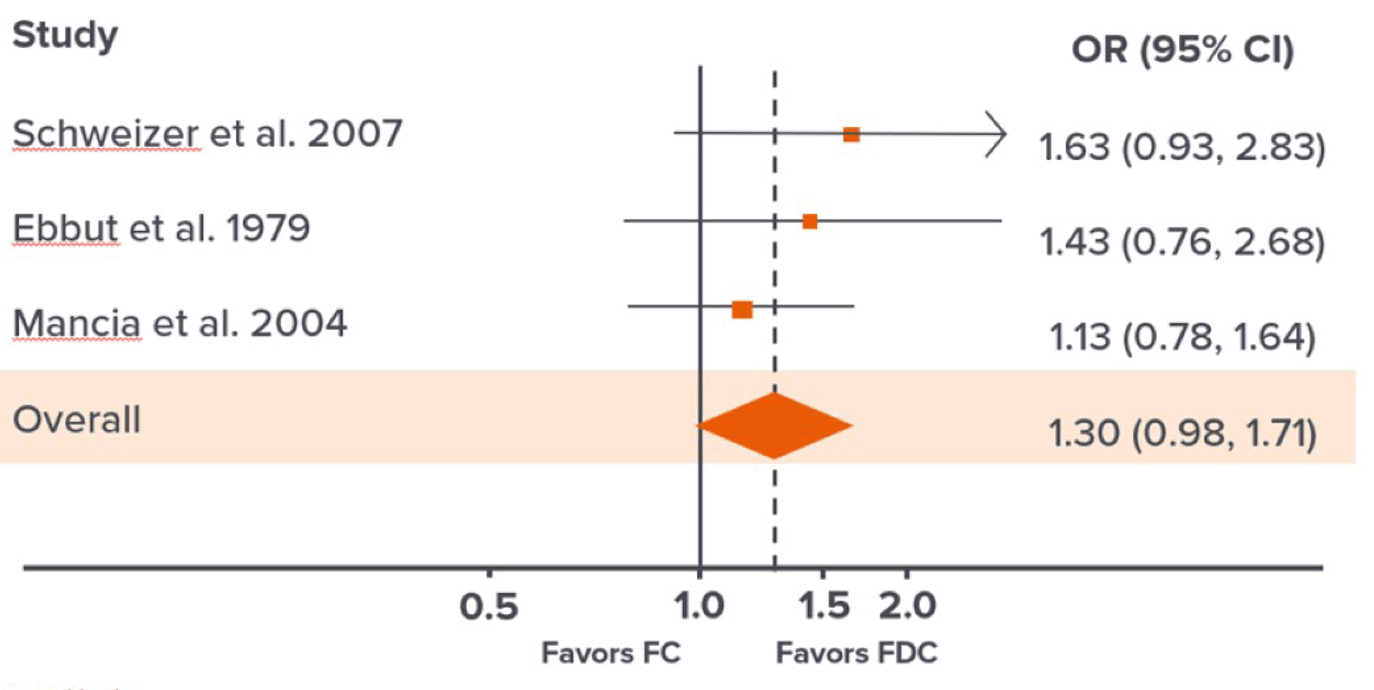
Single Pill Combination vs Free Equivalent Combination The Evidence
- Better adherence
- Better persistence with therapy
- Better BP control
- Better target achievement
- Patients' preference
Initial SPC Reduces CV Events in Hypertension Matched Cohorts in US Registry Data
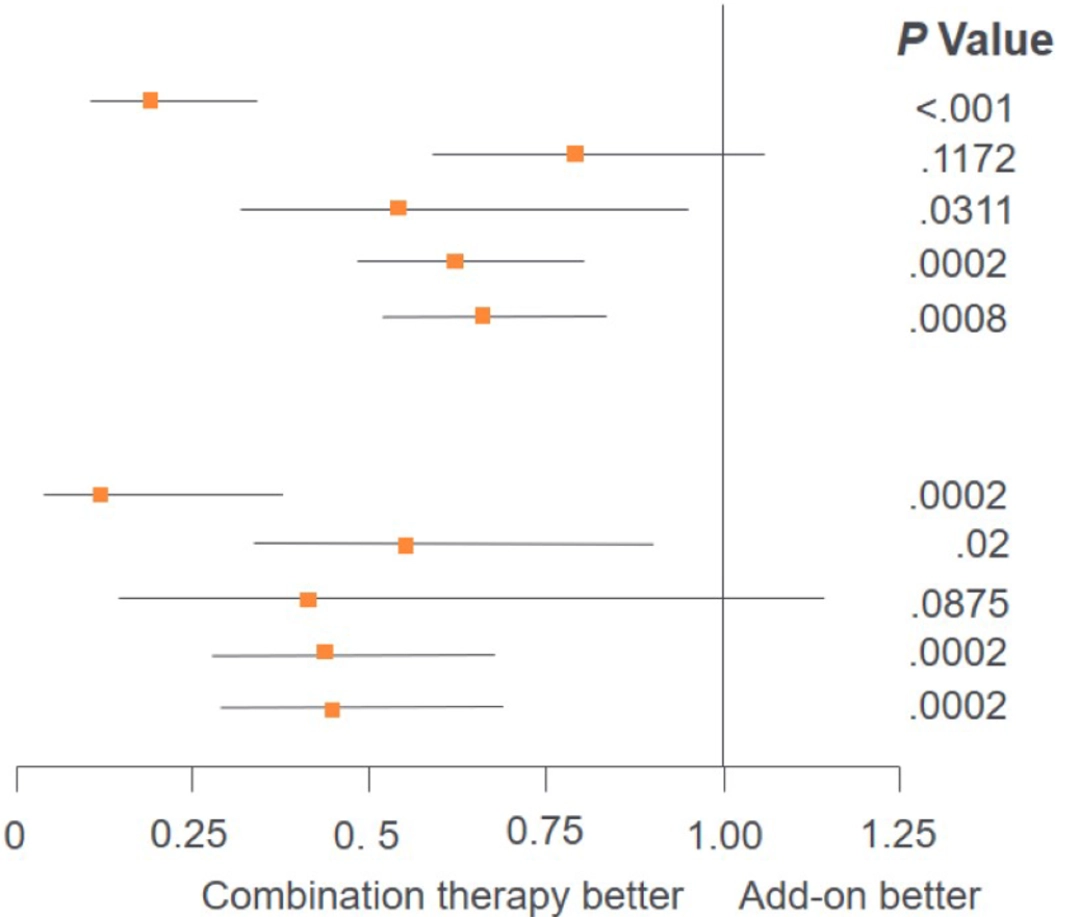
All patients (1762 patients in each cohort)
-
Acute MI
-
Stroke/TIA
-
HHF
-
Overall
-
Overall (with death)
Excluding patients with diabetes or CKD (803 patients in each cohort)
-
Acute MI
-
Stroke/TIA
-
HHF
-
Overall
-
Overall (with death)
Initial SPC Reduces CV Events in Hypertension Real World Data from Lombardy in Italy
Healthcare utilization database
- 44,534 residents of the region (aged 40-80 y) who started treatment with 1 antihypertensive drug
(n = 37,078) or a 2-drug FDC (n = 7456) in 2010 - Followed for 1 year after treatment initiation to compare the risk for hospitalization for CVD associated with the 2 treatment strategies
Initial SPC Reduces CV Events in Hypertension
Real World Data
| Outcome | HR (95% CI) | P Value |
|---|---|---|
| Any CV event | 0.85 (0.74, 0.97) | .02 |
| Ischemic heart disease | 0.73 (0.56, 0.95) | .02 |
| Cerebrovascular disease | 0.83 (0.61, 1.14) | .26 |
| Heart failure | 0.9 (0.54, 1.51) | .69 |
| Atrial fibrillation | 0.63 (0.42, 0.94) | .02 |
Database of the Lombardy Region (Italy)
- 44,534 residents
- Started on monotherapy (n = 37,078) or an FDC (n = 7456)
- Evaluation of the risk for CV events
- FDCs were associated with more effective CV protection
What Have We Learned From These Studies?
Efficacy of pharmacological therapies is not the major limitation to achieving blood pressure control
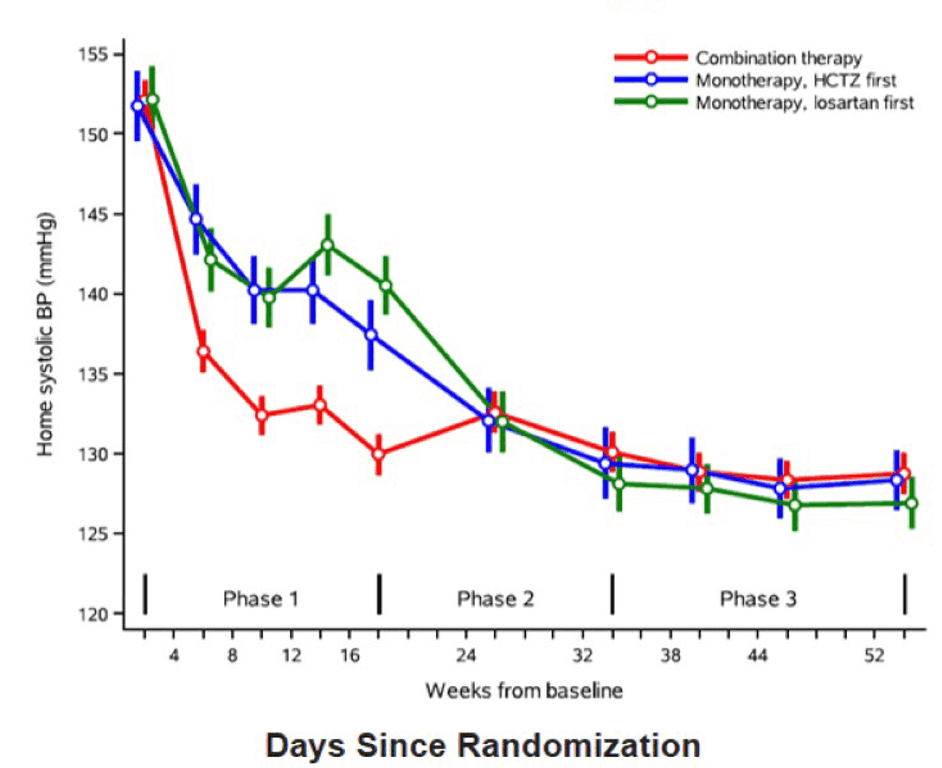
Combination Therapy Superiority to Sequential Monotherapy
Initial Treatment of Hypertension
Means of Home SBP in the Monotherapy and Combination Therapy Arms
-
This randomized double-blind trial showed that initial combination therapy was associated with a better earlier response rate
Therapeutic Inertia in Hypertension in Primary Care
A Dutch Cohort Study
Julius General Practitioners' Network (n = 530,564)
- Patients with a diagnosis of hypertension, SBP ≥ 140 mm Hg, and/or DBP ≥ 90 mm Hg, and 1 or 2 BP-lowering drugs)
- Therapeutic inertia was defined as not undertaking therapeutic action in follow-up despite uncontrolled BP
- 10% of all patients with hypertension had uncontrolled BP on 1 or 2 BP-lowering drugs
- Therapeutic inertia was 87%
- Older age, closer to target BP, and concurrent diabetes were associated with therapeutic inertia
Why SPCs?
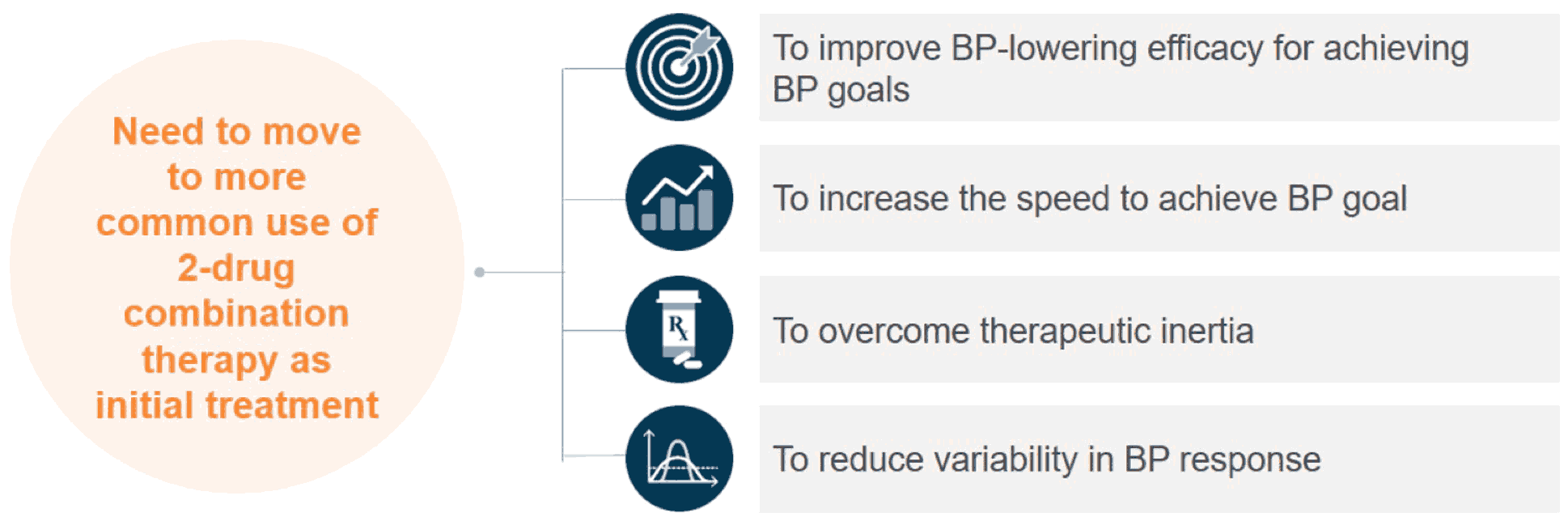
Long-Term Event Rates, Risk Factors, and Treatment Patters in Patients Qualifying for Dual BP-Lowering Therapy
Presented at ESH 2023
Database Study
- CPRD, HES, and ONS databases in England 2005 to 2019
- 1,426,079 individuals aged ≥ 18 y with hypertension, qualifying for dual BP-lowering therapy per the ESC/ESH guidelines
- At variance with guidelines, BP-lowering monotherapy was the most common treatment pattern (42.6%-56.7% of patient-time) over a 5-y follow-up period
Clinicians' Worries About Starting 2 or More Antihypertensive
Medications at Once
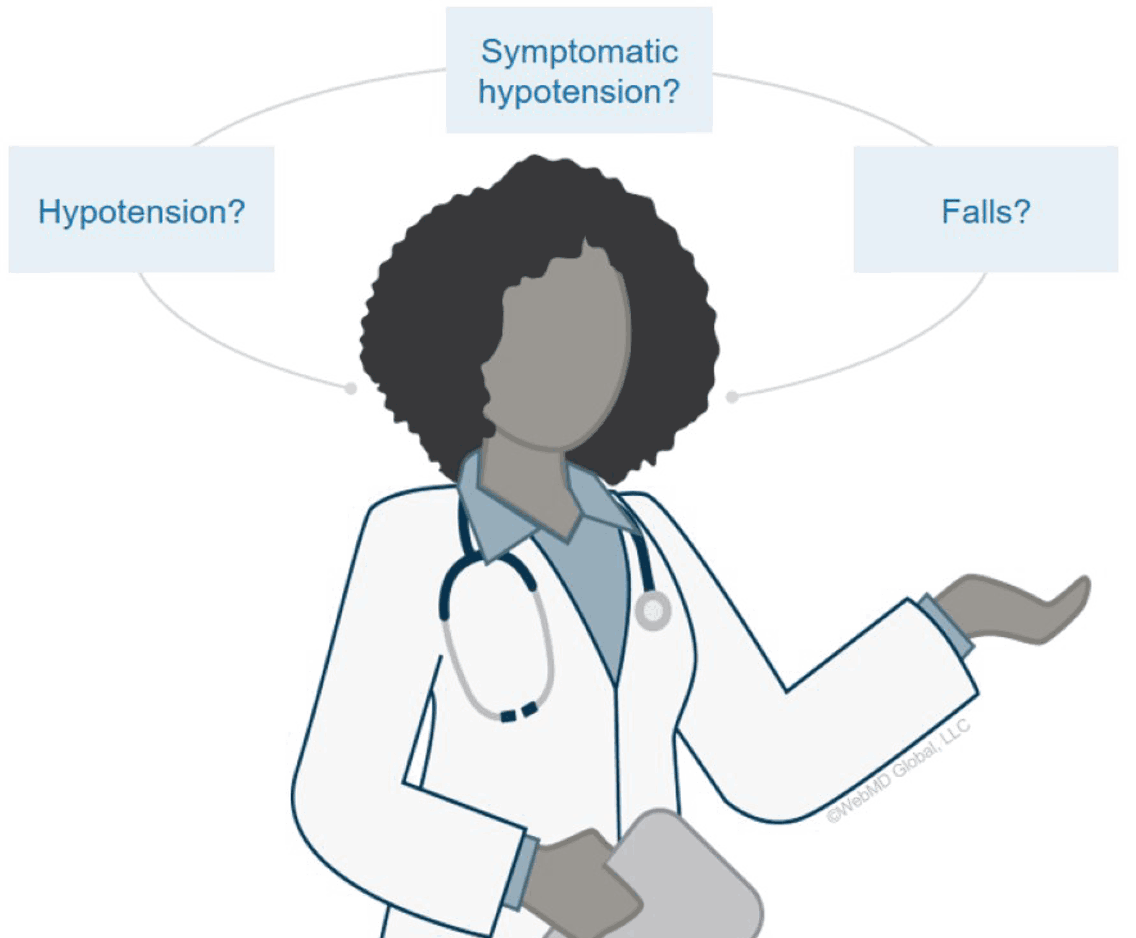
Clinicians' Worries About Starting 2 Antihypertensives at Once
- Initiating therapy with 2 drugs in a single pill does not lead to high frequency of hypotension, symptomatic hypotension, or falls
- Most patients tolerate the treatment very well and have better BP control
Studies Reporting Rates of Nonadherence in Patients With Treatment-Resistant Hypertension
| Study | Adherence Assessment Method | % Non-Adherent |
|---|---|---|
| Daugherty, 2012 | Prescription refill rate | 12.4 |
| Sim, 2013 | Prescription refill rate | 7 |
| Burnier, 2001 | MEMS | 51.2 |
| Grigoryan, 2013 | MEMS | 29 |
| Brinker, 2014 | Therapeutic drug monitoring | 53.6 |
| Ceral, 2011 | Serum drug level | 65.5 |
| Ewen, 2015 | Direct plasma and/or urine testing | 48 |
| Jung, 2013 | Direct urine testing | 52.6 |
| Rosa, 2014 | Direct blood testing | 37.5 |
| Strauch, 2013 | Direct blood testing | 32.4 |
| Beaussier, 2015 | Combination of plasma and urine tests, pill count, patient interview | 18.3 |
Number of Antihypertensives and Adherence
Increased number of antihypertensive drugs prescribed associated with poor adherence
What Have We Learned From These Studies?
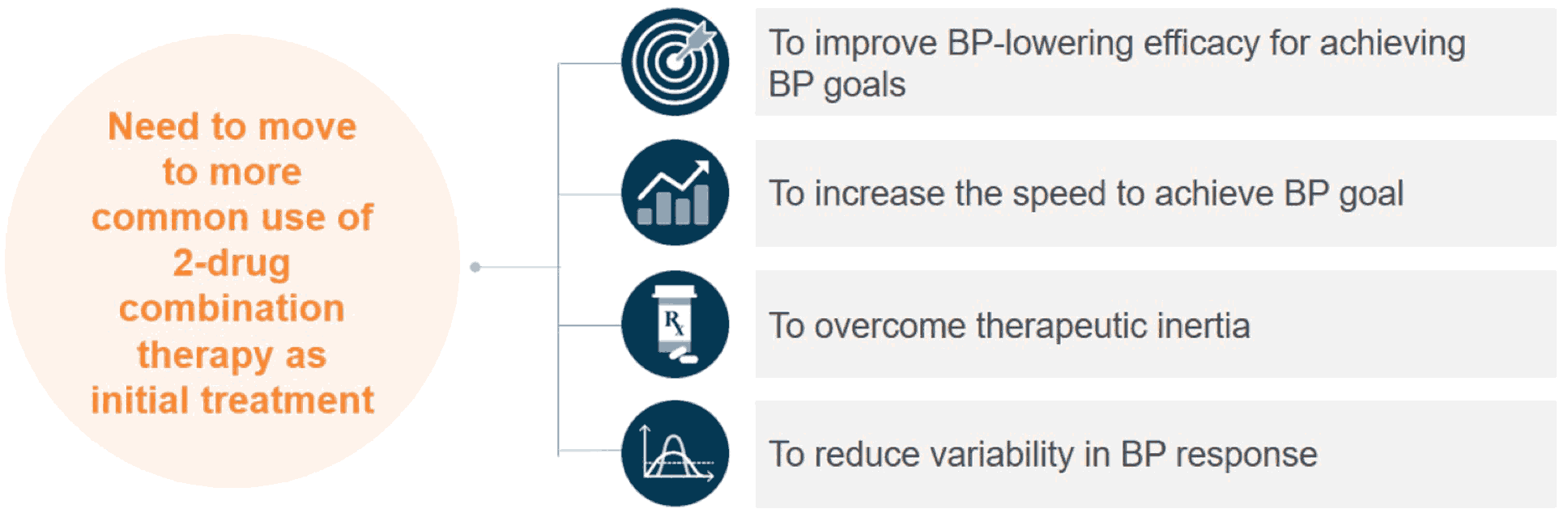
There's no reason to start monotherapy knowing that the SPC is effective, is safe, and in the long term improves adherence and persistence
SPC Leads to Improved BP Control and Improved Persistence
- Starting with a single drug leads to lower BP control rate vs combination therapies
- Starting with a single drug leads to clinical inertia lasting for years after treatment initiation
- Rate of treatment discontinuations is lower in patients starting treatment with combination therapy than in patients starting a single-class antihypertensive regimen
Complex Treatment Strategies in Previous Guidelines

Combination Approach Simplifies Treatment Decisions
- Combination approach combining a RAS blocker with a CCB or a diuretic, for most patients, makes it much simpler to follow the guidelines
- Clear, simple algorithms in the latest guidelines
-
Start with a single pill in most patients
Monotherapy for just a few patients
Summary
Un essai clinique randomisé évalue un traitement dans des conditions strictement contrôlées, sur une population sélectionnée selon des critères précis. Une étude de vie réelle observe l'efficacité et la sécurité du traitement dans la pratique clinique quotidienne, sur une population plus hétérogène. Les deux approches sont complémentaires pour évaluer un traitement de façon complète. Les recommandations s'appuient généralement sur la convergence de ces deux types de données.
Les données de vie réelle permettent d'évaluer un traitement chez des patients présentant des comorbidités souvent exclues des essais cliniques. Elles renseignent sur l'observance, la tolérance à long terme et l'efficacité en conditions réelles de prescription. Ces informations sont particulièrement utiles dans l'hypertension artérielle, pathologie chronique et multifactorielle. Elles contribuent à affiner les recommandations au fil du temps.
Les sociétés savantes intègrent régulièrement les résultats des essais cliniques et des cohortes de vie réelle pour actualiser leurs recommandations. Cette démarche permet d'ajuster les seuils thérapeutiques et les stratégies de prise en charge selon les populations concernées. Les recommandations récentes en hypertension artérielle reflètent ainsi une approche fondée sur un socle de preuves élargi. Cette actualisation continue vise à optimiser les bénéfices cliniques pour le patient.
Confirm that you are a healthcare professional to continue reading.
Click login to continue
Hypertension Treatment with Single-Pill Combinations
Les associations antihypertensives en un seul comprimé: une stratégie recommandée pour l'hypertension artérielle, efficacité et observance thérapeutique.
How Do I Manage a Patient Aged Older Than 65 Years with Hypertension
La prise en charge de l'hypertension artérielle après 65 ans nécessite un équilibre entre efficacité et sécurité, illustré via un cas clinique.
How Do I Manage a 40-Year-Old Patient with Hypertension and Coronary Artery Disease
L'association hypertension artérielle et maladie coronarienne chez un patient jeune pose des enjeux thérapeutiques spécifiques, illustrés ici par un cas clinique.