
- Article
- Source: Campus Sanofi
Prise en charge de l'hypertension artérielle après 65 ans
La prise en charge de l'hypertension artérielle après 65 ans nécessite un équilibre entre efficacité et sécurité, illustré via un cas clinique.
.2023-12-04-08-14-49.svg)
Case Study
Amara, 67 years old

- Bilateral osteoarthritis knees and hips
- Previous right hip replacement
- Depression
- NSAIDs as required
- Citalopram
- BMI 32.3
- eGFR 52 mL/min/1.73 m2
- ECG normal
-
GP started irbesartan 150 mg daily
-
After 6 weeks, office BP values were 152/86 mm Hg
CV Risk According to Hypertension Grade and Stage
Amara, 67 Years Old
| Hypertension Disease Staging |
Other Risk Factors, HMOD, CVD, or CKD |
BP (mm Hg) Grading | |||
|---|---|---|---|---|---|
| High-Normal SBP 130 to 139 DBP 85 to 89 |
Grade 1 SBP 140 to 159 DBP 90 to 99 |
Grade 2 SBP 160 to 179 DBP 100 to 109 |
Grade 3 SBP ≥ 180 DBP ≥ 110 |
||
| Stage 1 | No other risk factors | Low risk | Low risk | Moderate risk | High risk |
| 1 or 2 risk factors | Low risk | Moderate risk | Moderate to high risk | High risk | |
| ≥ 3 risk factors | Low to moderate risk | Moderate to high risk | High risk | High risk | |
| Stage 2 | HMOD, CKD grade 3, or diabetes mellitus | Moderate to high risk | High risk | High risk | Very high risk |
| Stage 3 | Established CVD or CKD grade ≥ 4 | Very high risk | Very high risk | Very high risk | Very high risk |
| < 50 y | 60 to 69 y | ≥ 70 y | ||
|---|---|---|---|---|
| < 2.5% | < 5% | < 7.5% | Complementary risk estimation in stage 1 with SCORE2/SCORE2-OP | |
| 2.5 to < 7.5% | 5 to < 10% | 7.5 to < 15% | ||
| ≥ 7.5% | ≥ 10% | ≥ 15% |
What Do the Guidelines Say?
2023 ESH Guidelines for the Management of Arterial Hypertension
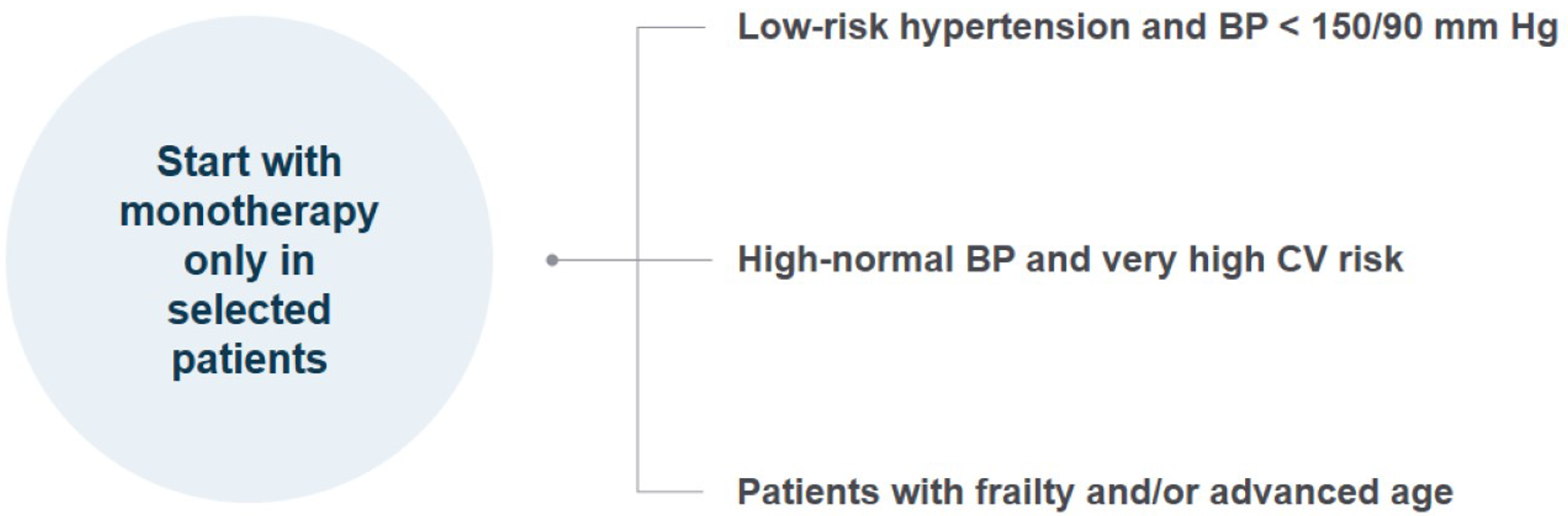
In patients at high risk start with dual combination therapy, not with monotherapy!
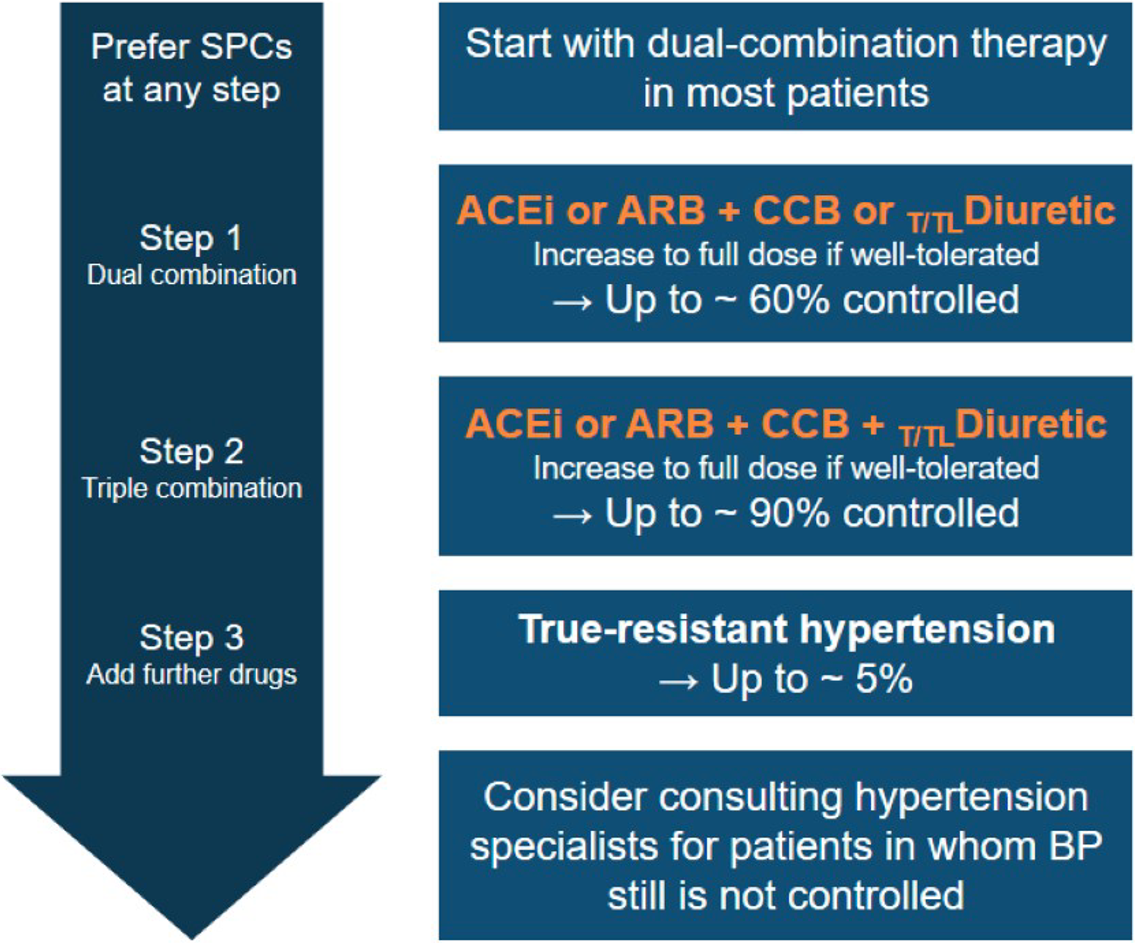
Start with monotherapy only in selected patients:
- Low-risk hypertension and BP < 150/95 mm Hg or
- High-normal BP and very high CV risk or
- Patients with frailty and/or advanced age
B-blockers can be used as monotherapy or at any step of combination therapy
Start with Dual-Combination Therapy in Most Patients
2023 ESH Guidelines for the Management of Arterial Hypertension
Blood Pressure Targets for Patients Aged 65 to 79 Years Old
2023 ESH Guidelines for the Management of Arterial Hypertension
-
Primary goal of treatment is to reduce BP to < 140/80 mm Hg*
-
Consider lowering BP to < 130/80 mm Hg if treatment†
67 years old
Grade 2 hypertension with high CV risk (HMOD)
- Recent diagnosis of hypertension
- BP 152/86 mm Hg
- NSAIDs as required
- Citalopram
- Irbesartan 150 mg/d
- BMI 32.3
- eGFR 52 mL/min/1.73 m2
- ECG normal
- Lifestyle advice
- Immediate drug treatment in high-risk patients aged 18 to 79 y to achieve a BP target < 140/80 mm Hg or < 130/80 mm Hg if tolerated
General BP Lowering Strategy in Patients With Hypertension 2023 ESH Guidelines
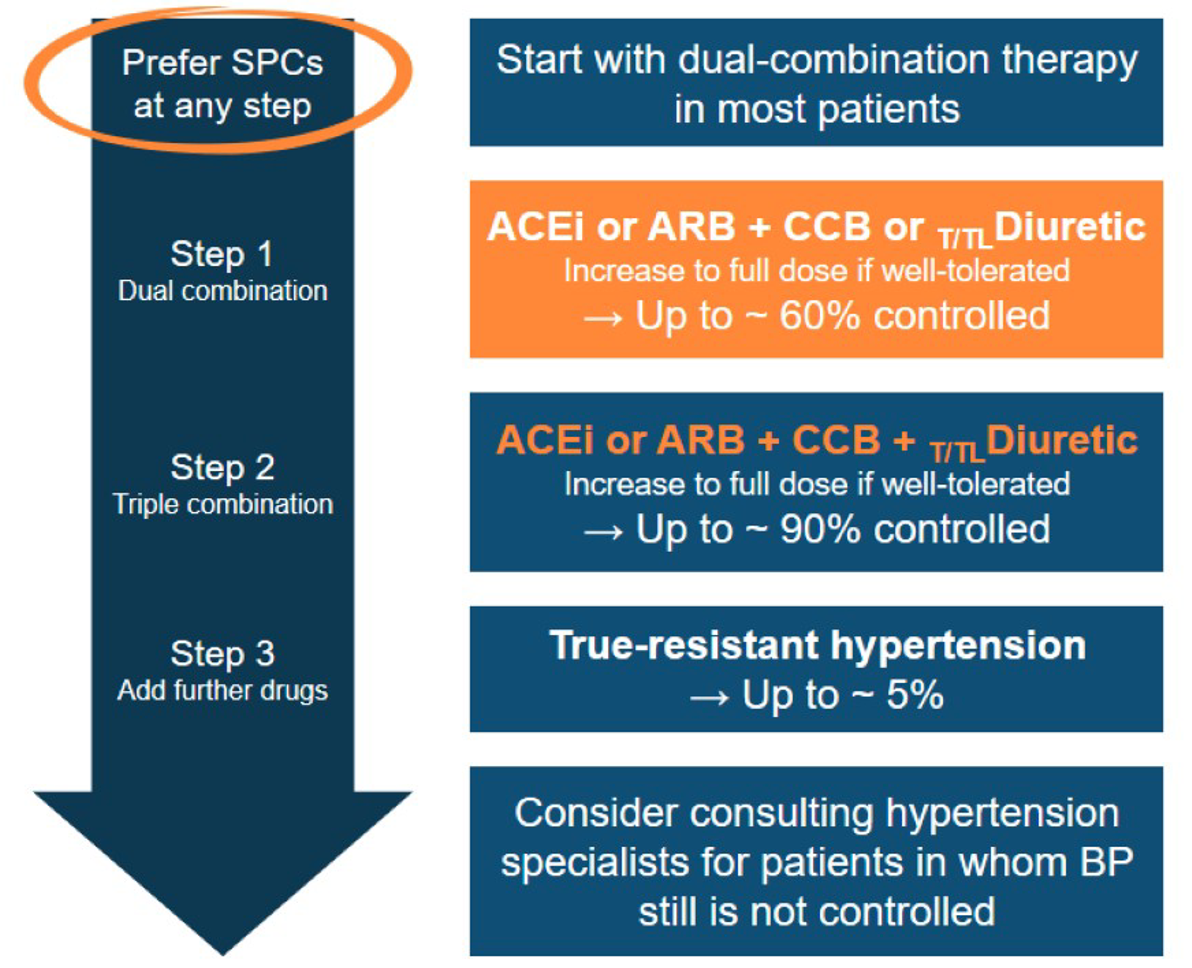
Start with monotherapy only in selected patients:
- Low-risk hypertension and
BP <150/95 mm Hg or - High-normal BP and very high CV risk or
- Patients with frailty and/or advanced age
ß-blockers can be used as monotherapy or at any step of combination therapy
Long-Term Event Rates, Risk Factors, and Treatment Patterns in Patients Qualifying for Dual BP-Lowering Therapy
Presented at ESH 2023
Longitudinal, retrospective, observational study using CPRD, HES, and ONS databases in England 2005 to 2019: 1,426,079 individuals aged ≥ 18 y with hypertension, qualifying for dual BP-lowering therapy per the ESC/ESH guidelines
- Primary composite endpoint: nonfatal MI, nonfatal stroke, HHF, and CV death
- Main subgroups of interest: ASCVD and diabetes
- Treatment patterns: percentage of patient-time on a given therapy during each year of follow-up
Elevated BP and CV Morbidity and Mortality in Individuals Eligible for Dual BP-Lowering Therapy
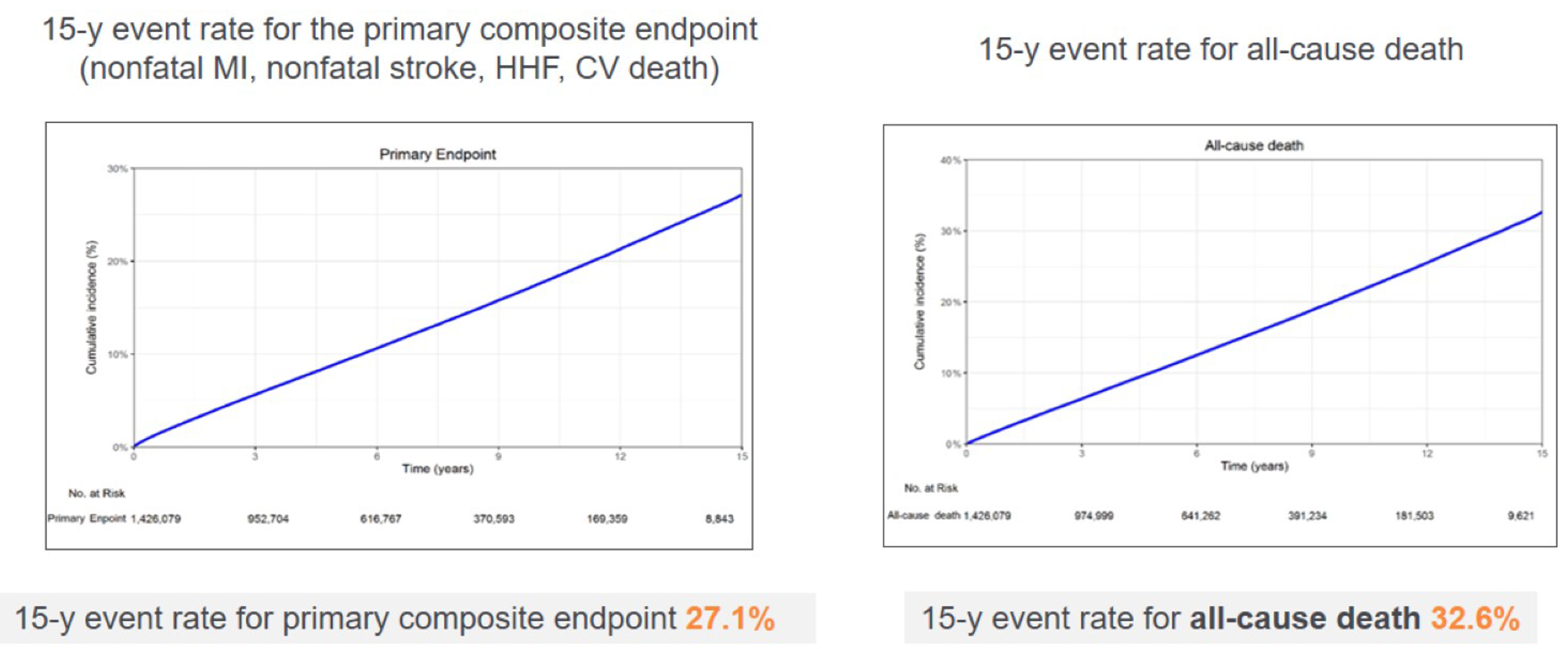
Elevated BP and CV Morbidity and Mortality in Individuals Eligible for Dual BP-Lowering Therapy
Presented at ESH 2023
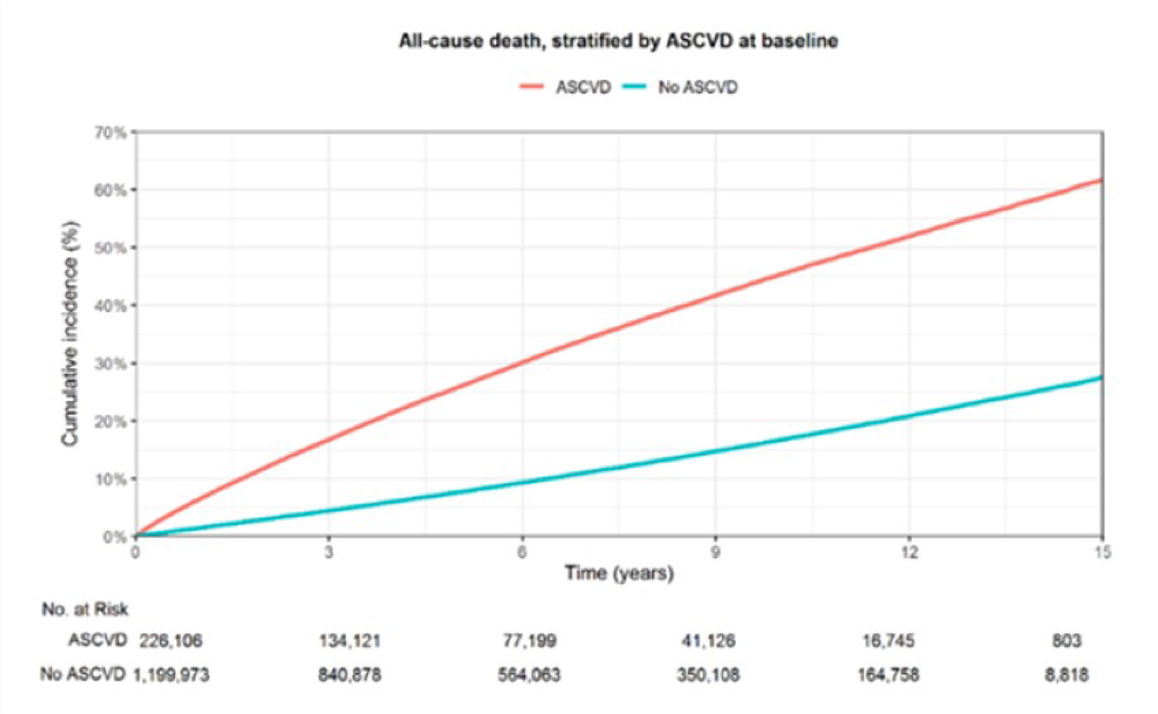
- All-cause death among patients with ASCVD at baseline 61.6%
- All-cause death in patients with no ASCVD at baseline 27.5%
Morbidity and Mortality in Individuals Eligible for Dual BP-Lowering
- Monotherapy was the most common BP-lowering treatment pattern, accounting for nearly 50% of patient-time, whereas only 25% of patient-time was receiving dual-combination therapy
- These real-life data highlight an opportunity for further risk reduction via timely initiation of dual BP-lowering therapy
What's New in the 2023 Guidelines for Patients Aged > 65 Years?
Antihypertensive Strategy in Older Persons With Hypertension
2023 ESH Guidelines
- Combination treatment is necessary in the vast majority of older patients with grade 2 or 3 hypertension, and it can usually be considered as first step treatment because favours better adherence to treatment and reduce treatment inertia. This is particularly important due to the multimorbidity of these patients and the consequent exposure to polypharmacy.
- As a rule, start antihypertensive drugs with lower doses and up-titrate treatment somewhat more slowly in older than in younger patients.
What Would Be the Best Choice for Our Patient?

-
67 y old
-
Grade 2 hypertension with high CV risk (HMOD)
-
BP 152/86 mm Hg after 6 wk on irbesartan 150 mg/d
Considering the effect and tolerability of ARBs in patients with osteoarthritis, dual fixed combination irbesartan 150 mg plus amlodipine 5 mg or plus HCTZ 12.5 mg/d, in a single pill
Because of her uncontrolled BP, an SPC should replace the monotherapy to achieve the BP target
The irbesartan dose may be doubled to 300 mg, maintaining low doses of amlodipine or HCTZ if needed
Key Takeaways
- Start treatment when office BP ≥ 140/90 mm Hg (individualize in patients with frailty)
- Achieve BP targets < 140/80 mm Hg and consider < 130/80 mm Hg if treatment is tolerated
- Dual-combination therapy in a single pill (RAS blocker plus CCB or diuretic) is recommended as first step in most older patients with grade 2 and 3 hypertension to improve adherence.
- Start antihypertensive treatment with lower doses of drugs included in the dual combination (individualize)
Les objectifs tensionnels chez le patient âgé sont généralement individualisés en fonction de l'état fonctionnel et des comorbidités. Une réduction trop rapide ou trop importante de la pression artérielle peut favoriser les chutes et l'hypotension orthostatique. Les recommandations actuelles privilégient une approche prudente et progressive du traitement. Une réévaluation régulière permet d'ajuster la stratégie thérapeutique dans le temps.
Le patient âgé est plus exposé au risque d'hypotension orthostatique, de troubles électrolytiques et d'interactions médicamenteuses. La polymédication fréquente dans cette population augmente également le risque d'effets indésirables. Une surveillance clinique et biologique régulière est recommandée après toute modification thérapeutique. Ces précautions permettent de sécuriser la prise en charge tout en maintenant l'efficacité du traitement.
La simplification du schéma thérapeutique, notamment via des associations en un seul comprimé, favorise l'observance chez le patient âgé. L'implication de l'entourage et des aidants peut également faciliter la prise régulière du traitement. Une explication claire des bénéfices attendus renforce l'adhésion du patient à sa prise en charge. Ces mesures contribuent à améliorer le contrôle tensionnel sur le long terme.
Confirm that you are a healthcare professional to continue reading.
Click login to continue
Hypertension Treatment with Single-Pill Combinations
Les associations antihypertensives en un seul comprimé: une stratégie recommandée pour l'hypertension artérielle, efficacité et observance thérapeutique.
From Recent Trials and Real-World Evidence to Guidelines
Les recommandations sur l'hypertension artérielle évoluent avec les essais cliniques randomisés et les données de vie réelle, qui se complètent en pratique courante.
How Do I Manage a 40-Year-Old Patient with Hypertension and Coronary Artery Disease
L'association hypertension artérielle et maladie coronarienne chez un patient jeune pose des enjeux thérapeutiques spécifiques, illustrés ici par un cas clinique.