{
event: "article_read",
name: `Prise en charge d'un patient hypertendu avec maladie coronarienne`,
author: ``,
tags: `Cardiovasculaire`,
publication_date: ``,
interaction_type: "content"
}
Article
Source: Campus Sanofi
Prise en charge d'un patient hypertendu avec maladie coronarienne
L'association hypertension artérielle et maladie coronarienne chez un patient jeune pose des enjeux thérapeutiques spécifiques, illustrés ici par un cas clinique.
Case Study
Benjamin, 40 years old
40 y old
Hypertension and CAD
History
Overweight
10 pack/y smoking history
Symptoms
Occasional exertional chest pain and mild shortness of breath
Complementary risk estimation
in Stage 1 with
SCORE2 / SCORE2-OP
< 2.5%
< 5%
< 7.5%
2.5 to < 7.5%
5 to < 10%
7.5 to < 15%
≥ 7.5%
≥ 10%
≥ 15%
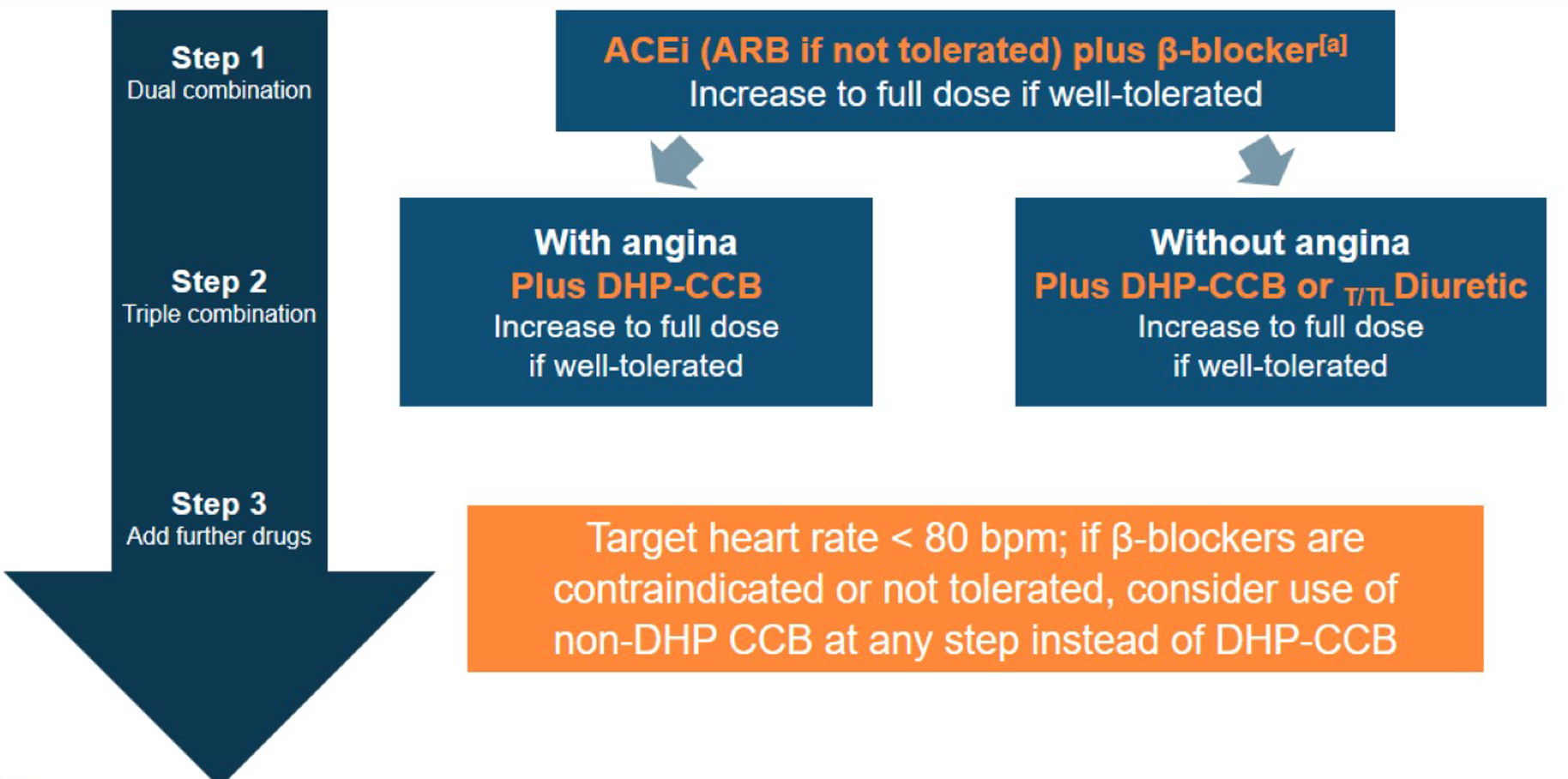
Drug Treatment Strategy - Hypertension and CAD 2018 ESC/ESH Guidelines
What's New in the 2023 Guidelines?
BP-Lowering in Hypertension and CAD
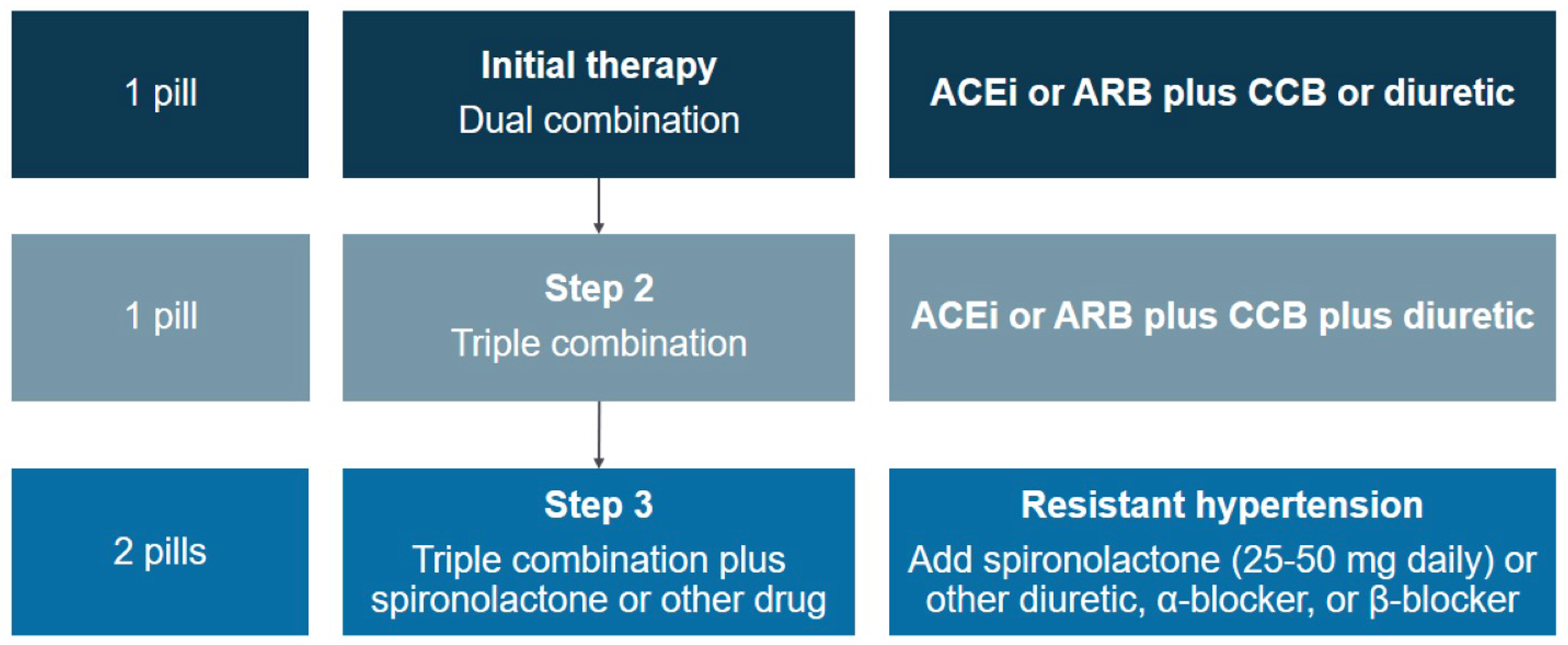
2023 ESH Guidelines for the Management of Arterial Hypertension
Try to put all patients on single pill combination therapy, either at step 1 with a dual combination or at step 2 with a triple combination. At step 3 patients will need 2 or more pills per day
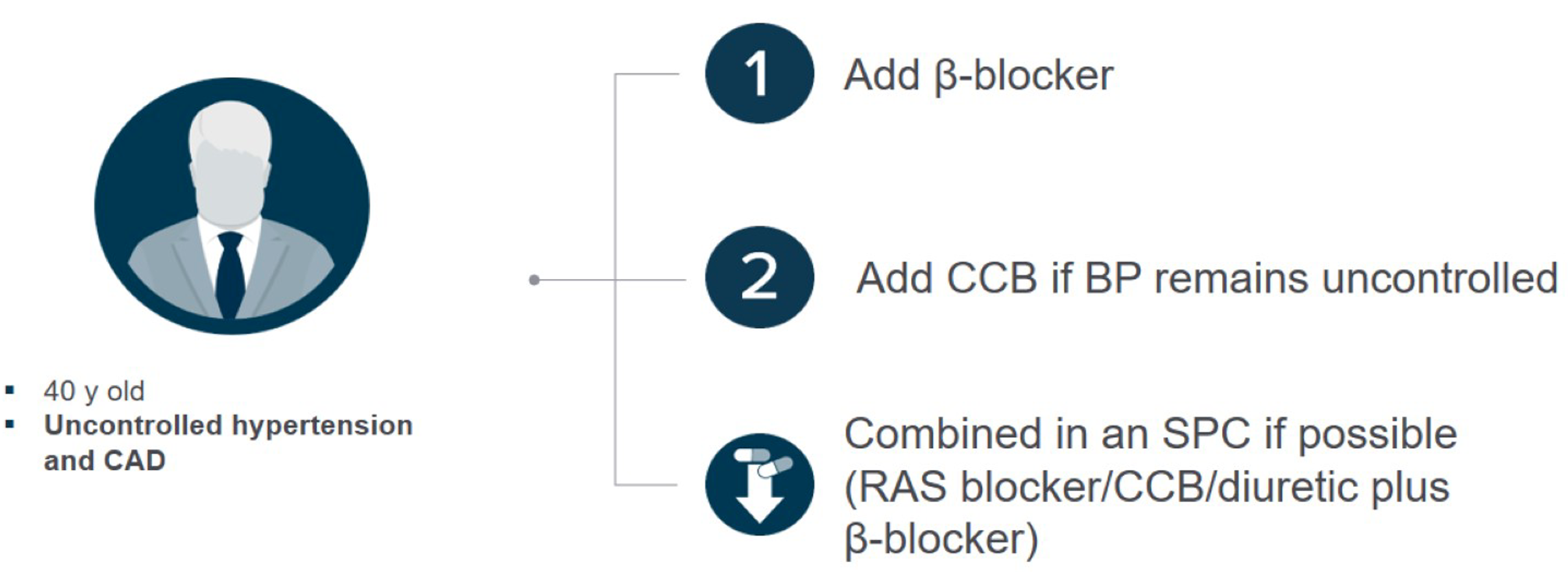
Clinical Case
Management Decision
SPC vs FEC on Treatment Persistence and MACE
Real-World Analysis
Presented at ESH 2023
Retrospective, observational cohort study using National Health Insurance Fund of Hungary database:
173,206 patients aged ≥ 18 y with hypertension who started on SPC or FEC of ramipril-amlodipine 2012-2018
Primary composite endpoint: long-term persistence rate between
SPC and FEC
Secondary endpoint: rate of MACE (composite of nonfatal MI, stroke, HHF, and all-cause death)
SPC vs FEC on MACE
Real-world Analysis
Secondary Endpoint
R/A 5/5 mg (n = 107,992)
R/A 5/10 mg (n = 13,195)
R/A 10/5 mg (n = 32,342)
R/A 10/10 mg (n = 19,677)
HR (95% CI)
P Value
HR (95% CI)
P Value
HR (95% CI)
P Value
HR (95% CI)
P Value
MACE
0.7(0.65, 0.75)
< .001
0.71(0.58, 0.89)
.002
0.73(0.64, 0.83)
< .001
0.68(0.57, 0.8)
< .001
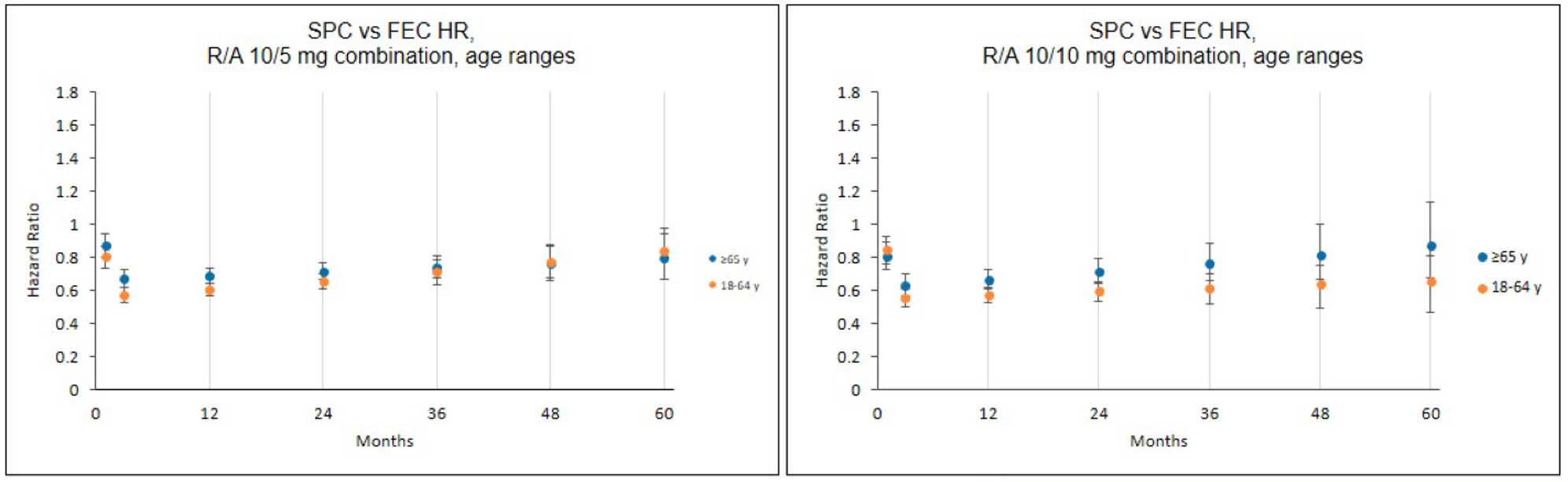
Improved Long-Term Persistence With SPC vs Free Combinations
Real-World Analysis
Presented at ESH 2023
HR (95% CI) by age ranges in the dosage combinationsa
No impact of age ranges on the association between the SPC treatment and persistence rate*
*Persistence measured as the rate of nonpersistence expressed as the hazard ratio.
BP Values for these patients not known; they might have needed a higher dose of hypertensives due to poor BP controlb
Conclusions
SPCs, have a major impact on prognosis in patients with hypertension, adherence, and long-term persistence to therapy
The many SPCs avaiable make it easy to follow the guidelines and treat hypertension effectively
Chez un patient jeune présentant une maladie coronarienne, un contrôle strict de la pression artérielle est recommandé pour limiter le risque d'événements cardiovasculaires. Les objectifs sont généralement individualisés selon la tolérance du traitement et les comorbidités associées. Une réduction progressive de la pression artérielle est préférée pour éviter une hypotension symptomatique. Le suivi régulier permet d'ajuster le traitement en fonction de la réponse clinique.
Les associations thérapeutiques sont souvent nécessaires pour atteindre les objectifs tensionnels chez un patient coronarien hypertendu. Elles permettent d'agir sur plusieurs mécanismes physiopathologiques tout en simplifiant le nombre de prises quotidiennes. Le choix des molécules associées tient compte des comorbidités et des contre-indications éventuelles. Une réévaluation régulière de l'efficacité et de la tolérance reste indispensable.
Chez un patient hypertendu et coronarien, la surveillance du profil lipidique et de l'équilibre glycémique est essentielle. Le statut tabagique et le niveau d'activité physique doivent également être évalués et pris en charge. Une approche globale du risque cardiovasculaire améliore le pronostic à long terme. Cette prise en charge multifactorielle est au cœur des recommandations actuelles.
Confirm that you are a healthcare professional to continue reading.
Click login to continue
Sanofi - Collecte de consentements de professionnels de santé en Tunisia
Vérification HCP requise
Le compte est en cours de vérification d'identité et il sera complété dans les 48 heures suivant votre inscription. A la fin vous recevrez un mail de confirmation et vous pourrez accéder à l'espace qui vous est dédié.
Vérification par e-mail envoyée
Veuillez vérifier votre courrier électronique pour vérification emali.
Contenu restreint
Vous n'avez pas le rôle vérifié correct pour afficher ce contenu.
Welcome to Sanofi Campus
Renvoi de l'email de vérification réussi
Vous êtes presque prêt !
Nous vous avons envoyé un lien de confirmation à l'adresse électronique que vous avez fournie.
Hypertension Treatment with Single-Pill Combinations
Les associations antihypertensives en un seul comprimé: une stratégie recommandée pour l'hypertension artérielle, efficacité et observance thérapeutique.
From Recent Trials and Real-World Evidence to Guidelines
Les recommandations sur l'hypertension artérielle évoluent avec les essais cliniques randomisés et les données de vie réelle, qui se complètent en pratique courante.



.2023-12-04-08-14-49.svg)