
Type 1 Diabetes
Artikelen

Autoimmune Type 1 Diabetes
The Type 1 Diabetes (T1D) field is evolving.
Recognition of the presymptomatic stages in T1D is growing.1-4
The clinical benefits of early detection of T1D are being highlighted.3-4 Programmes focusing on early detection through testing and screening for presymptomatic autoimmune T1D are increasingly offered to risk populations and the general population.1,2

A Paradigm Shift in Early Detection of Autoimmune Type 1 Diabetes
Autoimmune Type 1 diabetes (T1D) is undergoing a fundamental transformation in how the medical community approaches diagnosis and care.

Understanding Autoimmune T1D & The Value of Early Detection
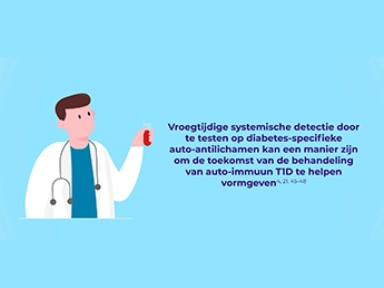
Autoimmune Type 1 Diabetes (T1D) can be detected through islet autoantibody testing years before symptoms appear.1-2 The video here explains how the condition progresses silently through presymptomatic stages, with beta cell destruction occurring long before symptom onset and clinical diagnosis.4-8

When a Child Gets Autoimmune Type 1 Diabetes
Parent's experiences of stage 3 diagnosis of T1D.

Does your patient have an existing autoimmune condition? Check for autoimmune type 1 diabetes!
Individuals living with other associated autoimmune diseases like celiac disease or autoimmune thyroid disease, are at an increased risk of developing autoimmune type 1 diabetes (T1D) and should be appropriately screened.1-6

Early detection of autoimmune type 1 diabetes could reduce the risk of diabetic ketoacidosis
Delay in screening for autoimmune type 1 diabetes (T1D) can increase the risk of diabetic ketoacidosis (DKA) at diagnosis—a critical complication that is potentially life-threatening and may result in long-term poor glycemic control and neurological complications.1,2 By identifying autoimmune T1D early, you can significantly lower the risk of DKA at diagnosis.3,4

How should individuals with positive autoimmune T1D autoantibodies be monitored over time?
Individuals who screen positive for ≥1 autoimmune islet cell antibodies need periodic medical monitoring, which includes regular assessments of blood glucose and HbA1c levels. You can also educate them about symptoms of diabetes, diabetic ketoacidosis (DKA), and provide psychosocial support to prepare them for a possible clinical diagnosis for type 1 diabetes (T1D).1


Bevestig uw status

Bevestig uw status
Sanofi biedt u exclusieve content over onze verschillende therapeutische gebieden op één portal
speciaal voor professionals in de gezondheidszorg, inclusief wetenschappelijk nieuws, een ljst met
evenementen en tools en diensten voor uw dagelijkse praktik.