

Passive Immunisation Against RSV in Infants in Clinical Practice
Clinical rationale for RSV passive immunisation with a long-acting monoclonal antibody in infant care.
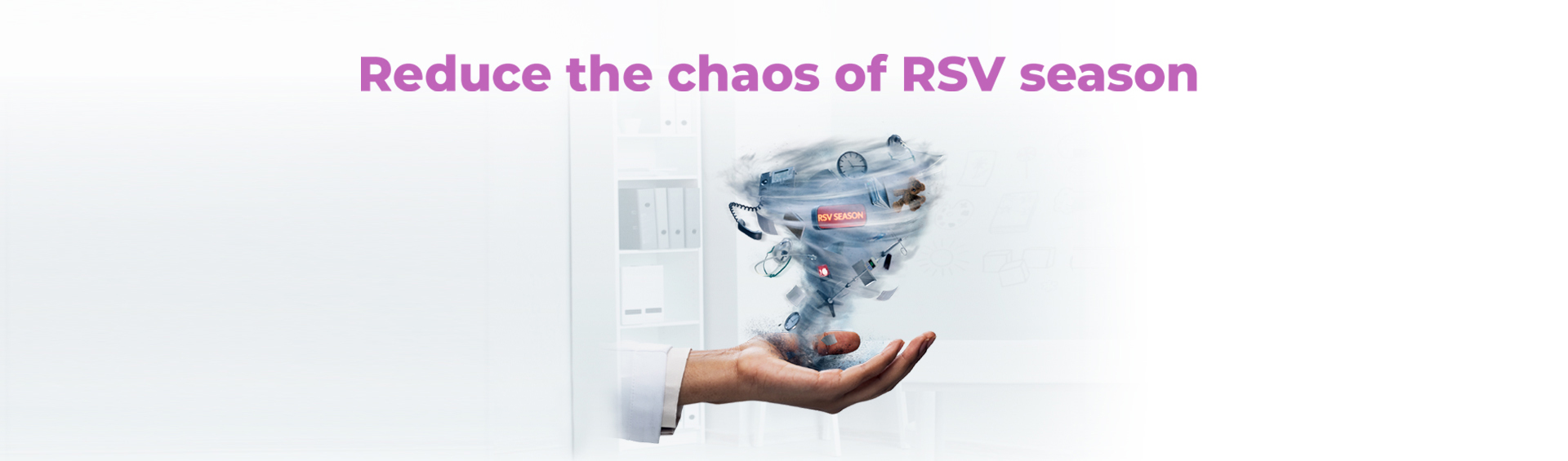
Beyfortus™ (nirsevimab) reduces the risk of medically-attended respiratory syncytial virus (RSV) lower respiratory tract infection (LRTI), inclusive of hospitalisation, in infants.1
Beyfortus™ is indicated for the prevention of respiratory syncytial virus lower respiratory tract disease in neonates and infants during their first RSV season.1
Beyfortus™ should be used in accordance with official recommendations.1
Contraindications: hypersensitivity to the active substance or to any of the excipients.1
Significantly reduces the risk of
medically attended RSV LRTI vs.
placebo in a broad infant population1,4
Simple to implement:
comes in a pre-filled syringe
and can be
incorporated into routine
appointments1
GA, gestational age; LRTD, lower respiratory tract disease; LRTI, lower respiratory tract infection; RSV, respiratory syncytial virus
- BEYFORTUS™ Professional Information. September 2025
- Griffin MP, Yuan Y, Takas T, et al. Single-Dose Nirsevimab for Prevention of RSV in Preterm Infants [published correction appears in N Engl J Med. 2020 Aug 13;383(7):698.
- Domachowske J, Madhi SA, Simões EAF, et al. Safety of Nirsevimab for RSV in Infants with Heart or Lung Disease or Prematurity. N Engl J Med. 2022;386(9):892-894
- Hammitt LL, Dagan R, Yuan Y, et al. Nirsevimab for Prevention of RSV in Healthy Late-Preterm and Term Infants. N Engl J Med. 2022;386(9):837-846.
- Muller WJ, Madhi SA, Seoane Nuñez B, et al. Nirsevimab for Prevention of RSV in Term and Late-Preterm Infants. N Engl J Med. 2023;388(16):1533-1534.
S4 BEYFORTUS 50 mg™; BEYFORTUS 100 mg™ (solution for injection).QUALITATIVE AND QUANTITATIVE COMPOSITION: One mL solution for injection contains 100 mg nirsevimab. Each BEYFORTUS 50 mg pre-filled syringe contains 50 mg of nirsevimab in 0,5 mL (100 mg/mL).Each BEYFORTUS 100 mg pre-filled syringe contains 100 mg of nirsevimab in 1 mL (100 mg/mL). REGISTRATION NUMBER: BEYFORTUS 50 mg: A59/30.1/0957; BEYFORTUS 100 mg: A59/30.1/0958.HOLDER OF CERTIFICATE OF REGISTRATION: sanofi-aventis south africa (pty) ltd., Reg. no.: 1996/010381/07, Floor 5, Building I, Hertford Office Park, 90 Bekker Road, Midrand, 2196. Tel: (011) 256 3700.
For Medical Information Enquiries kindly contact ZA.Medinfo@sanofi.com.
MAT-ZA-2500329
Passive immunisation delivers pre-formed antibodies directly to the infant, providing immediate protection without relying on the infant's own immune system to generate a response. This differs from active vaccination, which stimulates the immune system to produce antibodies over time. Passive immunisation is particularly suited to infants, whose immune systems are still developing at birth. Protection is typically designed to last through a single RSV season.
Infants in their first RSV season, particularly those born prematurely or with underlying cardiac or respiratory conditions, are at highest risk of severe lower respiratory tract disease. However, RSV can cause significant morbidity even in previously healthy term infants, as it is one of the most common causes of infant hospitalisation globally. This has driven interest in broader, universal approaches to RSV prevention rather than risk-based strategies alone. Clinical assessment should consider both risk factors and overall RSV disease burden in the local population.
Passive immunisation with a long-acting monoclonal antibody is generally administered shortly after birth or ahead of the RSV season, depending on the infant's birth timing relative to seasonal RSV circulation. A single dose is designed to provide protection through the infant's first season of highest RSV risk. Timing recommendations should follow local immunisation programme guidance for South Africa. This differs from multi-dose vaccination schedules used for other infant immunisations.
Confirm that you are a healthcare professional to continue reading.
Click login to continue