
Loss of Smell in CRSwNP
Loss of sense of smell is a common symptom of chronic rhinosinusitis with nasal polyps (CRSwNP), but its impact is often underestimated. Learn how olfactory dysfunction affects patient’s quality of life and explore the underlying mechanisms driving smell loss in CRSwNP.

Smell loss is one of the burdensome symptoms CRSwNP patients
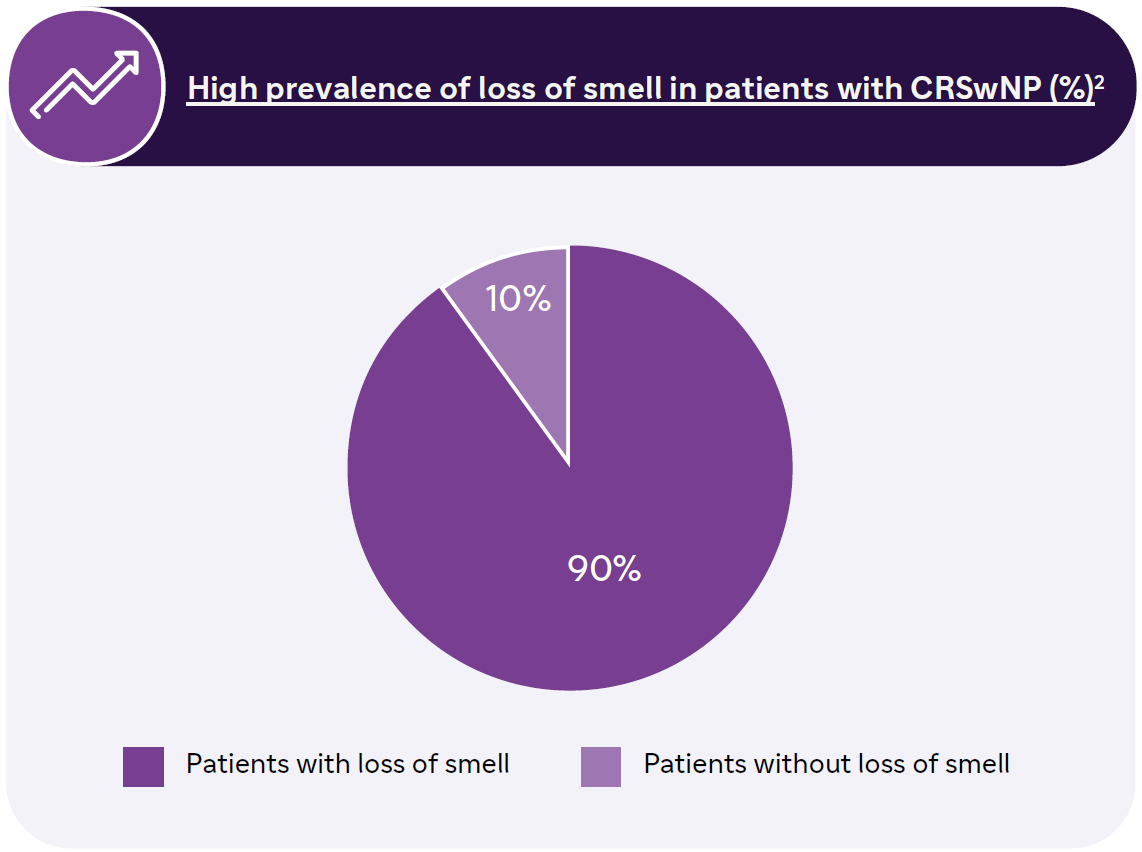
Loss of smell is is one of the most troublesome and difficult-to-treat symptoms of severe CRSwNP, while it is reported in by 90 % of patients (Figure 1).1
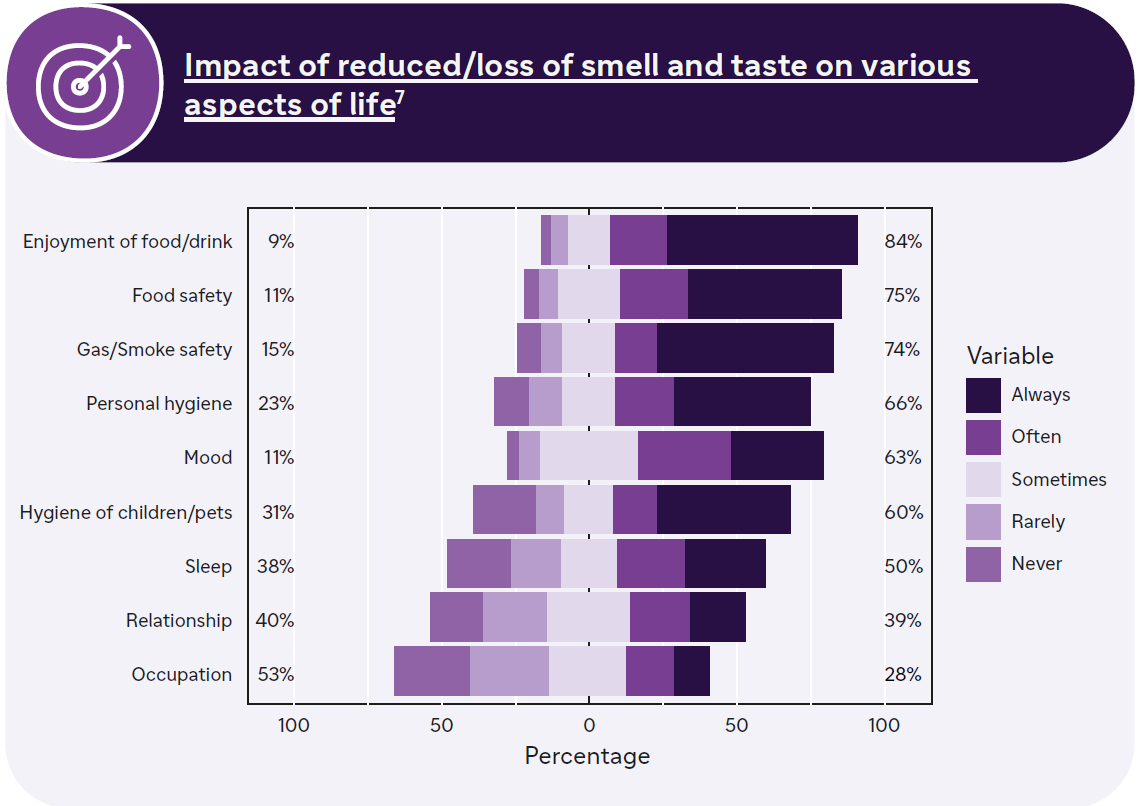
In an international patient experience survey (n=107) demonstrated that olfactory dysfunction was the most impactful symptoms on patients quality of life with 71 % of respondents stating a loss/reduced sense of smell as problem to be “as bad as it can be” (Figure 2).2
Understanding smell impairment in CRSwNP patients: expert interview with Sanna Salmi
Join Professor Sanna Salmi, Professor of Otorhinolaryngology at the University of Eastern Finland, as she explores how smell impairment affects patients' quality of life and shares practical perspectives on managing it in clinical practice.
Key Topics Covered
- Significance of smell impairment for patients
- Mechanisms of smell impairment
- Smell assessment and clinical considerations

Olfactory dysfunction
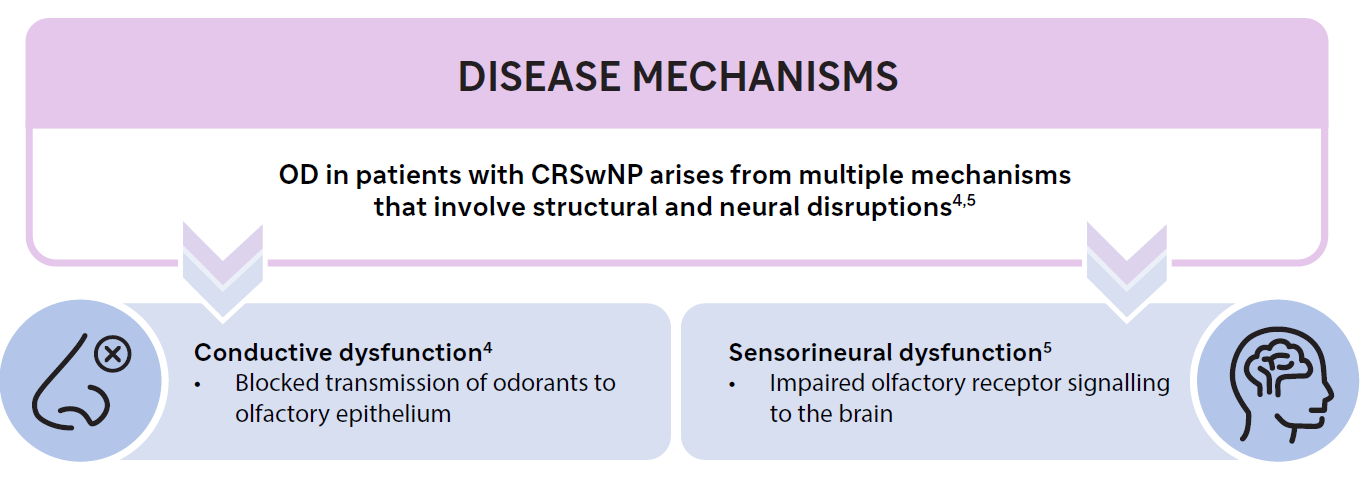
In a study of CRS patients with different inflammatory endotypes (n=230), loss of smell was associated with the type 2 endotype.3 Moreover, type 2 inflammation is associated with smell loss in CRSwNP via conductive and sensorineural olfactory dysfunction (Figure 3).4 In conductive disease, physical airflow obstructions prevent odorants from reaching the olfactory epithelium in the nasal cavity, while in sensorineural disease, olfactory receptor signalling to the brain is impaired.5-7
The role of cytokines in the CRSwNP pathophysiology
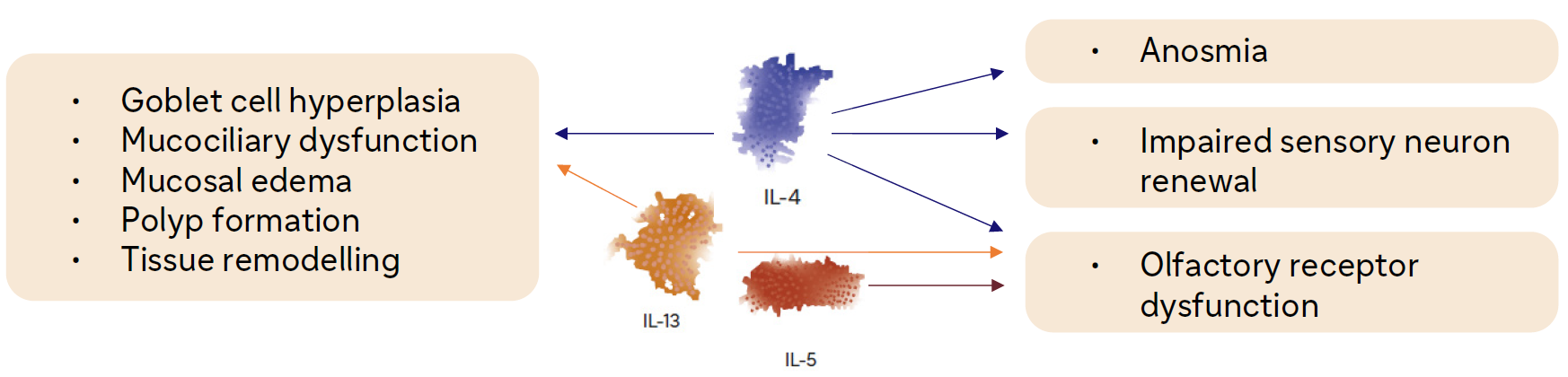
Elevated levels of type 2 inflammatory cytokines, IL-4, IL-13, IL-5, thymic stromal lmphopoietin (TSLP), eoxatin-3 and periostin have been correlated with a decline in olfactory function.
Therapies that target IL-4, IL-5, IL-13 and TSLP have provided significant improvements to the sense of smell, and reductions in nasal polyps and nasal congestion in phase 3 trials, highlighting the importance of type 2 inflammatory cytokines as valuable targets for improving the symptom burden of patients with CRSwNP (Figure 4).8,9,10,11
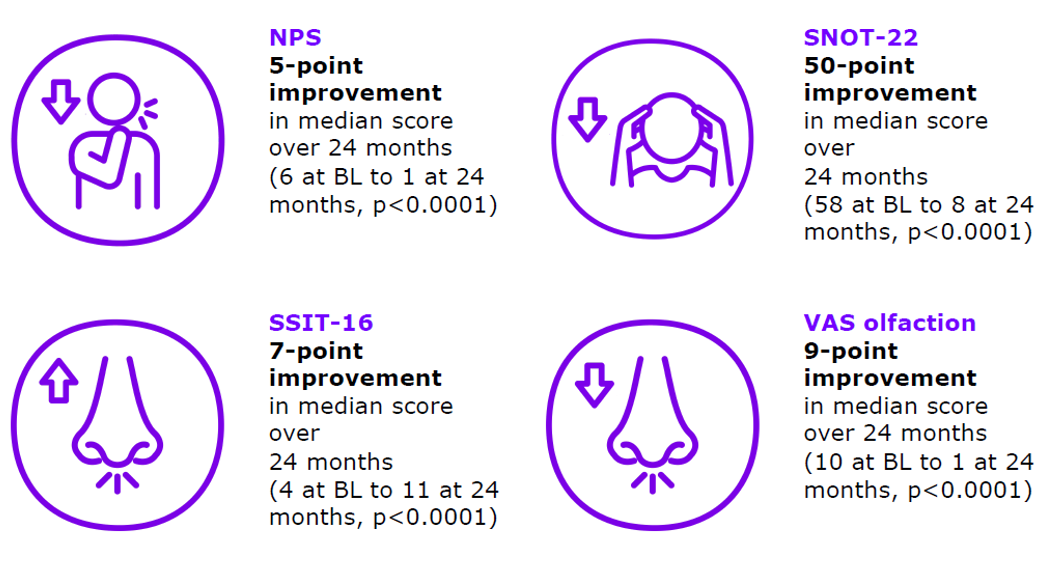
Smell loss was investigated in DUPIREAL real-world study
DUPIREAL is the largest real-life study (more than 900 patients) evaluating effectiveness of dupilumab (including treatment response, disease control and remission) in CRSwNP over 2 years in a real-life setting.12 Olfactory functioning improved over time, as indicated by a significant increase in Sniffin’ Sticks score (p<0.001) and a significant reduction in smell VAS score (p<0.001) compared to baseline (Figure 5).12
Primary and selected secondary outcomes:
Interested in learning more?
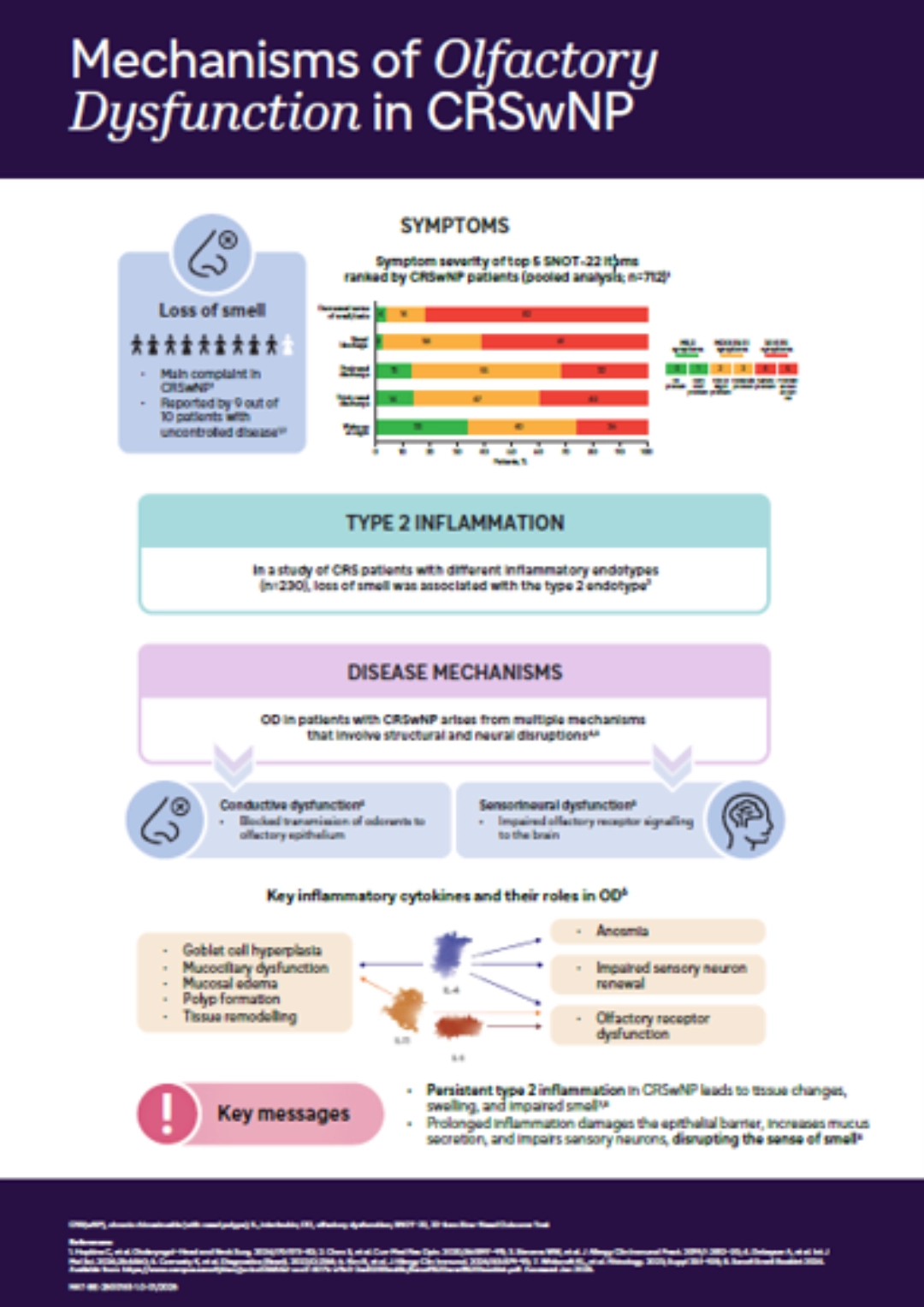
Mechanisms of Olfactory Dysfunction in CRSwNP
Read more on the underlying mechanisms of olfactory dysfunction in CRSwNP, including how type 2 inflammation drives both conductive and sensorineural disruptions that lead to the severe smell loss.
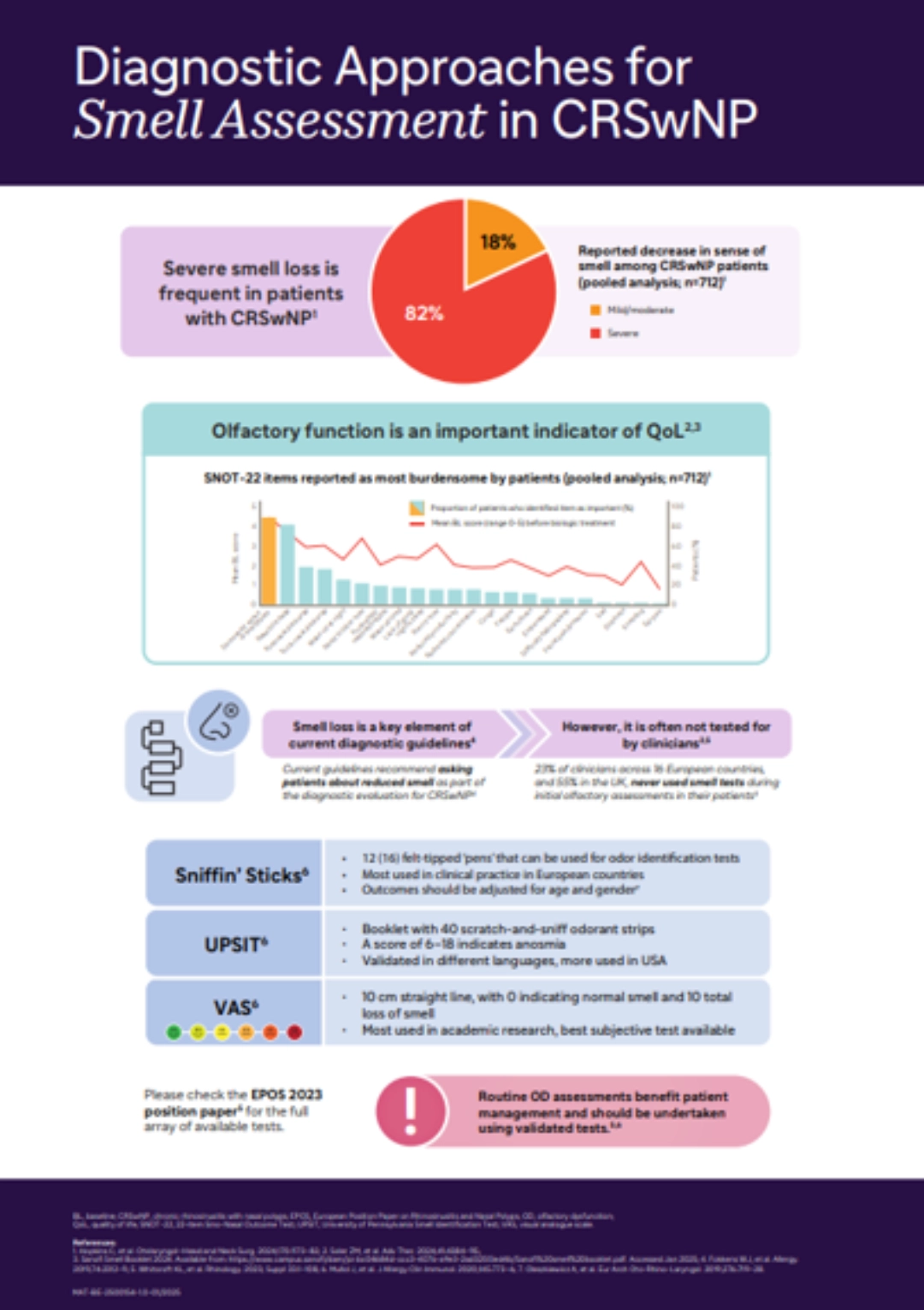
Diagnostic Approaches for Smell Assessment in CRSwNP
Read more on the prevalence and clinical burden of smell loss in CRSwNP patients, why olfactory dysfunction remains underassessed in practice, and which validated diagnostic tools (Sniffin' Sticks, UPSIT, and VAS) are recommended by current guidelines for routine olfactory assessment.
Uncovering the hidden burden: Understanding loss of smell in CRSwNP
The loss of sense of smell is a common symptom of chronic rhinosinusitis with nasal polyps (CRSwNP); however, its impact is often underestimated. To increase understanding on smell loss, Sanofi and EUFOREA have produced a Smell booklet, a short guidebook discussing mechanisms, impact, and assessment of olfactory disfunction.
-
Chen S, et al. Curr Med Res Opin. 2020;36:1897–911;
-
Luke L, et al. J Clin Med. 2023;12(16)5367.
-
Stevens WW, et al. J Allergy Clin Immunol Pract. 2019;7(8):2812-2820.
-
Desai M and Oppenheimer J. J Allergy Clin Immunol Pract. 2021;9(1):7–12.
-
Ahmed OG and Rowan NR. Immunol Allergy Clin North Am. 2020;40(2):223–232.
-
Qureshi HA and Lane AP. Am J Rhinol Allergy. 2023;37(2):168–174.
-
Song J, et al. Expert Rev Clin Immunol. 2023;19(8):993–1004.
-
Kim B, et al. J Allergy Clin Immunol. 2024;153:879-93.
-
Sanofi and Regeneron. Dupixent® Summary of Product Characteristics. Available at: https://www.ema.europa.eu/en/documents/product-information/dupixent-epar.product-information_en.pdf. Last accessed May 2026
-
GlaxoSmithKline. Nucala® Summary of Product Characteristics. Available at: https://www.ema.europa. eu/en/documents/product-information/Nucala-epar-product-information_en.pdf. Last accessed May 2026
-
AstraZeneca. Tezspire® Summary of Product Characteristics. Available at: https://www.ema.europa.eu/en/documents/product-information/tezspire-epar-product-information_en.pdf. Last accessed May 2026.
-
De Corso E, et al. Allergy. 2025; 0:1–14.


SE-FILMEN-HÄR
